

The Met Gala has never really been just a red carpet. Held every year on the first Monday of May at the Metropolitan Museum of Art, it’s technically a fundraiser for the Costume Institute, but culturally, it’s something much bigger. It’s where fashion stops being about trends and starts becoming a form of expression, interpretation, and sometimes even controversy. Guests aren’t simply dressing up; they are responding to a theme, translating it through design, silhouette, and storytelling, which is exactly why the night continues to hold so much weight beyond the industry.
This year’s theme, “Costume Art,” paired with the dress code “Fashion is Art,” leaned fully into that idea. Instead of focusing on a designer, era, or aesthetic, the 2026 exhibition explored the relationship between the body and clothing across time, placing garments alongside paintings, sculptures, and historical objects to show how fashion has always been tied to identity, culture, and meaning. The concept of the “dressed body” became central – how the body is shaped, presented, exaggerated, or even concealed through clothing and that allowed for a wide range of interpretations on the carpet, from sculptural silhouettes to deeply conceptual pieces.
The choice of this theme wasn’t accidental. The Costume Institute is entering a new phase with the opening of its expanded, permanent gallery space, and this exhibition essentially positions fashion where it has long been pushing to belong: within the realm of fine art. It also reflects a broader shift in how fashion is understood, not just as something worn, but as something that communicates ideas about identity, history, and even politics. That is why the exhibition itself is structured around different “body types,” including those often overlooked in fashion, reinforcing the idea that clothing is never neutral; it always says something about the person wearing it and the world they exist in.
Looking back, the Met Gala has always evolved through its themes, each year offering a different lens. In 2025, “Superfine: Tailoring Black Style” centered craftsmanship and cultural identity, while 2024’s “Sleeping Beauties: Reawakening Fashion” focused on preservation and revival. 2023 paid tribute to Karl Lagerfeld, and the years before that explored American fashion through both a lexicon and an anthology. What sets 2026 apart is how expansive it feels – there are fewer boundaries, and in many ways, fewer excuses. When the brief is “fashion is art,” it leaves very little room for playing it safe. Personally, one of the standout themes in recent memory was “Heavenly Bodies: Fashion and the Catholic Imagination,” especially for the way it translated celestial and religious symbolism into unforgettable, almost otherworldly red carpet costumes.
As always, the night was overseen by Anna Wintour, who continues to shape the event into what it is today, with this year’s co-chairs—Beyoncé, Nicole Kidman, and Venus Williams—bringing their own influence and presence to a theme that already demanded attention. With an open-ended concept like this, the expectation wasn’t just creativity, but intention, and that is where the red carpet became particularly interesting.
The looks: who understood the assignment (and who just looked good)
What made this year’s red carpet stand out was how clearly it separated those who dressed for the theme from those who simply dressed well. The best looks didn’t just photograph nicely; they felt considered, almost like extensions of the exhibition itself.
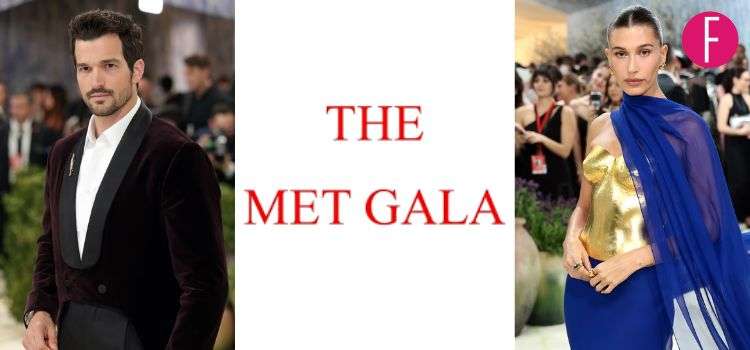
Hailey Bieber’s Saint Laurent look, for instance, leaned into the idea of the body as form. The sculpted structure of the outfit gave it a near-statue-like quality, striking that balance between minimal and conceptual. It wasn’t loud, but it didn’t need to be – the focus was entirely on shape and presence, which is exactly where this year’s theme lived.
Beyoncé, in a design by Olivier Rousteing, approached the theme more dramatically, transforming the human body into something almost anatomical and surreal. It was one of those looks that immediately sparked conversation, not because it was conventionally beautiful, but because it pushed the idea of fashion as art into something more abstract and slightly unsettling. It felt deliberate, layered, and very much in line with the exhibition’s exploration of the body itself.
Bad Bunny took a completely different route, opting for a conceptual interpretation that centered on aging. Through prosthetics and styling, he presented a version of the body that fashion rarely acknowledges, aligning closely with the exhibition’s focus on overlooked or marginalized forms. It was unconventional, but that was precisely the point—this was one of the few looks that directly engaged with the deeper ideas behind the theme rather than just its surface.
Ciara’s look leaned fully into the theme without overcomplicating it. Dressed in a striking golden ensemble, she brought a sense of radiance that felt both sculptural and intentional, standing out even on a carpet that thrives on excess. The metallic finish gave the outfit an almost art-object quality, catching light in a way that made it feel alive. What worked in her favor was how naturally she carried it – there was confidence, ease, and a kind of quiet control that kept the look from tipping into costume. It reflected her long-standing approach to fashion: make a statement, but make it yours.
On the other end, Paul Anthony Kelly’s Dior look leaned into classic Hollywood glamour, using velvet and tailoring to reflect craftsmanship as a form of artistry. While less experimental, it still held its place within the theme by focusing on construction and timeless design, reminding that art in fashion doesn’t always have to be conceptual—it can also be about precision and technique.
What ultimately defined the night was not how dramatic the looks were, but how well they engaged with the idea behind them. Some leaned into storytelling, others into structure, and a few into pure concept, but the most memorable appearances all had one thing in common, they treated fashion as something more than clothing. And for a theme that quite literally asked for that, it made all the difference.
Sources: Vogue, MEGA, People, NY Times

