

New wave of tensions have broken out in Yemen following reports that the Houthis claimed that Sanaa International Airport has been targeted by airstrikes from Saudi Arabia, which is alleged to have carried out acts of aggression on Yemen.
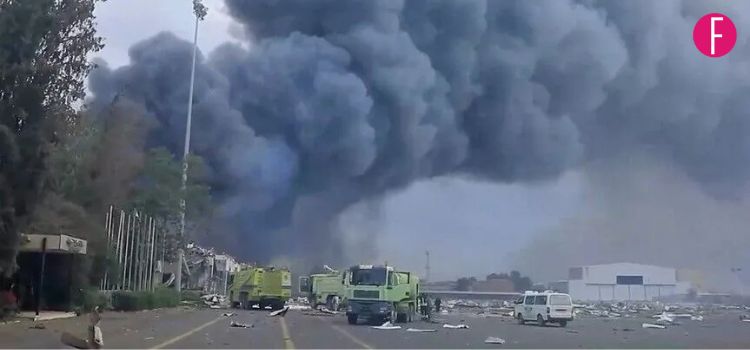
The Houthi movement, aligned with Iran, which holds control of the capital city and most of the northern parts of Yemen, issued a statement indicating that their airport had come under aerial bombardment. Brigadier General Yahya Saree, the spokesman for the Houthi armed forces, described the assault as an act of “blatant aggression” and that it was the end of a period of de-escalation and assured retaliation against Saudi Arabia.
The statement quickly escalated the existing tension in a country whose residents have had to endure wars, economic hardships, and one of the world’s most severe humanitarian crises. For the Yemeni people, their airports do not only serve as transport facilities; they also play a crucial role in connecting them to medical services, relatives outside the country, humanitarian aid, and vital supplies.
What Happened at Sanaa International Airport?
According to Houthi statements, Saudi forces carried out airstrikes against Sanaa International Airport. The group said the attack represented a major escalation after months of relative calm and accused Saudi Arabia of violating efforts aimed at reducing tensions.
Authorities reportedly issued evacuation orders for the airport and nearby areas following the strikes, adding to concerns among residents living around the capital. The airport has repeatedly become a flashpoint during Yemen’s conflict because of its strategic importance and its role as one of the few gateways available to people living in Houthi-controlled areas.
Saudi Arabia had not immediately issued a response to the Houthi accusations. However, Yemen’s internationally recognized government, which is based in Aden and supported by Saudi Arabia, presented a different account of the events.
Yemen’s Government Gives a Different Explanation
The internationally recognized government of Yemen reported that their forces have attacked the runway at the airport to prevent an Iranian plane from landing. The government reported that it was an attack on Yemeni airspace and that they had no alternative but to use force since diplomatic ways failed.
Officials from the government also claimed that the Houthis were detaining an airplane belonging to the International Committee of the Red Cross at the Sanaa airport, along with its crew members. The government said it considered unauthorized aircraft movements a security threat and warned that future violations could be met with military action.
These reports clearly demonstrate the underlying political tensions between the Houthis, who control Sanaa, and the internationally recognized Yemeni government supported by Saudi Arabia and other Arab Gulf countries.
Why Sanaa Airport Matters
Sanaa International Airport has traditionally served as a hallmark of Yemen’s isolation amidst the ongoing war. The airport has continuously faced closure, restrictions, and attacks ever since the Saudi-led intervention campaign started in 2015, which makes travel for civilians quite complicated.
Disruptions in Sanaa’s air traffic may directly affect Yemenis in various ways: patients requiring foreign medical assistance may not be able to board flights, and families may be unable to unite sooner than expected.
There have already been several instances when attacks on the airport resulted in damages done to runways, terminals, and other aviation-related facilities. Recently, Sanaa International Airport has become involved in the larger conflict between Yemen, Saudi Arabia, Iran, and Israel.
A Return to Escalation?
The latest incident comes after signs that Yemen’s conflict had entered a quieter phase compared with previous years. The Houthis have repeatedly warned Saudi Arabia against military actions, while Saudi Arabia has sought to manage security concerns along its southern border.
Analysts say the airport strike allegations could become another turning point if they lead to renewed military exchanges. The Houthis have previously threatened retaliation against Saudi interests following disputes involving Yemeni airspace and flights linked to Iran.
The situation at hand is still very fluid with each side giving completely contradicting accounts of the event.
This is a developing story.
Sources: Reuters, and Al Jazeera.

