


Apple has officially entered its next iPhone era, and honestly, that burgundy is doing a lot of the convincing for us. The company has unveiled the new iPhone 18 Pro and iPhone 18 Pro Max, alongside the much-anticipated iPhone Duo, Apple’s first-ever foldable iPhone. So yes, there is a lot to unpack — and no, Apple clearly did not come to this event to make choosing your next phone any easier.
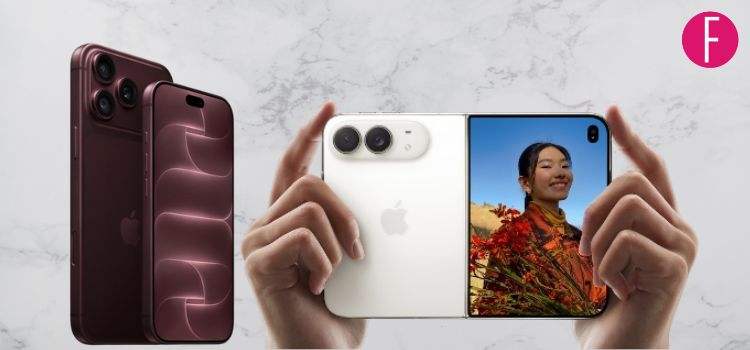
The iPhone 18 Pro and Pro Max keep a familiar overall design, but Apple has packed the new generation with some pretty significant upgrades under the hood. The Pro models come in black, silver, glacier and burgundy, with the latter already looking like the colour everyone is going to be talking about. There is also a redesigned, smaller Dynamic Island that can display up to three Live Activities at once.
But the biggest changes are happening inside.
The A20 Pro Is Doing Some Serious Heavy Lifting
The iPhone 18 Pro and Pro Max are powered by Apple’s new A20 Pro chip, built using a 2-nanometre process. It features a six-core CPU and a seven-core GPU, with Apple claiming graphics performance can be up to 40% faster than the previous generation. The chip also gets a major AI boost, with a 32-core Neural Engine and 50% more memory bandwidth.
Apple has also focused heavily on keeping all that power from turning the phone into a tiny hand warmer. The new thermal system uses an upgraded vapor chamber, with the A20 Pro directly connected to it for better heat management and more sustained performance.
Battery life gets a serious upgrade too. Apple says the iPhone 18 Pro can match the battery life previously associated with the iPhone 17 Pro Max, while the iPhone 18 Pro Max can deliver up to 30 hours of usage. Wired charging has also been made faster. Basically, Apple is betting that the people who want a Pro iPhone don’t just want it to be fast for five minutes — they want it to stay fast.
The Camera Finally Gets an Actual Aperture
The camera upgrade might be the most interesting part of the iPhone 18 Pro. The 48MP Fusion Main camera now comes with a variable aperture, meaning the camera can physically adjust how much light enters the lens. It can open up for situations like low light and narrow down when you want more depth of field. And yes, this isn’t just a Pro Max feature — both the iPhone 18 Pro and Pro Max get it.
For people who actually enjoy messing around with their camera settings, Apple is also adding more manual controls. Users can adjust aperture and shutter speed themselves, while the redesigned Camera app allows for a more customisable shooting experience.
Photographic Styles have also been upgraded with more control over things like texture, while improvements to night photography are designed to make low-light shots faster and cleaner.
And then there is Apple Reference Image, which is basically Apple’s answer to the increasingly messy question of, “Okay, but is this photo actually real?” The feature creates a reference version of an image containing information from the original camera capture, allowing the source of an image to be verified even after edits. With AI-generated and heavily edited images becoming almost impossible to distinguish from reality, Apple clearly wants the iPhone camera to have a way of proving where an image came from.
And Then Apple Dropped the iPhone Duo
Because apparently a regular iPhone launch wasn’t enough.
Apple has officially unveiled the iPhone Duo, its first foldable iPhone, and this is easily the most dramatic new addition to the lineup. When opened, the Duo gives you a 7.6-inch Super Retina XDR display, making it the largest display ever put on an iPhone. When folded, it has a 5.4-inch outer display, which Apple says gives you roughly 90% of the screen area of the iPhone 18 Pro. It is also Apple’s thinnest iPhone yet, with a Grade 5 titanium design and a precision-engineered hinge. The company has clearly spent a ridiculous amount of time making sure this isn’t just an iPhone that happens to fold in half — the software has been redesigned around the two-screen experience as well.
iOS 27 adapts depending on whether the phone is open, folded or flipped, while Split View allows two apps to run side by side. You can even open two windows of the same app, which should make the larger display considerably more useful than simply giving you a bigger screen to scroll Instagram on.
There is also a new Dock, redesigned navigation and support for app pairs, while StandBy can work on either display. And yes, Apple has gone all-in on the camera experience too. The Duo can use its rear cameras for selfies while showing a preview on the outer display, and the new Duo Preview feature is designed specifically around the foldable form factor.
How Much Is All This Going to Cost?
Here’s where the “maybe my current phone is actually fine” conversation begins. The iPhone 18 Pro starts at $1,199, while the iPhone 18 Pro Max starts at $1,299. The Pro models are available with storage options going all the way up to 2TB, which is a first for the lineup.
Pre-orders for the iPhone 18 Pro and Pro Max begin September 12, with the phones officially going on sale September 18.
The iPhone Duo is in an entirely different financial universe. Apple’s first foldable starts at $1,999 and comes in 256GB, 512GB, 1TB and 2TB configurations. Pre-orders begin October 16, with the Duo officially arriving in stores on October 23.
So, if you were waiting for Apple to finally make a foldable iPhone, congratulations. It exists. If you were waiting for an affordable foldable iPhone, however… perhaps continue waiting.
Between the burgundy Pro, the camera upgrades, the A20 Pro chip and Apple’s first foldable finally becoming real, this year’s iPhone lineup is less about a tiny annual spec bump and more about Apple trying to show where it thinks the smartphone is headed next.
Sources: Apple, CNBC, Engadget, 9 to 5 Mac