

In a significant escalation of the conflict, Hamas leader Ismail Haniyeh was killed in Tehran, Iran. The killing occurred on Wednesday, following Haniyeh’s attendance at the swearing-in ceremony of Iran’s President Masoud Pezeshkian. Iran’s paramilitary Revolutionary Guard reported the death.
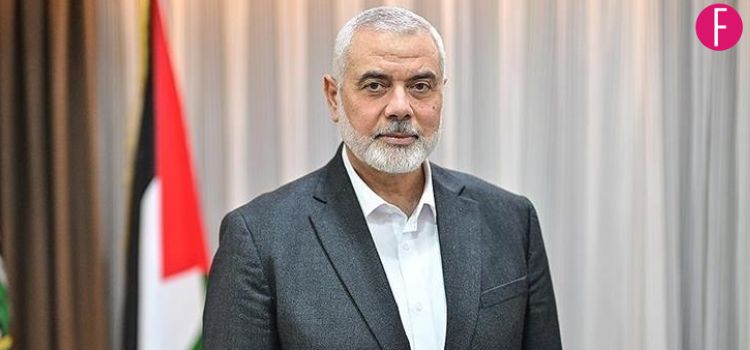
President Masoud Pezeshkian condemned the act, labeling it a “cowardly attack” that undermines efforts for regional stability. Israel has yet to comment on the incident. The timing of the strike, immediately after Haniyeh’s participation in the inauguration, suggests a calculated move that may have substantial geopolitical repercussions.
The death of Haniyeh, a prominent figure in the Palestinian resistance, holds the potential to escalate the already volatile situation. The killing has prompted immediate reactions from various international actors, including China, Malaysia, Russia, and others. The situation remains fluid, with further developments expected as global leaders respond to this shocking event.
Who Was Ismail Haniyeh?
Ismail Haniyeh was born in a refugee camp near Gaza City on January 29, 1963. His parents were refugees expelled from Askalan, now known as the Israeli city Ashkelon. Haniyeh joined Hamas in the late 1980s during the First Intifada. He was imprisoned several times by Israel for his participation in the uprising, before being deported and returning to Gaza. There, he steadily climbed Hamas ranks in the following decade. Haniyeh dedicated his life to the Palestinian cause, emerging as a prominent leader in the fight for Palestinian self-determination. His journey, marked by perseverance and commitment, saw him becoming Prime Minister of the Palestinian Authority despite facing immense international isolation and economic blockades. His leadership during this tumultuous period highlighted his resilience and ability to navigate the complex political landscape, striving to provide stability and governance for the Palestinians.
In 2004, Haniyeh was appointed part of a secret “collective leadership” following the deaths of Hamas’s previous two leaders, Sheikh Ahmed Yassin and Abdel Aziz al-Rantisi, who were killed in Israeli strikes just weeks apart. After Hamas won elections to the Palestinian Legislative Council in 2006, Haniyeh became Prime Minister of the Palestinian Authority (PA) government. However, his term was short-lived as he was dismissed after a year in office by PA President Mahmoud Abbas, remaining the only PA Prime Minister to have taken office after securing a mandate in popular elections.
On May 6, 2017, Hamas, the Palestinian political movement that governs the Gaza Strip, elected Ismail Haniyeh as the head of its political bureau. Haniyeh’s appointment marked a significant leadership shift, replacing Khaled Meshal. As the new head, Haniyeh played a crucial role in shaping Hamas’s diplomatic strategy from various locations, including Turkey and the Qatari capital, Doha. He was actively involved in negotiating ceasefires and engaging with Iran, a key supporter of Palestinian liberation. Haniyeh’s tenure was characterized by efforts to strengthen Hamas’s international relations and secure support for the Palestinian cause on a global stage.
Haniyeh’s tenure as the overall political leader of Hamas from 2017 showcased his dedication to uniting Palestinian factions and advocating for their rights on the international stage. He played a crucial role in maintaining Hamas’s influence in Gaza and sought to bring attention to the humanitarian issues faced by Palestinians through diplomatic efforts worldwide. Haniyeh’s travels and meetings with global leaders underscored his commitment to securing international support for the Palestinian cause. His efforts in leadership and advocacy have left a lasting impact on the Palestinian resistance movement.
In June, ten members of his family were killed in the Gaza Strip due to continuous Israeli attacks and airstrikes. On July 31st, Ismail Haniyeh himself was also killed in Iran.
Hasan Ayoub, an assistant professor of political sciences at An-Najah University in Nablus, noted that although the killing didn’t occur on Qatari soil, it is likely to hinder the political and diplomatic efforts that have been ongoing for months to broker a ceasefire in Gaza. This is especially significant because Qatar hosts Hamas’s political office and had been hosting Haniyeh himself.
Sheikh Mohammed bin Abdulrahman bin Jassim Al Thani, the Qatari prime minister, expressed doubts about the success of ceasefire negotiations after the assassination of Haniyeh. Qatar has been acting as a mediator in the ceasefire talks between Israel and Hamas.
Previous Hamas Leaders & How Their Tenures Ended
It is important to note that most of Hamas’s leaders have not peacefully resigned from their positions but have been killed, primarily by Israeli airstrikes. Sheikh Ahmed Yassin, the spiritual leader and co-founder of Hamas, was eliminated by an Israeli missile strike in 2004. His successor, Abdel Aziz al-Rantisi, met a similar fate just weeks later when he was also killed in an Israeli airstrike. These targeted killings highlight the relentless and one-sided nature of Israeli actions against Hamas, where leadership changes are often marked by violent eliminations rather than orderly transitions.
The pattern continued with subsequent leaders facing similar threats. Khaled Meshaal, who led Hamas from 2004 to 2017, survived an assassination attempt by Israeli agents in Jordan. Ismail Haniyeh, who took over from Meshaal, was also under constant threat, ultimately culminating in his death in Tehran. This consistent targeting of Hamas leaders by Israeli forces underscores the high stakes and volatility of the situation. The leadership of Hamas has been systematically undermined through lethal force, reflecting a persistent and aggressive approach by Israel towards Hamas and its leaders.
It is a deeply alarming situation that individuals from around the world who have been actively advocating for Gaza and Palestine are being targeted and killed one after another. Earlier this year, Ebrahim Raisi, one of the most vocal supporters of Gaza, was suspiciously killed. Now, with the death of Ismail Haniyeh, the pattern of violence continues. When will this injustice end? When will international powers rightfully step in to address these atrocities? The world seems eerily silent as thousands of innocent children and people lose their lives, with minimal action from the global community to halt the suffering.
The death of Ismail Haniyeh underscores the ongoing suffering of the Palestinian people, who continue to endure hardships and violence with no justifiable reason. Despite massive international calls for a ceasefire, Israel persists in its aggressive attacks, further exacerbating the humanitarian crisis in Gaza. The Palestinian civilians are caught in a relentless cycle of violence, facing daily struggles under the blockade and constant threat of military strikes. This continued aggression not only deepens their plight but also hinders any prospects for peace and stability in the region. The global community must intensify efforts to advocate for an immediate ceasefire and a lasting resolution that prioritizes the rights and dignity of the Palestinian people.
News Sources: BBC, Reuters, and CNN.

