

Ek Jhooti Kahani: Alpha Males & Unconventional Heroines Under the Spotlight. A Chat with Writer Amna Mufti

Ek Jhoot Kahani is a story about a young girl whose dream is to take on acting as a career, and that too, by studying the art formally by enrolling in an acting academy. It is also the story of a young guy who is guardian to his 5 sisters, each one of them, a force or rather, a chronic headache to be reckoned with – that’s not us by the way, but the story. Hence we decided to reach out to writer Amna Mufti to help us de-layer the characters and find out truly, who’s who? Read on as we tell all.
But first, the story
Bushra played by Zara Noor Abbas needs to find a job so she can earn enough money to pay for a spot at the acting academy and achieve her dream of becoming an actor. Irfan played by Mohib Mirza needs to find a solution for his persistent sister problem – 5 of them, all managing him more than him managing the household, relentless forces to be reckoned with. Any tentative marriage candidates for Irfan are turned or rather, chased away by the sisters who possibly want their brother all to themselves, to attend to their minutest of needs; from a craving for Chinese takeaway to sourcing a cook for the family.
Ek Jhooti Kahani is a social satire from the pen of Amna Mufti. In order to understand it best, one can walk the drama through its characters, each one clearly etched out in the writer’s mind.
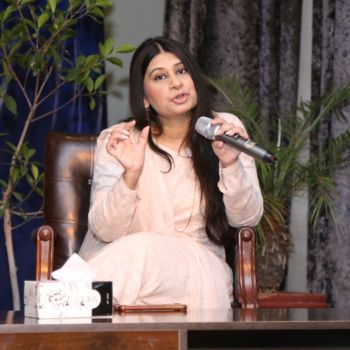
We had to ask this one as we spot Sherry’s character played by Tamoor Akbar, self-declared Alpha Male of the story, but is he really?
What is an Alpha Male then? We asked the writer.
Amna Mufti responds with her social scientist cap on: “Alpha Male (in my humble opinion, she clarifies), has not originated from the human species. After much research, I came to the conclusion that the term or rather, the behaviour attached to this term in fact originates from a clan of the Orangutan family. Amna traces it back to evolution. A clan belonging to the ape family – Orangutans where the male was very caring, used to raise young children and forage for his offspring and all the females’ food as well. These females ended up choosing the male, who tended to their sustenace, as a natural mating partner, and that is how their generations multiplied over the years. Hence these character traits, never originally human, evolved from our ancestors and are now a part of the human family.
Surprised? So were we, but we shouldn’t have been. It’s all about evolution, and you’ll connect the dots as we unlock Sherry and Irfan’s characters below. But ladies first and we’re on to our heroine, Bushra.
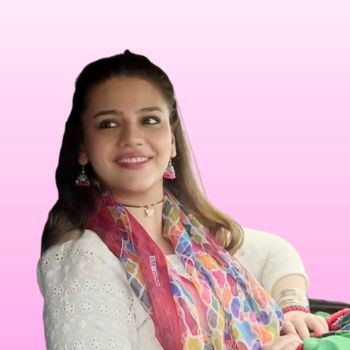
Zara Noor Abbas as Bushra
Bushra belongs to a family of performers who passed down the Art of acting over generations. Bushra is very clear about her direction in life. She is a dream catcher, but she’s not all fluff and owns her desire to pursue acting – she wants to take it on as a conscious career choice. She also does not feel the need to NOT own it and is refreshingly uncaged, free from society’s pressure or criticism in her life choices.
Mohib Mirza as Irfan
Irfan is in fact, the anti-thesis to Sherry. The man who does not proclaim to be the ‘Alpha Male’ but actually, also the one who is the fatherly figure in the family and the one who might depict this Alpha Male figure we mentioned earlier, the one we seem to have twisted in transition, as it was passed down from our ancestors. He loves his sisters but he does not palm off his responsibilities to them. In fact, he facilitates the women around him to achieve their best without forcing them into obedience.
Irfan’s background also comes from a self-made father, a family risen from poverty, a furniture maker who achieved success through his honest and hard work. Of course, we belong where we come from and the writer has been clear to depict that just like Bushra has acting ingrained in her roots, Irfan’s character imbibes the rugged sincerity of the indigenous village people. He has this cultural legacy from his father Hashmat Ali hailing from the village and who shared similar traits.
It is great to see both Mohib Mirza and Zara Noor Abbas essaying a fitting portrayal of the writer’s depiction, and it is in fact, these main characters who are amping up the pull factor in Ek Jhooti Kahani.

Syed Muhammad Ahmed as Habib Sahab
Habib sahab is a chronic bachelor, serving the family since a long time now, and more on his background is yet to be revealed so we have to wait for this one to peel back the layers. Safia, married to Habib Sahab now, a woman in her 40s, has now fulfilled all her responsibilities and feels she has every right to fall in love at this stage or in fact, any stage in life. She is her own favourite and doesn’t require validation from anyone else. According to writer Amna Mufti, Safia’s character is inspired by Geet from Jab We Met.
It is refreshing to see women like Safia adorn our drama stories. They demand to reclaim their territory as valuable members of society who will not be ignored even though our ‘ageist mindsets’ might argue otherwise.
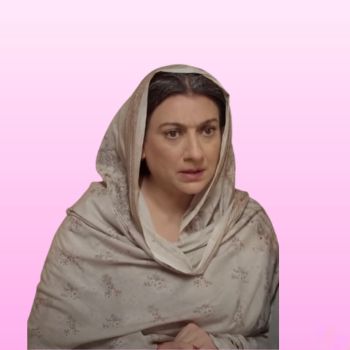

Qudsia Ali as Nasira
Nasira is the bossy one. Also the vamp from Indian soaps – social satire all the way!

Amna Youzasaif as Bindiya
Bindiya is all airy fairy, she has given up her B.S degree and just wants to get married and escape the everyday life she’s leading. Character inspired from the Victorian heroine, stricken by the love bug and keeping marriage as her sole purpose in life. Bindiya is also inspired by the self proclaimed damsel in distress, hence the perpetual calls with her beau to save her and help her escape.
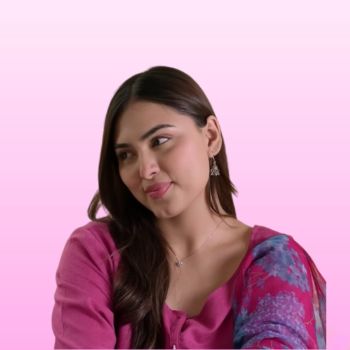
Sabeena Syed as Samiya
Samiya, the eldest, expressionless, calm, yet calculating is inspired by Wednesday from the Adams family.

Laiba Shah as Meerub
Meerub is the youngest and the Tom-boy personality amongst the five sisters. More inclined towards taking charge, and obviously the dominant character of the two younger sisters.

Nawal Pervaiz Malik as Hooria
Hooria is overshadowed by her younger sibling Meerub. She is always trying to stamp her identity but often fails miserably although she is the smart one between the two.

Taimoor Akbar as Sherry
Sherry represents a satirical character hailing from the city, a character gifted to us from colonial times, a perceived macho man, essaying westernised perceptions, he deems himself superior to women, physically and mentally. This character should hold many layers though we might not catch them all onscreen – there is many a slip between the pen and the screen, and often, consiously or unconsiously, we might not get the finer layers. However Sherry is surely getting somethings right and ‘pretend Alpha Male’ aka macho man as we understand the term presently, might be one of them.

Behroze Sabzwari as Abba Ji
Abba Ki’s family was born talented, they hail from a ‘meerasi family’ that wanted to pursue acting as a full time profession but unfortunately had to switch careers and deny what was taught to them through the generations because of the criticism and judgments they received from society. However Abba Ji and Amma Ji now feel that they can teach their daughter better than any formal university as they strongly believe they have this talent rooted in their DNA.
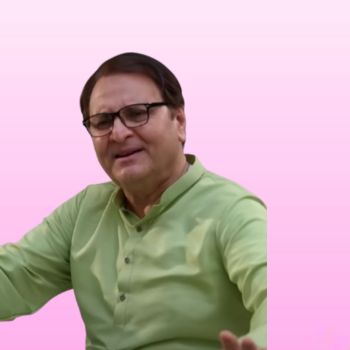
Some times a script might need de-layering, complex characters requiring deeper insight into the writer’s mind, in order to understand them better and rightfully. Ek Jhooti Kahani might just be that story. We hope you’re watching and if you still have questions, drop us some in comments below and we’d be happy to ask Amna Mufti to shed more light as the drama progresses.
Credits:
Ek Jhooti Kahani is a Momina Duraid Productions drama, written by Amna Mufti and directed by Shehrazade Sheikh. The cast features Zara Noor Abbas, Mohib Mirza, Syed Muhammad Ahmed, Qudsia Ali, Behroze Sabzwari, Amna Youzasaif, Sabeena Syed, Laiba Shah, Nawal Perwaiz Malik, Tamoor Akbar, and Uzma Beg. The drama airs every Tuesday at 8:00 PM on HUM TV.


Comments 2