

Apple has formally announced a major leadership transition, naming John Ternus as its next chief executive officer. Ternus will succeed Tim Cook, who is stepping down after 15 years at the helm of the technology giant. The transition will take effect on 1 September, with Cook assuming the role of executive chairman.
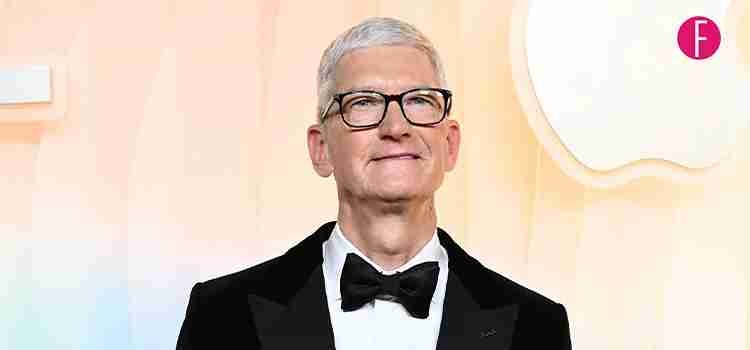
Ternus, currently Apple’s senior vice president of hardware engineering, brings with him more than two decades of experience at the company. Having joined Apple 25 years ago, he has played a central role in shaping many of its flagship products and is widely regarded as a key figure in the company’s engineering leadership. His appointment reflects Apple’s preference for continuity, elevating a long-time insider deeply familiar with its culture and product ecosystem.
Cook, who became CEO in 2011 following the resignation of co-founder Steve Jobs, will remain in his position through the summer to oversee a smooth transition. Even after stepping down, he is expected to stay involved in selected aspects of the company’s operations, particularly in engaging with policymakers and representing Apple on the global stage.
His departure comes after months of speculation regarding succession planning at Apple, especially as the company recently celebrated its 50th anniversary. During his tenure, Cook transformed Apple into one of the most valuable companies in the world. In 2018, it became the first publicly traded company to reach a $1 trillion valuation, and it has since grown to an estimated $4 trillion. Under his leadership, Apple’s annual revenue surged from $108 billion in 2011 to over $416 billion in 2025.
Cook also oversaw the expansion of Apple’s product and services ecosystem, including the introduction of Apple Watch, AirPods, and Apple Vision Pro, alongside services such as iCloud, Apple Pay, Apple TV, and Apple Music. His leadership style, often characterized by operational precision and long-term strategy, marked a shift from the visionary, product-driven era of Jobs to one focused on scale and sustainability.
In announcing his successor, Cook described Ternus as a “visionary” leader with a rare combination of technical expertise and integrity. Ternus had already emerged as a leading candidate for the role, particularly following the departure of former chief operating officer Jeff Williams last year.
John Ternus joined Apple’s design team in 2001 and has since built a long and influential career within the company. After becoming Vice President of Hardware Engineering in 2013, he stepped into the role of Senior Vice President in 2021, taking charge of hardware development across all Apple products. During his time at Apple, he has helped launch and refine key product categories, including the iPad and AirPods, while contributing to ongoing improvements in the iPhone, Mac, and Apple Watch. His work has been especially important in strengthening the Mac lineup, making it more capable and widely adopted than ever before, with recent additions like the MacBook Neo expanding its reach.
Ternus has also overseen the development of Apple’s latest iPhones, including the high-performance iPhone 17 Pro models, the sleek iPhone Air, and the upgraded iPhone 17. His team has pushed AirPods to new heights with better sound, advanced noise cancellation, and features that support hearing health. In addition to innovation, he has emphasized building products that last longer and are better for the environment, introducing new materials, improving durability, and incorporating sustainable practices such as recycled metals and advanced manufacturing techniques.
One of John Ternus’s standout contributions has been the introduction of the MacBook Neo, a completely new addition to the Mac lineup designed to make the Mac experience more accessible to a wider audience. Under his leadership, the device reflects Apple’s push toward combining performance with affordability, without compromising on design or user experience. The MacBook Neo has played a key role in expanding the global reach of the Mac, helping attract new users while reinforcing the platform’s growing popularity.
Under his direction, Apple has continued to push boundaries with its iPhone lineup, including the advanced iPhone 17 Pro and Pro Max, the ultra-thin iPhone Air, and the improved iPhone 17. He has also driven major innovations in AirPods, enhancing features like noise cancellation and expanding their role into hearing health technology. Beyond performance, Ternus has focused on durability and sustainability, introducing stronger materials, improving repairability, and reducing environmental impact through innovations like recycled aluminum and 3D-printed titanium components.
Apple’s decision to appoint John Ternus suggests a deliberate move toward stability and internal continuity rather than a dramatic shift in direction. While Tim Cook’s tenure was defined by unprecedented financial growth and ecosystem expansion, the next phase may demand a different kind of leadership—one that balances Apple’s established strengths with the need for breakthrough innovation. Ternus’s deep roots in hardware engineering position him well to lead on the product front, but the real test will be whether he can define a bold, forward-looking vision that keeps Apple at the forefront of an increasingly competitive and rapidly evolving tech landscape.
Source: Al Jazeera, BBC, Apple

