

Every few years, the same scene plays out on the Mediterranean: a group of boats, packed with activists, aid supplies, and banners calling for justice, sets sail toward Gaza. They’re called flotillas — civilian convoys meant to break Israel’s naval blockade. On paper, they’re about delivering food, medicine, and supplies. In reality, they’ve become political theatre at sea — part humanitarian mission, part protest, part international pressure tactic.
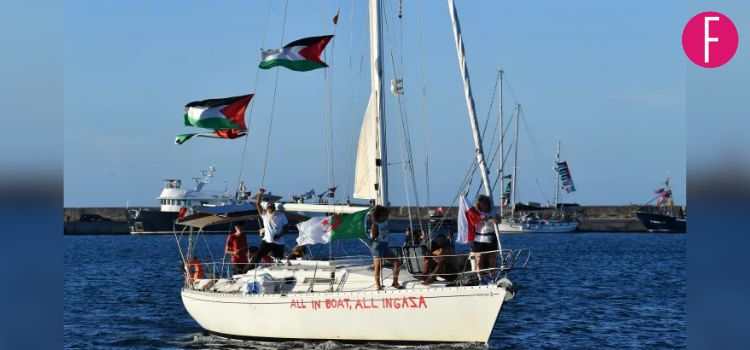
The tradition dates back to 2008, when small boats managed to dock in Gaza, briefly puncturing the blockade. Since then, attempts have been met with force. The most infamous example: the 2010 Mavi Marmara, when Israeli commandos stormed the lead ship and killed 10 Turkish activists. That raid seared flotillas into public memory — proof that these voyages are as much about making noise globally as they are about actually reaching Gaza’s shore.
The latest chapter is the Global Sumud Flotilla — “Sumud” meaning steadfastness in Arabic — a massive undertaking of around 50 civilian boats, carrying activists, lawmakers, lawyers, and high-profile names like Greta Thunberg. The point isn’t subtle: if governments stay quiet, civil society will sail straight into contested waters to force attention back on Gaza.
Greta Thunberg’s Involvement
Greta’s presence is both strategic and symbolic. Earlier this year, in June, she joined a smaller flotilla that never made it — Israeli forces intercepted the boat, seized the aid, and deported the activists. She knew exactly what she was signing up for this time.
So why do it again? Greta has been blunt: recognition of a Palestinian state or sympathetic words aren’t enough unless they’re matched by real action. Her argument is simple — if states won’t hold Israel accountable, civilians have a moral duty to step in. She insists the mission isn’t about the activists themselves, but about Gaza’s daily reality — where drones don’t just buzz overhead as harassment, they drop bombs. For her, the risk of sailing is nothing compared to the risk of living in Gaza.
Drone Attacks and Escalation at Sea
The Global Sumud Flotilla hasn’t even reached Gazan waters, and already it’s under attack. Activists report drones buzzing above their decks, jamming communications, blasting speakers with noise, even dropping devices — stun grenades, itching powder, and explosives. Some boats have taken damage, though thankfully no one’s been killed. It’s a reminder: these ships may be filled with civilians, but they’re entering a live combat zone.
Israel doesn’t officially take credit for the harassment, but its stance is clear: the flotilla is a provocation, not a humanitarian mission, and the blockade will be enforced. Officials argue aid can be dropped off in nearby ports and delivered through Israel, but flotilla participants see that as missing the point. For them, the whole mission is about challenging the legality — and morality — of the blockade itself.
Europe Steps In: Italy and Spain Send Warships
This time, something new happened. Italy and Spain both dispatched naval vessels to shadow the flotilla after the drone incidents. Rome first sent a frigate, then announced a second ship to replace it. Spain followed with a warship of its own. Both governments framed the move not as a challenge to Israel, but as protection for their citizens on board — a humanitarian duty, not a hostile act.
Italy even floated a compromise: unload the supplies in Cyprus, hand them to the Catholic Church’s Latin Patriarchate of Jerusalem, and let aid trickle into Gaza that way. Israel supported the idea. The flotilla refused — saying that would gut the mission’s entire purpose.
That refusal highlights the real crux of these voyages: they’re not just about sacks of flour or boxes of medicine. They’re about breaking a siege, confronting a blockade, and forcing the world to look at Gaza’s devastation.
Do They Actually Help Gaza?
Here’s the uncomfortable question: if flotillas never make it through, if the aid is always confiscated or rerouted, does the effort actually change anything for Palestinians? The supplies rarely reach Gaza. But the images — boats bobbing defiantly at sea, activists bracing against drones, Greta Thunberg giving interviews in a frog hat — do reach headlines worldwide.
That publicity keeps Gaza’s crisis from slipping into silence. It embarrasses governments into taking a stance. And it reminds the public that behind blockades and statistics are real people, risking their lives to make sure Gaza isn’t forgotten.
So no, flotillas might not deliver their cargo. But maybe the point isn’t just delivery. It’s disruption — a civilian refusal to accept that a blockade should decide who eats, who starves, and who gets to look away.
In many ways, the flotillas echo past movements of conscience — the Freedom Rides in the American South, anti-apartheid boycotts in the ’80s, even ships that tried to break sieges during colonial struggles. None of those efforts alone toppled systems, but they forced the world to confront its own complicity. Gaza’s flotillas belong to that lineage: risky, symbolic journeys that may not pierce the blockade physically, but can chip away at its legitimacy with every sail raised.
Sources: Al Jazeera, Reuters, CNN, CBCN, CBS, France 24, BBC

