

Gaza have lived under constant threat, enduring relentless airstrikes, ground invasions, and suffocating blockades. Homes have been obliterated, schools have been turned into graves, and hospitals have become targets instead of sanctuaries. Each passing day brings new horrors, yet the world watches in a state of paralysis. How many more lives must be shattered before the world takes decisive action? What does justice look like in the face of such overwhelming destruction? As we witness these atrocities, we must ask ourselves: how can we remain silent in the face of such suffering, and what can be done to prevent this cycle of violence from continuing?
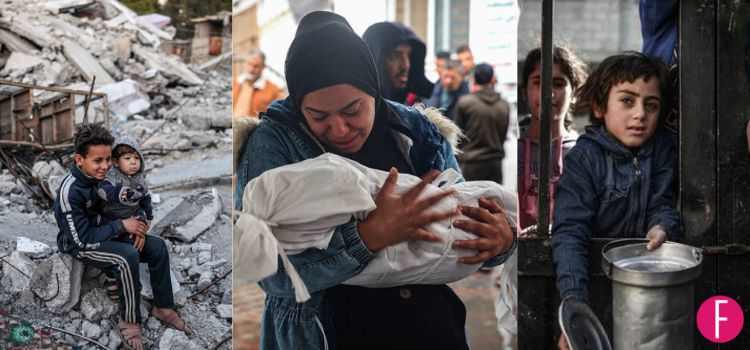
The unrest in Gaza has surpassed 250 days, marking a grim chapter in the ongoing violence that has devastated the region. Since the conflict’s inception on October 7, Israel’s military campaign has unleashed a relentless assault on the besieged enclave, leading to an unparalleled humanitarian crisis. The scale of destruction, the loss of lives, and the severe displacement of Gaza’s population have turned the region into a living nightmare. The relentless airstrikes, ground offensives, and blockade have left Gaza in ruins, with entire neighborhoods flattened and basic necessities becoming a luxury for the 2.3 million people trapped within its borders.
The international community (some parts of it) continues to express concern over the disproportionate use of force and the deteriorating humanitarian situation, yet the violence remains unrelenting. As the conflict drags on, Gaza’s people face a future filled with uncertainty and despair, with little hope for peace on the horizon.
The Rafah Border: A Lifeline Under Siege
The Rafah border crossing, Gaza’s only outlet to the outside world not controlled by Israel, has become a critical point of contention in this prolonged conflict. As the violence escalated, Israel’s repeated closure of the Rafah crossing has trapped millions of Palestinians inside the besieged enclave, cutting off essential aid and medical evacuations. The closure has also severely restricted the flow of humanitarian supplies into Gaza, exacerbating the already dire conditions. The overcrowded and chaotic scenes at the Rafah border underscore the desperation of those trying to flee the violence, but with the crossing frequently closed, many are left with no escape from the horrors of war.
The Significance Of The Rafah Border
Khan Younis: A City In Crisis
Khan Younis, a major city in southern Gaza, has been subjected to some of the most intense bombardments in the ongoing conflict. As one of the last strongholds in the besieged territory, Khan Younis has become a focal point for Israel’s ground offensive, resulting in widespread destruction right now. Entire neighborhoods have been leveled, displacing thousands of residents who sought refuge in the city from other parts of Gaza. The relentless attacks have decimated the city’s infrastructure, leaving hospitals overwhelmed and struggling to provide care for the growing number of casualties. The humanitarian situation in Khan Younis is dire, with food, water, and medical supplies running dangerously low.
The Human Toll: Casualties And Injuries
The human cost of this conflict is staggering. Over 34,000+ Palestinians have been killed in the past 250+ days, according to the Gaza Ministry of Health. Of these, approximately 72 percent are women and children, highlighting the devastating impact on Gaza’s most vulnerable populations. In addition to the dead, more than 77,000 people have been injured, many of whom are suffering from life-threatening wounds. The scale of casualties is unprecedented, with the death toll rising daily as the conflict shows no signs of abating.
The Human Toll Of Ongoing Unrest In Gaza
Children: The Innocent Victims
The conflict has taken a particularly heavy toll on Gaza’s children, who have borne the brunt of the violence. Over 14,000 children have been killed, 34,000 injured and around 21,000 missing since the conflict began, a heartbreaking statistic that underscores the indiscriminate nature of the attacks. These young lives have been tragically cut short by airstrikes and ground assaults, leaving families devastated and communities in mourning. The psychological trauma inflicted on the surviving children is immense, as they struggle to cope with the loss of loved ones and the constant threat of violence.
Women: Suffering Amidst The Conflict
Women in Gaza have also suffered immensely during this conflict. Over 9,000 women have been killed, a figure that highlights the severe impact on families and communities. Many of these women were mothers, daughters, and caregivers, and their loss has created a significant void in the lives of those they left behind. The destruction of homes and the collapse of social services have compounded their suffering, making it increasingly difficult for the surviving women to care for their families and secure basic necessities. The ongoing violence only adds to their hardship as they strive to protect their loved ones amidst the horrors of war.
Mothers In Gaza: A Double Tragedy
The death of thousands of pregnant women in this conflict is a particularly harrowing aspect of the ongoing violence. Since October 7, approximately 37 mothers have been killed each day, translating to an alarming rate of 2 mothers every hour. These women, who were on the verge of bringing new life into the world, were killed alongside their unborn children, representing a double tragedy for their families.
Approximately 60,000 pregnant women in Gaza now face severe challenges, with little-to-no access to adequate prenatal health services. At least 183 women give birth every day in Gaza, but most do so without access to midwives, doctors, or healthcare facilities during or after delivery. The destruction of healthcare facilities has significantly worsened the situation; only 2 of the 12 partially functioning hospitals in Gaza can provide maternity services, down from a total of 36 hospitals that were operational before October 7. By December, over 155,000 pregnant and breastfeeding women were at high risk of malnutrition, and this number has likely risen exponentially since then. The loss of pregnant women highlights the indiscriminate nature of the attacks and the devastating impact on Gaza’s most vulnerable populations.
The Destruction Of Schools & Hospitals
The relentless bombing campaign has not spared Gaza’s schools and hospitals, which have been targeted repeatedly throughout the conflict. Israeli airstrikes have destroyed or severely damaged dozens of educational institutions, depriving thousands of children of their right to education. By late March 2024, the United Nations recorded more than 200 Israeli attacks on schools in Gaza, with at least 53 schools totally destroyed. Additionally, all 19 Gaza universities have suffered severe damage, with 80% of university buildings destroyed, 103 academics killed, and 90,000 students unable to continue their studies. As of June 2024, 76% of Gaza’s schools required “full reconstruction or major rehabilitation,” and nearly 120, or 70%, of UNRWA schools had been hit by Israeli attacks.
The healthcare system in Gaza is also in a state of collapse. The World Health Organization (WHO) reported 164 attacks on healthcare facilities in Palestine’s Gaza Strip since October 7, 2023. These attacks have resulted in the deaths of 198 Palestinian medical staff, 12 members of the Palestinian Civil Defense, and 103 UNRWA staff. The situation is dire, with 26 hospitals destroyed and hundreds of medical personnel killed or injured. The remaining hospitals are overwhelmed, operating under severe conditions as they struggle to provide care for the injured and sick. The repeated targeting of these critical institutions underscores the severe humanitarian crisis faced by Gaza’s residents.
The Looming Famine: A Crisis Of Hunger
The war has triggered a severe food crisis in Gaza. Approximately 1.1 million people, nearly half of Gaza’s population, are facing catastrophic levels of food insecurity. At least 20 percent of the population experiences extreme levels of hunger, while 30 percent of the children in the area are too thin for their height. The blockade on Gaza has crippled food supplies, leaving large portions of the population on the brink of starvation. The ongoing conflict has disrupted the delivery of humanitarian aid, exacerbating the crisis. The death rate has doubled from the average, surpassing two deaths per 10,000 daily for adults and four deaths per 10,000 daily for children. Children and the elderly are particularly vulnerable to malnutrition and disease, as the lack of access to clean water and proper sanitation threatens their survival.
Famine In Gaza & How You Can Help
The ongoing unrest in Gaza has reached a critical juncture, with the human toll continuing to rise and the humanitarian crisis deepening by the day. The destruction and loss of life are unprecedented, with entire communities left in ruins. It is imperative that the international community takes immediate action to bring about a ceasefire and provide much-needed aid to the people of Gaza. The world cannot turn a blind eye to the suffering of innocent civilians caught in the crossfire of this brutal conflict. The time for peace is now, before more lives are lost and the situation deteriorates further.
Sources: TRT and Al Jazeera.

