

The Trump administration has taken aim at Harvard by banning it from enrolling international students. Here’s all you need to know.
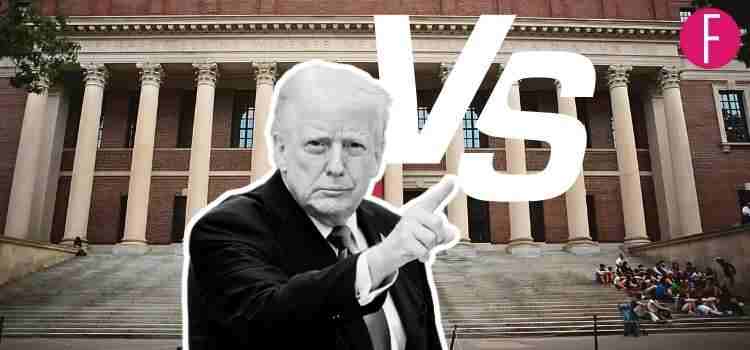
Since returning to office, almost all of Trump’s moves have been nothing short of controversial — and his latest decision is no different. In a stunning blow to one of the world’s most prestigious universities, the Trump administration has barred Harvard from enrolling international students. The move has sparked backlash across the country, with critics calling it an attack on academic freedom and diversity.
For Harvard — and the thousands of students from across the globe who call it home — the impact is immediate, and the message from Washington is loud and clear: comply, or face consequences.
Why the Ban
The Department of Homeland Security, led by Kristi Noem, claims Harvard failed to meet federal requirements when asked to share specific records related to international students. The administration said the university didn’t cooperate with their requests about student visa holders, especially concerning alleged antisemitism on campus. This comes after weeks of pro-Palestinian protests and increased political pressure on elite universities.
The Trump administration is basically saying Harvard refused to submit documents that Homeland Security believes are connected to “misconduct and other offenses” involving international students. On top of that, Kristi Noem has thrown in some heavy accusations—without backing them up—claiming that Harvard’s campus is unsafe for Jewish students, that it promotes pro-Hamas sentiment, pushes “racist” DEI policies, and is somehow tied to the Chinese Communist Party.
Before Harvard even took legal action, China was already calling out the decision. Early Friday, the Chinese government warned that pushing international students out of Harvard would only damage the U.S.’s global reputation. Meanwhile, the Hong Kong University of Science and Technology jumped in with an open offer, inviting Harvard’s international students — both current and incoming — to continue their studies there instead.
What It Is
Harvard has officially lost its certification under the Student and Exchange Visitor Program. This means not only is the university blocked from accepting new international students, but even current students on visas are at risk — they may be forced to transfer or leave the country altogether.
It’s a massive move, considering nearly 27% of Harvard’s student body is international.Back in April, the Trump administration slammed the brakes on nearly $2.3 billion in federal funding to Harvard, accusing the university of turning a blind eye to what it called widespread anti-Semitism on campus.
What It Means
This decision hits hard on multiple fronts. International students are a huge part of what makes Harvard so global and competitive — academically and financially. Many pay full tuition, contribute to research, and enrich the learning environment.
Stripping Harvard of this ability doesn’t just hurt the university, it sends a chilling message to all U.S. institutions: fall in line or face punishment.
Harvard’s Response
Harvard is now suing the government, calling the move “unlawful” and straight-up damaging to its mission and values. The lawsuit was filed in federal court, arguing that this whole mess violates the First Amendment and Due Process rights — and they’re demanding a temporary restraining order to stop DHS from enforcing it. The heart of the issue? Nearly 6,800 international students are now stuck in a giant legal and emotional limbo. No new enrolments, and those already here are being told to transfer or leave. It’s not just disruptive — it’s terrifying.
“We are fully committed to maintaining Harvard’s ability to host our international students and scholars, who hail from more than 140 countries and enrich the University—and this nation—immeasurably. We are working quickly to provide guidance and support to members of our community. This retaliatory action threatens serious harm to the Harvard community and our country, and undermines Harvard’s academic and research mission.”
Harvard spokesperson Jason A. Newton.
The 72-hour ultimatum DHS gave Harvard to cough up detailed disciplinary and protest participation records of international students? It’s still ticking. If Harvard doesn’t comply, they risk losing access to all international enrolment, period. That includes some really specific conditions like external audits and monitoring student affiliations, which the university straight-up rejected, calling it government overreach.
Meanwhile, the student response is just a mix of panic, group chats blowing up, and everyone trying to figure out what to do next. Shreya Mishra Reddy, an HBS student from India, said she’s now unsure if she’ll be able to complete her MBA. (Source: Business Insider). Same goes for hundreds of others — especially those close to graduation. Immigration attorneys are warning about the real possibility of students losing their legal status if they don’t transfer fast enough. If they overstay even by mistake, they could be banned from entering the US for three years.
And what makes it even more frustrating? There’s been zero official word from Harvard for students so far. Everyone’s just waiting — refreshing inboxes, calling program officers, DMing immigration lawyers — trying to stay ahead before the 72 hours run out as told by Fangzhou Jiang, a student of Harvard Kennedy School on CNN.
As for Harvard’s finances — this is no small blow. International students pay full tuition (approximately $86,926 a year), which means this group brings in over $590 million annually, looking at simple maths. Beyond the money, they’re the lifeblood of Harvard’s global community — from research to activism to classroom diversity. Harvard’s legal team is preparing for a full-on legal battle. This case could end up setting a major precedent for academic freedom, government oversight, and how far universities can go in protecting their students — especially the ones who cross oceans to be there.
The Future
There’s no clear path forward yet. Harvard has been given 72 hours to comply with an expanded list of federal demands, but it’s unclear if the school will budge. This case may lead to a long legal battle — not just for Harvard, but for the future of academic freedom and international education in the U.S. For now, thousands of students are left in uncertainty of what the future holds .
Sources: BBC, New York Times, Financial Times, Middle East Eye, CNN, Business Insider, Times and Guardian

