

“Cycles exist because they are excruciating to break.” – Colleen Hoover, It Ends With Us
If there was one takeaway from the screen adaption of the novel that has created unprecedented “virality” on our social media feeds, it is this thought, the painfulness of breaking a cycle. However, the true message might have been lost in storytelling that merely scratched the surface of a torturous life choice that many women make everyday – to stay on living with their abuser. It doesn’t end with them, the story continues, because every woman who wants to break free does not have it as easy as Lily, with an Atlas standing on the side lines, ever dependable, ever supportive, cheering her on.
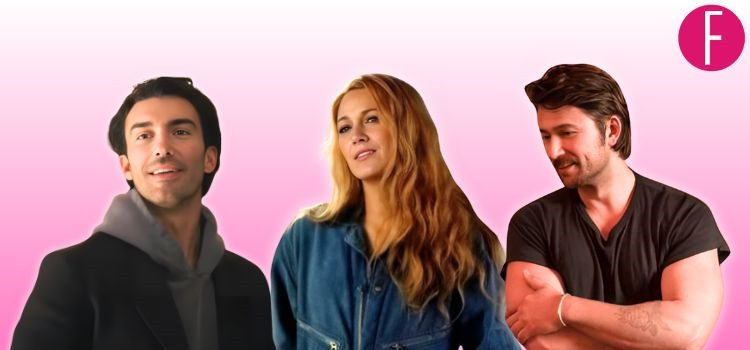
But the cinema was packed.
The audience was a disbalanced majority of women, with maybe, 3 or 4 men who had shown their support, or love, or (ahem, lack of ability to say no when their partners insisted) to come watch a film that is half romance, half domestic violence with eye candy for the girls and perhaps, a story that might be triggering for many.
Did the success of the novel drive the audience into theatres? You bet it did. In June 2023, It Ends With Us was No. 1 on The New York Times paperback list, and had sold four million copies already. After fans begged for a sequel, Hoover wrote a continuation, titled “It Starts with Us,” with a first printing of 2.5 million copies. – The New York Times. There was no way the movie wouldn’t fill in the cinema seats.
But would the film have been successful on its own, as a standalone piece of work? Hmmm, just maybe for Justin Baldoni and Brandon Sklenar fans, the rest is anybody’s guess.
But first the good stuff
It Ends With Us delves into the emotional scarring of young people who have seen domestic violence up close when growing up. The scars they carry might not heal over time, and the story certainly visits this theme effectively. Both Lily and Atlas bear the emotional aftermaths of living with a parent who suffered abuse, and the other parent, who perpetrated the trauma. One could say that Atlas never settled down because of this very baggage (though that’s just me contemplating, not the author), and Lily, while revisited by the painful memories, seems to have come out of it in one piece. So has Atlas, but that’s another story for perhaps another sequel.
The casting
If Justin Baldoni charmed as Ryle, he matched his good looks with a performance that spoke to audiences. From the gentle whispers, sweet nothings and drop dead hypnotic spell he casts around his audience, manifesting every young girl’s ‘dream come true’ for a life partner, Justin covered Ryle from every possible angle. To the point that even when he turned abusive, we could see shades of the man who charmed us and nearly wanted to believe he could, perhaps, turn a new leaf?
Ryle’s character was complete in all its subtleness, mirroring real life men many women live with. They appeal to the woman in you, the partner who needs to be cared for – after all, what’s a little bit of possessiveness for a lifetime of this guy by your side? If you’re reading this, you got Ryle the way you were meant to.
Atlas essayed by Brandon Sklenar was equally on point. The younger character was played by Alex Neustaedter, and mapped onto young Atlas beautifully. When he reappeared as Brandon later in the film, he nudged a noticeable ripple of excitement from the in cinema audience as they navigated the next move in the story. The face off between Ryle and Atlas was a high point, well “actioned” and perhaps, also a signature turning point in the plot.
Atlas saw what others might miss. It was interesting that if you hadn’t read the book (like yours truly) you might even wonder if Atlas was making much ado about nothing at the restaurant?
But then, came the subsequent storyline. An oversimplified, linear telling of a tale that deserved more for the sake of all the women who suffer domestic violence everyday. Many might be watching the movie too, and recognize tell tale trigger points in Lily’s story, urging her inside their hearts to run as fast as she can, although, they were tragically unable to follow their own, well-meant advice!
Lily’s story ties up without a single crease
So while I applaud the way It Ends With Us ‘Ended’, and Lily walked away from Ryle with a well-planned exit strategy, using his new born daughter to validate her case, the narrative, unfortunately failed to highlight the finer layers of what an abuse victim goes through.
Lily had old faithful Atlas by her side, she seemed to cruise through her work and personal life with little or no disruptions minus Ryle. Her flower shop flourished and so did she, without so much as a crease upon her forehead – oh what pregnant, single mothers would do to have such a life. Even in her darkest moments, she had a helpline number, Atlas, who was available for as long as she needed – single, unattached, uncomplicated Atlas, who knew her better than Ryle, and possibly, loved her better too.
Lily’s story was super neatly tied up. Does she go back to magically single Atlas? Apparently yes, and it’s happily ever after for them.
Scenes that stood out
The marital rape scene, with Ryle and Lily was captured expertly, visions of her mom revisited in horrific sequences, that brought home the truth to Lily. If anything, that scene alone was enough to drive home the reality of living with domestic violence, never knowing when it will creep up on you. For Lily, the decision was swift and she never turned back after. In real life, a victim of domestic abuse might try to leave at least 10 to 17 times before they actually manage to (if they ever do, leave their abuser).
Much like Lily’s mother, who chose to stay.
Lily had a clean break, good for her, but clearly a hard to replicate act for many women who watch and go home to the same “excruciating cycle”. The scene where Ryle pushes Lily on the stairs when she goes after him to explain, although he was clearly raging, spoke volumes for the premise that women are often blamed for getting hurt in these situations because they don’t back off. “just walk away, stay out of his way, leave him alone or you’re asking for it,” are often used as victim blaming arguments that sit well with our conditioning as a society.
But it was, perhaps, in the silent threat of Ryle’s demeanour when he makes her read the magazine, that instilled heart-stopping terror, a sense of dreadful foreboding for what’s to come, that left audiences on the edge of their seats. The sense of impending doom hung upon very word he uttered and the gradual crawl to the final scene, when Ryle, possibly, wrote out his own death sentence to his relationship, was marked with champion strokes – THIS is what domestic abuse looks like, and that’s why you need to not look back, and just run for your life, despite all the after apologies, the missed phone calls, the desperate pleas, the tears and the guilt, stay away.
If It Ends With Us delivered us a master stroke, it was here, in this scene. But from then on, the story faltered, beginning a steep downhill descent in a seemingly rom-com like trajectory, undoing everything it had worked so hard to create.
Could he have gotten therapy?
Ryle and Lily’s dad, although shown as abusers in parallel were a world apart. Lily’s dad did not give us ‘near normal’ feels and if he was used as an 80’s example of what abuse felt like, and how women back then “took it” because they had no choice, the story really takes away from women in 2024 who struggle in equal measure, unable to break free from the cycle despite all the awareness ad countless narratives around domestic abuse – one of them could be the oversimplified abuse victim’s story which made leaving for Lily so much easier than it is for women in real life.
More on Ryle, whose actions were very subtle, as opposed to Lily’s dad, and who apologized instantly after the act, painting Ryle in a more believable shade for sure – was the narrative hinting that abusers can be many-typed, one mapping Lily’s dad, the obvious red flag, and one, like Ryle, the red flag that no one sees because of all the green flag signals they throw off. Do either of them have any hope to live normal lives? Can therapy help? Or are we disregarding the role of therapy entirely in a young boy’s life who accidentally killed his brother and lived with the truth for the rest of his life, and then – became an abuser? So while Justin essayed Ryle’s role expertly, the telling of the character needed filling in the gaps, perhaps, to be addressed in a sequel?
Ryle post attack, helping Lily make up their baby’s bed, feeling the baby move, gave off ‘normal’ feels. Ryle wanting to take therapy could have been an option totally isolated from Lily’s decision to leave. Abusers need therapy for themselves too, and all the other relationships they might seek in future. Ryle’s background with his brother was not delved in detail, did he have anger management issues as a child?
The narrative is sharp in making us feel that men like Ryle can be “fixed”. Can they? A burning question women like Lily and all of us watching, often ask ourselves. Lily answers for all of us, but that answer, still needs a deeper dive into Ryle’s character, separate from Lily’s decision, that is not to be questioned by the way, in fact lauded, in the least.
Ryle needs to fight his demons. He was not your obvious domestic violence perpetrator, unlike Lily’s dad. Ryle’s profile matches accurately, for many women who enter into a relationship with a man, totally not expecting the demons that lie within. This is why, a deeper dive into his character was certainly an opportunity lost.
Allysa played by Jenny Slate was well captured. Her advice to Lily was heartfelt, though her role as a sister could be called in question. Perhaps helping her brother fight his demons and urging him to help himself, might have helped her be a better sister just as she essayed bestie roles with her friend Lily.
Hasan Minhaj as Marshall needed more substance to his role, perhaps as a partner who offsets ‘normalcy’ and positivity in a partner role with Alyssa?
And finally, Lily calling it an “end to us…”
It can be said that although Lily’s decision turned a new page in a woman’s story to save herself and walk out before it’s too late, there was an incompleteness in her message, and that too, through her own subsequent actions. Meeting Atlas soon after and asking him if he’s single took away from the strength of the message. And this is why, audiences might simply not be able to get more from “It Ends With Us” than the movie offers them. Any attempt at seeking a deeper meaning is lost or can be translated into wishful thinking.
No one denies an abuse victim a normal, ‘happily ever after’, but one must question the simplified tying up of messy ends and bubble wrapping an emotionally triggering narrative in brightly-coloured paper, ribbons and all, to iron out the creases of a story that consumes women all over the world – it’s messy, hard to navigate and often, means unimaginable hardship and sacrifices on the apart of the victim – Lily seemed to have none or very few of those.
The red flag?
The cinema was full of young girls who came together to watch, I assume Justin Baldoni and Brandon Sklenar on the big screen for the hunks they were, a bit of a storyline thrown in and a Lily that needed better casting. Unfortunately, Blake Lively was not the Lily many young readers had envisioned. Although she grows upon you in the latter part of the story, a great deal of that too, because of Justin’s interactions – intense, sharp and delivered in perfect synchrony with his co actor, almost as if he were singing a duet and urging her to play her part, because, well, that’s what the song demands.
So, was the movie a rom-com or a tribute to victims of domestic violence? Could it have served as a serious, stand-alone watch without the book readers driving the sale of cinema tickets? We don’t know that, but the audience certainly has a taste for the narrative, judging by the packed cinemas. But what they’re going in for, is anybody’s guess. I’d put my bets on the popcorn and eye candy for sure!
It Ends With Us, The Movie, is adapted from the Colleen Hoover novel, It Ends With Us is written by Colleen Hoover and Christy Hall. The film is directed by Justin Baldoni. The cast features Blake Lively, Justin Baldoni, Jenny Slate, Brandon Sklenar, Isabela Ferrer, Alex Neustaedter, Hassan Minhaj, and more.

