

Jo Bichar Gaye is not coming slow and the narrative seeks to cover all aspects of war and rebellion – the turmoil and sadness of the times, the terror and sense of loss mirrored in every frame.

The deep regard Captain Farrukh feels for Sonia, the need to defend his uniform and the blame it will have to bear for all the bloodshed, Rumi’s fight for inner peace and obtaining the rights of his people at any cost, Sonia’s fear for Rumi’s life, all come together to paint a canvas that takes us back to 1971. As the events are mimicking real life, we shudder to watch the story unfold, yet, stay riveted due to the very nature of the story telling and execution.
About The Episode
Jo Bichar Gaye has mapped out a sequence of events that are repeatedly making us consult history, reread events from a fresh perspective & not take for granted what we have been told so far.
It is critical to point out that we have very few stories amongst us that relate both sides. In Sonia and Rumi’s narrative, the drama attempts to add perspective, yet trying to set the record straight. Ironically, Jo Bichar Gaye has been adapted from the memoirs of a fauji himself… which is why perhaps, the narrative writer is sensitive to covering all bases and attempting to give us a fuller depiction of true events.
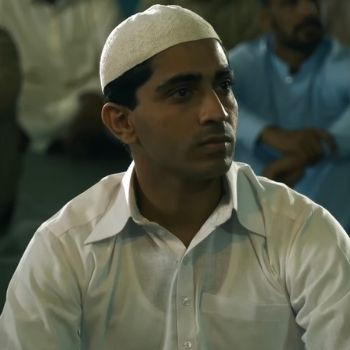
Mein maanta hoon genocide kya gaya hai … on the basis of their language, par wo hum nahin. Lekin shayed ye ilzaam barson tak humaare saath rahe ga. …Kyunke taareekh ya toh log lihkte hain ya siasat daan.
Captain Farrukh (Jo Bichar Gaye)
“45000 strong army fighting against a population of 6 crore people.”
Captain Farukkh (Jo Bichar Gaye)
These words of Captain Farrukh drive home the ongoing reality and left an everlasting impact.
Shabnam’s ire at Rumi knew no bounds. Every word was uttered with utmost vitriol, intense emotion and rage that only a mother who lost an innocent son at the prime of his age can feel. Rumi’s cross is a very heavy one to wear. The scene was so perfectly executed by both Wahaj Ali and Nadia Jameel that we were left shaken to the core.
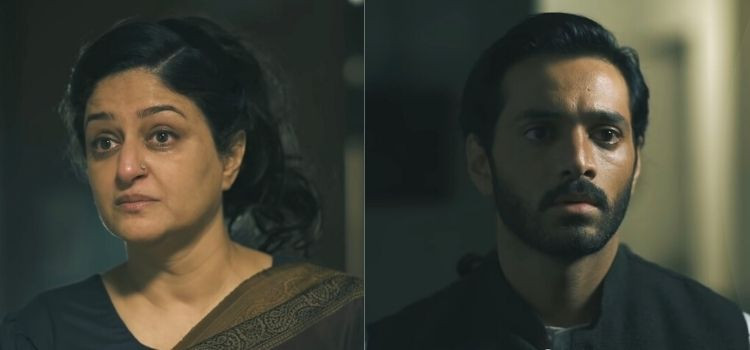
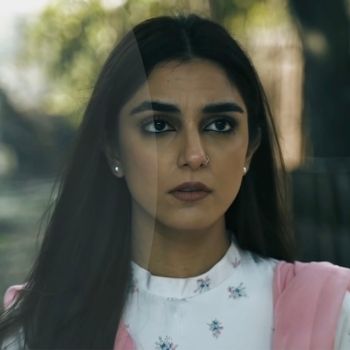
Not enough can be said about the mind blowing contribution of the cast. This episode belonged to Nadia Jameel, Wahaj Ali, Maya Ali and Talha Chahour for epic performances that stayed with us well past the final scene.
The silent revolt of PTV Dhaka portrayed how rebellion and breaking away is not a loosely planned strategy with a few Mukti Bahinis taking to the streets. It is backed by sharp strategic planning by military minds, the media channels must be taken over if covert messages have to be relayed, and how the common person is also part of the operation, just like the ladies who infiltrated Sonia’s home to dupe her and get hold of the Bridges list.
The TV station’s evasion to play the Qaumi Tarana on 23rd March 1971 was an open act of defiance and more importantly, pointed to the mood of the times. The tide had turned and East Pakistan saw itself chanting freedom, not just by a handful of street protesters but throughout the nation. Those who opposed it were either forced to switch sides, flee or meet a fatal end. Such is the nature of revolt and cries for freedom – it is all or nothing.
A Shout Out To The Director
Lastly, the director continues to amaze us with a lingering OST that complements the mood of the moment. Special mention of when Sonia attempted to light the stove and the OST filtered through repeatedly, interrupted by a noise here, a glimpse there, creating fear, uncertainty and intrigue throughout the scene.
Once again, Jo Bichar Gaye had us completely riveted throughout the episode. The gravity of the war is more imminent than ever. And though we know the inevitable must come to pass, though it is a painful watch, the nature of the narrative & its execution is so gripping, that we cannot help, but watch it through till the end.

