

The family of the victims involved in the tragic Karsaz road accident has chosen to forgive the female driver responsible for the crash.
A judicial magistrate in Karachi has rejected the bail plea of Natasha Danish, who faces charges in a drug-related case linked to a fatal car accident in the city. The court’s decision came amid reports of a financial settlement between Natasha’s family and the families of those who lost their lives in the incident.
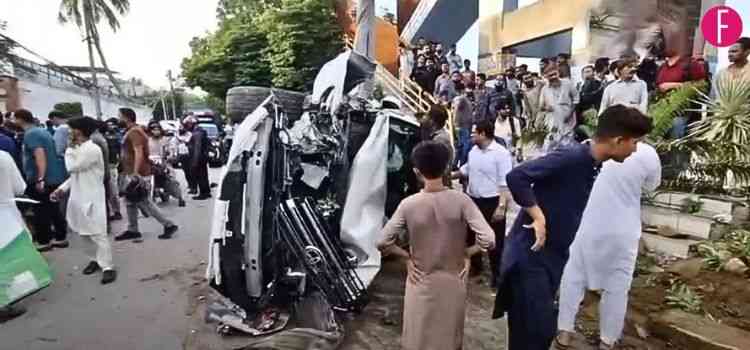
On August 19, a devastating road accident occurred near the Pakistan Maritime Museum in Karachi when a luxury vehicle lost control and crashed into multiple cars. The incident resulted in the deaths of a 22-year-old, Amna, and her 60-year-old father, Imran. The collision also left other individuals critically injured. Emergency services transported the victims to the Jinnah Postgraduate Medical Centre (JPMC), where medical and legal formalities were completed. The female driver of the luxury vehicle also sustained head injuries and was taken to JPMC for treatment, where she underwent a CT scan.
Following the accident, a case was filed against the female driver by the victims’ family. Initially, the family sought justice through legal channels, prompting an investigation into the circumstances surrounding the crash. The charges included reckless driving, and the case garnered significant public attention due to the severity of the incident and the tragic loss of lives.
Jibran Nasir, a prominent lawyer and activist, who has been vocal about the Karsaz road accident case, took to Instagram last night to express his concerns. In his post, he revealed that despite multiple attempts, he has been unable to contact the victim’s family in recent days. Jibran, who had offered pro bono legal representation and services to the family, stated that his repeated efforts to reach them now have gone unanswered. As a result, he can no longer speak or act on behalf of the family. He concluded his message by wishing the family well and expressing hope that they will be able to pursue justice in the best way possible.
Family’s Decision To Forgive
Following the accident, the victims’ family, including Imran’s wife and son, Usama Arif, decided to forgive the female driver involved in the incident. During a recent court hearing for the suspect’s bail request, the family submitted an affidavit stating that the accident was unintentional, and they held no ill will against the driver. “We have reached an agreement and have pardoned the suspect. We forgive in the name of Allah, the most merciful and compassionate” read the affidavit, emphasizing that the family had come to this decision without any external pressure.
During the bail hearing, the family submitted an affidavit stating that the accident was unintentional and that they had reached an agreement with the suspect. The affidavit included a no-objection certificate (NOC), which allowed the court to grant bail to the female driver after the submission of surety bonds worth Rs100,000. Additionally, the settlement involved the suspect compensating the victims’ family with Rs55 million and offering a job to one of the family members. The court accepted the family’s statement, marking a critical development in the case.
Public Reaction
While some applaud the family’s decision as an act of mercy, public sentiment remains divided. Many have said that the settlement involve “blood money” (diyyat), suggesting that the family may have accepted financial compensation due to their needs. Others argue that the pardon might have been influenced by hidden sources or external pressures, questioning whether justice has been served. Critics of the decision believe that the case should have been pursued to set a legal precedent, ensuring that such reckless driving incidents are met with stricter consequences in the future.
Furthermore, since deep public sentiment for this case had been expressed online, and continues to be now that the judgement and court proceedings have been made public, some argue that despite the family forgiving the alleged culprits and an out f court settlement, the state can pursue the case as a separate accident case, independent of the family, as a violation of the law of the land due to reckless driving, under also substance abuse.
This case continues to stir debate across Karachi, with discussions on both the ethical and legal implications of pardoning someone involved in a fatal accident. Moreover, the Karsaz Accident has sparked conversations in online Pakistani public platforms about the privilege, entitlement and income divide between the citizens, leading to violations of the law by a certain segment of society and also how this court ruling might set a standard for future such incidents involving unlawful actions by some. This is a developing story.
News Sources: Geo News & Aaj News.

