

Kabhi Main Kabhi Tum: Is it a drama, or reel life uncomfortably close to the real? The characters that live in the world of Pakistani dramas have often been called out for being overly sensational, plastic, too filmy or, just not relatable – Not in this drama – Not Mustafa, or Sharjeena, or Adeel or even Shagufta and Rubab. Writer Farhat Ishtiaq tells us more on how her hero and heroine fleshed out into near-real life characters, what lay behind Mustafa’s gaming talents and why Sharjeena will never wait for her knight in shining armour. Read on!
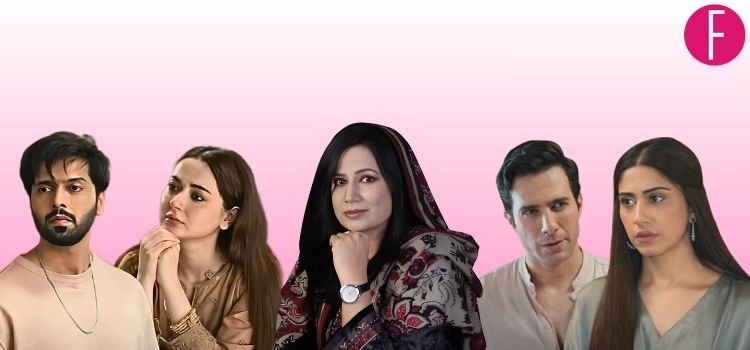
One wonders why Mustafa couldn’t be your conventional hero, or Sharjeena, the radiant, submissive young girl who is only slightly assertive, but traditionally, gives in to her mother in-law and leading man… until she doesn’t! Oh well, because neither of the characters in our story have anything to do with convention! Not us, this is from the pen that wrote the story, none other than Farhat Ishtiaq, and here’s the story behind the story Kabhi Main Kabhi Tum, from the mind who conjured it all up!
So sit back as writer Farhat Ishtiaq takes our questions on Kabhi Main Kabhi Tum.
Mustafa is a truly unconventional hero – everything you didn’t want in a hero, the anti hero?
Farhat Ishtiaq: Responds almost instantly… “What we expect in a hero, there will be none of those qualities in him… It didn’t take long to make Mustafa.” This character came from the heart!
“This time,” she continued, “I wanted an unconventional hero. Because usually my heroes are highly qualified. They have achieved a lot in life. They have everything that is based on the definition of a hero. So for the first time, I thought that my hero will be completely different from my past heroes. As the story progresses, you will see.” She concluded, keeping the best for last?
Sharjeena radiates hope and strength, unlike the typical damsel in distress.
Farhat Ishtiaq: “I wanted to make a character who doesn’t have to wait for a hero to come and save her.”
The writer sheds more light on her heroine: “For the character of Sharjeena. I wanted a different kind of girl. We always put a lot of pressure on our girls that someone will come to save them – perhaps a knight in shining armour? She takes all the decisions of her life, good and bad. Even if she took a decision to marry Mustafa, it was her decision, good or bad. But her parents never forced her to do so. So this character was very clear; that this girl takes her own life decisions, good or bad, she is a strong girl emotionally, and an empowered girl, I had to make a character of an empowered girl.”
Farhat Ishtiaq’s vision on Sharjeena was crystal clear, just like the character itself. And we’re so glad for that vision, women across Pakistan are welcoming it, and we suspect, some men too!
Do we see Farhat Ishtiaq’s own personality in one of the characters? Which one?
Farhat Ishtiaq: “Definitely I am there,” was the instant response. “In fact, not only in this, but in all the characters. I have said this many times before.” Clarifies the writer adamantly. “It is not true that writers are not in their own stories. Writers are always in their own stories. It is not necessary that they are in the characters of the hero and heroine. They can be in any character, any place. You cannot deny that you are there. In Sharjeena’s character, in her beliefs, in her thoughts, in her conversations, I am there. In many places, there are things that express my own belief as well. Not completely, but somewhere I am there too.”
The title ‘Kabhi Main Kabhi Tum’?
Farhat Ishtiaq: “Kabhi Main, Kabhi Tum… the story is mine, but the title was suggested by one of our creative production team in Big Bang. I really like this title because it goes perfectly with our story. We are two partners. Like Sharjeena said, we are walking together step by step. So this is the message of our story:
Kabhi Main Kabhi Tum, the title…that sometimes you will be there, sometimes I will be there, sometimes I will be your support, sometimes you will be my support. Neither of us is ahead, neither is behind, we are together, we are partners. So we are each other’s support, from that angle, this title goes perfectly with it.”
Farhat Ishtiaq, writer KMKT
And now that we hear it explained so subliminally, Kabhi Main Kabhi Tum can be the force behind so many relationships – what a truly beautiful thought.
Mustafa’s profession, inspired by? A deeper message here?
Farhat Ishtiaq: “Mustafa’s profession was very intentional and deliberate and there was a deeper message behind it. We have confined everything into right and wrong boxes. How a hero or heroine should be. And if you don’t do certain things or follow a certain route you will not be successful. He should have a certain type of career or earning. So Mustafa we wanted to show as a person who was very talented, Everything we see in society, that a successful person must have all these ingredients traditionally, Mustafa will not have any of the things successful people are expected to have. He will not have a degree, or a job, as opposed to his brother Adeel, who shines from a distance.”
The writer continues to explain the hero she has penned so lovingly, and who is, as we speak, hugely adored by fans: “He will not have the traditional tick marks that we expect successful people to have. But when we see him up close, we will see his talents.”
And she elaborates:
“There is no one particular person whom I can say that I took inspiration from for Mustafa’s character. But after seeing different people, even our Gen Z boys and girls, … now we are in 2024, so many things have changed. Now success is not only about becoming a doctor, becoming an engineer, getting a CA, or you are a lawyer or an architect, you can be anything and you can be successful in life.”
Farhat Ishtiaq explains the character further:
“Like Mustafa’s gaming example, his parents don’t take his things seriously, nor does he think that it can be a career choice. So, in today’s time, I see that things have changed so much and many of our parents, our family members, don’t even think that these things can be part of your career choices. So, I thought it was important to give this message to our parents, our elders, our family members, who are still steeped in their old thoughts and ideas. If a child is playing a game on a computer or making a game, they feel like they are wasting their time. The world is changing so fast, we have to accept the changes in our world. Often parents do not allow children to follow a talent or passion because they don’t see it as a traditional route to success, hence they do not appreciate his talent or potential. I wanted them to feel that if their child is doing something different from the traditional, then this can also be a good profession or career. It is not necessary that you will only read traditional books, pass good exams and get a good GPA, and then you will be successful.” Wow, the character tells the story of so many Mustafa’s, and we hope parents are taking notes!
On a further note: we hope that some parents might take up this story and understand that their child too has talents which they might not be appreciating because the definition of success can change now and children need to be appreciated for the talent or potential they have, not how or what we want them to become.
Bushra Ansari’s character dynamics with Adeel and Mustafa reveal the preferential treatment of a higher-earning child. What motivated you to explore this rarely discussed grey area of society?
Farhat Ishtiaq: “Bushra Ansari – the character of the mother, Adeel and Mustafa’s mother, Shagufta. I have seen people like her very closely – the parents’ especially mothers… I have seen this in many homes, that parents prefer a child on the basis that he is more successful in life, he is earning more, he is contributing more in the house. So the importance of that child will not be the same as the importance of the non-earning child. You are giving preference to one child over the other. And you have neglected your child’s behavior. I think this kind of treatment occurs in many homes by the parents and mothers. And they think that their earning child is doing so much, my house is running because of him. If they give preference to him and shower words of praise on him and he gets importance in the house, then it is right. Even if they neglect the other child, the parents don’t think that they are doing something wrong.”
Farhat Ishtiaq continued to elaborate on this unconscious parenting behaviour: “And I’m sure many other people have seen that the son who earns more, his family’s behaviour towards him is also different from the son who earns less. The son who earns well and brings it home, the respect and protocol that his wife and children get and the son who earns less, his wife and children don’t get the same treatment… this happens in a lot of homes, and it’s a routine thing, it happens.” Concluded the writer, as if to emphasize the injustice and tragedy of it.
The story is also about Adeel. Are parents responsible for sibling rivalry too?
Farhat Ishtiaq: “Now about Adeel… parents are very, very responsible for children like Adeel.” The writer settles in to give insights into her character, Adeel has turned a dark shade of black for now and her voice, insistent, raises a
“How responsible are the parents in making him so selfish? And the treatment you give to your children, that you have loved one child more than the other, and you have always called the other one useless, he has not done anything and he is not capable of doing anything. And our parents, they don’t think about these things for a long time. Even since childhood, it has been like this, that the child who is better in studies, in everything, with him, your treatment is completely different, and the child who is not so good at achieving what we call success,…?” Her voice trails off. And then she continues: “Sometimes children are compared, one with the other, without parents realizing the repercussions of their words. Sometimes small things remain in the child’s heart which we don’t even think about.”
The writer explains how Mustafa manifests the pain of parenting gone horribly wrong?
“Mustafa says I have become dheet (stubborn) now. Because he has heard these things about himself when growing up. Everyone reacts differently. Mustafa could have become jealous of his brother and competed with him. But that was not Mustafa. He just accepted that he’s useless, and he can’t do anything. He wasn’t worried that his father was retired, and he needed another earning member in the house. He just became the person he had heard spoken about himself. That he is useless, and he cannot do anything… and he became that person.”
“So all these things were in my mind while making Mustafa and Adeel and their characters.” Concluded Farhat Ishtiaq
Why is Sharjeena expected to help Mustafa realize his potential? Are we again pushing the same expectation on our heroines, yet in a more subtle manner.
Farhat Ishtiaq responds passionately to this charge! “I have a big disagreement with this question.” She says with a dire need to set the record straight. And we’re listening:
“Yahan saari baat muhabbat ki thi…” and the writer continues her thought:
“There were no expectations from Sharjeena, that a heroine will make Mustafa realize his potential. So, it was not like that at all. The element here was of love, of caring for each other, that there are two partners. First, they became friends, then they fall in love with each other. And with that love, which Mustafa realized, on a rainy night, everything happened. After that, he realized that he has never had expectations from anyone in his life. He himself has accepted that he is useless, he has done nothing, he will never do anything. He has started having expectations from himself for the first time in his life, so he wants to live up to those expectations.”
Yahan agar baat koi thi tau wo muhabbat ki baat thi. Jab aap kisi se muhabbat karte ho tau aap usme saari achhi cheezain dekhna chahte ho, Yahan koi responsibility larki pe nahin thi, keh usko kisi ko fix karna hai. Aisa bilkul bhi nahin tha. Yahan saari baat muhabbat ki thi, chaahat ki thi. Jab aap kisi se sachhay dil se muhabbat karte ho tau aap uske liye sab kuch achha chahtaay ho, Keh jo mujhe iske andar nazar aata hai, iska talent, iski achhai, saari dunya dekhe aur appreciate kare jis tarha mein isko appreciate karti hoon.
Farhat Ishtiaq: Kabhi Main Kabhi Tum
The writer continues to underline this point that: “Muhabbat ke ird gird saari cheez hai.”
Farhat Ishtiaq: “So here if there was any talk, it was about love. When you love someone, you want to see all the good things in him. There was nothing like that, that we have unreal expectations from our heroine. That if a girl comes into our lives, it’s her responsibility to make her husband good or fix him. Everything here was about love. Love, care for each other. When you love someone with a pure heart, you want everything good for them. I never thought that my heroine had a responsibility to fix this person, to correct his flaws, to make him right. Here, if there was anything, it was love. And all this was happening around love.” Farhat Ishtiaq wanted to highlight the purity of love between Sharjeena and Mustafa, love really has the power to change people, and that’s all it was, not compulsion, nor any outside force, just pure, simple love – Sharjeena’s love for Mustafa.
“So my story could also be,” continued the writer, “Where my hero sees that my heroine needs to realize her potential. The one you love, you want people to like him or her, I like her, I see his qualities, so the whole world should like her, the whole world should see her qualities. In the same way, when Sharjeena says that she doesn’t like it that people say bad things about Mustafa, my parents, your parents, I want everyone to like you, she says, everyone to praise you.” Explains the writer, and you could feel the passion she shares for her heroine.
The writer continues:
“So the whole reason behind her thinking is, that she wants everyone to see him in a good light, to earn money, to make a career, to do everything so that people see the talent in him. And she wants all this because loves him.”
Your pasandeeda character in the drama and why?
Farhat Ishtiaq responds from the heart: “For a writer, her story and all her characters are her babies. So, she can’t say which one is better or worse. I like Adeel and Rubab because I made them with love.”
She elaborates:
“I think all the characters I have penned have been inspired by real life. I have met many people who have inspired me. I have also observed many things. I have seen many good and bad sides to their personality. So obviously, those things come into my characters. And my favorite character, obviously, can’t be only one, because a mother has all her children equal. I made the negative characters with love because I feel I gave them a proper arc. If they are the way they are in the story, then there is proper reasoning as to why they are like this. Or the way they are behaving, why they are behaving like this and what could be the reasons behind it. I love all my characters I can’t say which one is my favorite and which one is my least favorite.” And that settles the debate.
On supportive nands like Sharjeena’s
Farhat Ishtiaq: “I kept the nand positive intentionally, that you can’t keep so much negativity in one narrative. But compared to that,…” the writer elaborates, “you make your characters completely black and white. The good is just a complete angel, the bad is a complete devil. Such characters will not allow your story to be realistic.” The writer gives insights into her narrative writing strategy, which seems to be working pretty well so far.
She continues:
“About supportive nands, I kept it intentionally because Shagufta was already a negative, I won’t say negative because she had her reasons. The way Shagufta was behaving, she had her reasons – her husband’s behavior, the way her favorite son was thrown out of the house, those things made her bitter. And that bitterness was coming out on Sharjeena.”
And as far as balancing is concerned, it is not necessary that to balance your narrative, you have to show the characters negative or positive, black and white. I just want my characters to be grey. Because I believe that no human being is completely good or bad. Our heroes and heroines have flaws and defects.The level of evilness in them will be a little higher, but it won’t be that they are only evil. There will be some goodness in them too. I think that the greyness of the characters is more of a writer’s success.” And we agree!
Dhaabay mein khaana seekhna, burger bachhi, yeh term kahan se aaya.
Farhat Ishtiaq responds smilingly: “Okay, eating at a dhaaba. And… because Mustafa and Sharjeena have completely opposite personalities. One of the mindsets behind this story was that opposites attract. The story that your heroine and hero are two different people and when two different people live together, how will they befriend each other? How will they love each other? That girl is very particular, highly educated, and she likes cleanliness, she has a craze for cleanliness, she is very confused with messy surroundings.” Farhat Ishtiaq explains Sharjeena and Mustafa as two opposite sides of a coin… “This hero of ours will sit anywhere, he will eat anywhere. His shoes are lying here, the bathroom is dirty, Mustafa is exactly like that.”
The writer goes on to show how it worked out on the ‘fun’ meter. “So, there was a fun contrast between their personalities. When I had to build their friendship, I had to make it related to that. So I brought in the dhaaba concept, since Mustafa was so comfortable with it and Sharjeena would even wash her hands before eating, and has a craze for cleanliness. Hence I could create these fun moments looking at the contrast in their personalities.”
A message to your audience…
Farhat ishtiaq: “I think Kabhi Main Kabhi Tum was written for the Pakistani audience. I don’t know if I was successful or not, but it was written for all age groups, all backgrounds. I wanted everyone to relate to something in the drama and enjoy it.” Responds the writer.
“The messages, I’m not sure how successful I’ve been.” Contemplates Farhat Ishtiaq, a tad humbly.
Her messages cover parenting, life partners and the definition of success:
“The parents’ behavior with their children, how they are not thinking of the repercussions of their words and how it will affect their children’s entire lives. Both parents are equally responsible. If Adeel became so selfish and entitled to think he is not responsible for his actions, and if Mustafa accepted himself as a loser, then both parents are completely responsible for their children’s behavior. This was definitely a message in the drama – that parents should put a lot of emphasis on their children’s behavior.”
“In the same way, when we are looking for a perfect partner, we are looking for perfect qualities, ticking all the boxes. But sometimes that doesn’t happen in life. When you are seeking perfection, that person is not always right for you. Sometimes you get the right life partner in imperfection. You don’t get anything perfect, but you get the support and validation to explore your potentials and talents.”
“Then we often assume that a perfect person, a successful person ticks all the right boxes – degree, job, status etc. Because of this, so many talented people lose out, because they do not get support from their family, they are not allowed to shine, their family never gives them the validation that they can explore their talent fully and realize their potential.”
The actor performing the character exactly the way you had imagined
Farhat Ishtiaq: “I think everyone’s performance is excellent, amazing. It will be very difficult to pick any one person, everyone has fit into the cast beautifully. The families will feel that this is the mother, this is the father, this is the brother, this is the sister. Everyone will feel like they are watching someone’s real life. It doesn’t feel like the characters are playing a role. Everyone’s performance is great.” She rounds off, and we tend to agree.
Your favourite dialogue from the drama and why.
Farhat Ishtiaq: “My favorite dialogue? I think I have a lot of favorites.” But then she replies with a hint of passion: “I think the sentence because some people have praised it a lot, and I have great belief in it. The sentence about love, which came in episode 18 – how many people are there in life who who get true love…”
Kitne log hote hain jinko dunya main sachhi muhabbat milti hai, hum Allah ke woh chunay huway log hain jinhain Allah ne sachhi mohabbat dene kay liye chunna. Is cheez pe mera bhi bohat yaqeen hai, keh aisa hota hai, keh sachhi muhabbat har kisi ko nahi mile aur waqai wo Allah keh chunnay huway log hain. I have full faith in this. True love is not found by everyone, but those who do, are chosen by Allah. I like this because I have a strong belief in love.
Farhat Ishtiaq. Writer, Kabhi Main Kabhi Tum
The writer praises the efforts of the entire team…
Kahin kahin aap bhool jaate hain keh ye drama hai, lagta hai keh yeh sab kuch haqeeqat hai. Is ke liye poori team ka kaam, kisis aik shaqs ka nahin. Humaari tawaquh se bhi zyada logon ne humaray kaam ko itna pyar diya hai, humaare liye buhat khushi ki baat hai.
Farhat Ishtiaq, writer Kabhi Main Kabhi Tum
“I am very happy that people loved the characters of Mustafa and Sharjeena I think that Fahad Mustafa and Hania Amir performed so well I don’t think that anyone else could have done this better. I think that Fahad Mustafa and Sharjeena should have been exactly the same. I have no doubt that it is a great performance. And not only that, but the performance of the entire production team, from our DOP to our OST, everything, the direction, especially the direction given by Mr. Badar Mehmood, the amazing camera angles, the frames, the way the emotions are captured, the build-up for different situations… I am getting a lot of love from the people, the whole team is getting a lot of love. More than we expected, people have given so much love to our play. It is a very happy thing for all of us, for the entire team.”
Kabhi Main Kabhi Tum is penned by Farhat Ishtiaq and directed by Badar Mehmood. It is a project of Big Bang Entertainment. The cast features Fahad Mustafa, Hania Aamir, Bushra Ansari, Emmad Irfani, Javed Sheikh, Maya Khan, Naeema Butt and more. Kabhi Main Kabhi Tum airs every Monday and Tuesday on 8 PM on ARY Digital. The OST from AUR band has received unmatched love. It has been composed by Raffey Anwar, sung by Ahad Khan & Usama Ali. The lyrics afre written by Ahad Khan & Usama Ali.

