

Kubra Khan is set to breathe life into the character of Homai Vyarawalla, one of the first female photo journalists from pre-independence India, in an upcoming series Fatima Jinnah. Here’s what you should know about her character. Homai was not really the biggest fan of Mohammad Ali Jinnah – Yes, take a moment for that to sink in. She was, on all counts, fond of photographing Indian nationalist Jawaharlal Nehru and could often be seen, dressed in signature sari-clad outfits, camera in hand, taking candid shots of the personalities that ruled public and political opinion of the times.
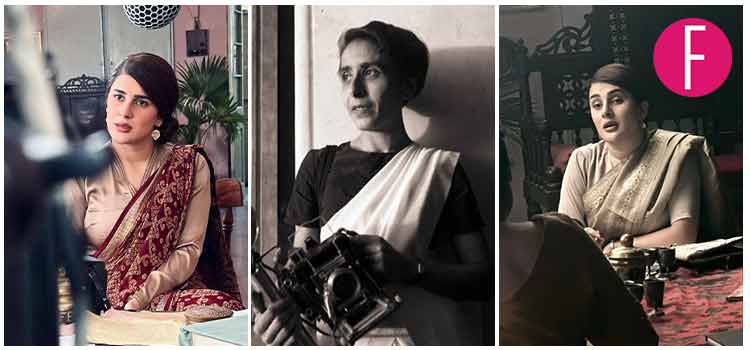
As Kubra Khan embraces Homai’s spirit, she invites us to look beyond the faded pages of our history text books. It’s a chance to rediscover a woman who stood against the winds of societal norms, capturing the essence of a transforming nation.
Homai’s pivotal role in documenting India’s journey from independence to political shifts is as intriguing as it is vital. Yet, her narrative, much like many other unsung heroes, often remains unexplored in the simplistic narratives we find in History textbooks. But here’s the thing – our history books often give us the ‘what,’ not the ‘who’ or ‘how.’ Kubra’s portrayal promises to unwrap Homai’s story, offering a more human touch to this incredible journey.
We’re all in the same boat here – not knowing much about Homai Vyarawalla. So, who was Homai? Was Homai a staunch ally of Pakistan and Muhammad Ali Jinnah, or did her allegiance lean towards the Indian masses? Read on to find out more!
Homai & The Pakistan Movement
“I Will Be Against Quaid e Azam”
Kubra Khan On Her Character Homai Vyarawalla in Fatima Jinnah
This statement raises curiosity about how Homai’s story intersects with the narrative of Fatima Jinnah. The missing pieces of whether Homai was a critic or a supporter of Mr. Jinnah’s vision, leave room for speculation. The upcoming series holds the promise of shedding light on this aspect, unveiling how Homai perceived the struggle of Muslims for a separate homeland. What unspoken chapters connect her gaze to the intricate struggle for a separate homeland, and how do these silent narratives resonate within the corridors of time alongside the endeavours of Fatima Jinnah?
Fatima Jinnah & Homai Vyarawalla – Opponents Or Inspiration?
While sentiments on both sides of the border look upon their own heroes as saviours and the other side, antagonists, it would be interesting to note that in a time when there was no India or Pakistan, how did these two women view each other – as worthy opponents or, inspiration? It is said that, Fatima Jinnah found inspiration in Homai’s ground-breaking journey defying the norms that sought to confine women. Her own journey too, was mapped on the same route in a way, so it would be no surprise if there are parallels between the two women who defined political events of the time.
A Pakistani Actor Taking On An Anti-Jinnah Role?
Fast forward to current geo-political events and the Hinduvta movement gathering force in present day India, one wonders how a mutual respect shared by these two women would be looked upon by citizens of both countries today. Perhaps Homai’s Parsi background might help lighten the blow? Or perhaps, the recent events in Ayodhya with the Ram Mandir consecration might not be the best time to hold a neutral conversation? Perhaps the fact that a Pakistani actor is playing a character who is clearly not aligned to the vision of its founder and whose muse was Jawaharlal Nehru, might set off local sentiments – which ones though? Indian or Pakistani?
It is then no mean feat that in pre-partition times, both these women trailblazers symbolized a harmonious movement, united by shared aspirations rather than religious divides. It’s a stark contrast to the current volatile sentiments across borders. Their stories echo a time when individuals were driven by a collective purpose, overshadowing divisive religious or cultural spectacles—a testament to the more interconnected and human side of history.
The Parallels: Fatima Jinnah & Homai Vyarawalla
As we delve into the life of Homai Vyarawalla, intriguing parallels emerge with the madar e millat of Pakistan – Fatima Jinnah. Both women navigated their eras, propelled by powerful men – Mohammad Ali Jinnah and Maneckshaw Vyarawalla who became platforms for their ambitions. Homai being a Parsi in itself, is a sign of the secular nature of pre partition times where Fatima Jinnah herself, had around her, trusted confidantes from all Faiths. Both women retreated from public life when the male companions they supported passed away. Homai never picked up a camera again after Maneckshaw’s death, however, Fatima Jinnah did return to public and political life with great gusto and a measure of success, (one we hope to see more off in the series Fatima Jinnah).
However, a lingering question persists: What were Homai’s views on Mr. Jinnah’s politics? In our exploration of different accounts, there’s a subtle absence suggesting that Homai may not have explicitly supported Jinnah.
More On The Life Of Homai Vyarawalla
From 1938 to 1973, Homai Vyarawalla, India’s pioneer female photojournalist, didn’t just capture moments; she chronicled a nation’s journey through her lens. Whether it was the British Raj’s exit, the tumultuous rise of Indian democracy, or the challenging aftermath of partition, Homai’s camera painted the canvas of India’s history in black and white. Imagine standing beside her as she witnesses Lord Mountbatten’s final salute, feels the weight of the heartbreaking deaths of Gandhi and Nehru, and breathes in the significance of the pivotal conference deciding India’s partition and even the very first Republic Day parade. Her photographic legacy, timeless and monochromatic, is a historical treasure trove for future generations.
Homai discovered her passion at J. J. School of Art, meeting Maneckshaw Vyarawalla, a photographer, who became not just a boyfriend but her guiding force and husband. Maneckshaw taught her the ropes, kicking off her journey as a woman photojournalist in pre-independence India. Against the backdrop of gender norms nudging women toward softer paths, Homai defied the odds, fueled by Maneckshaw’s unwavering support.
Her debut? A photo series at a Women’s Club picnic in Bombay, impressing her supportive husband, who sent the shots to The Bombay Chronicle, marking the start of Homai’s iconic journey. Despite challenges faced by Indian photojournalists, compounded by gender biases, Homai persevered.
Did you know, that in those early days, Homai, audacious and creative, used Maneckshaw’s name to publish her photographs? Picture the courage it took when society questioned not only her gender but also her place in a male-dominated profession. Maneckshaw’s name, a shield of credibility, enabled Homai to navigate the turbulent waters faced by Indian photojournalists.
Now, envision navigating a career riddled with gender and racial prejudices. Homai, refusing to compromise on her passion, plunged into photojournalism. In 1942, she made a significant move to Delhi, joining the British Information Services amidst India’s political awakening. Her story is resilience personified – breaking barriers and capturing history one click at a time.
Over the next five decades, she meticulously documented India’s monumental milestones – from gaining independence to the challenging decisions surrounding partition and the subsequent post-independence period marked by political, economic, social, religious, and cultural conflicts.
More Insights On Homai
Homai, disapproving of the whimsical saris, ingeniously fastened her garment with a reliable safety pin. Workdays witnessed her draped in the simplicity of white or cream khaddar, while silk adorned her evenings at the Gymkhana Club or Rashtrapati Bhawan.
Kubra Khan, the actress embodying Homai in an upcoming series, will be seen gracefully donning saris reminiscent of these tales. As the audience witnesses her portrayal of Homai’s wit and resilience, the essence of these sartorial escapades is sure to add a charming layer to the character, connecting the real and reel narratives of this pioneering photojournalist.
Homai’s Muse
Homai Vyarawalla had the remarkable privilege of photographing some of India’s most influential political figures, including Sardar Patel, Dr. Rajendra Prasad, Mahatma Gandhi, Dr. Ambedkar, C. Rajagopalachari, Maulana Azad, and Indira Gandhi. Yet, among these towering personalities, none seemed to captivate her lens quite like Pandit Nehru, whom she often considered a fascinating ‘muse.’ Throughout her extensive career, Homai documented various facets of Nehru’s life – from playful interactions with adoring children to intimate moments shared with his daughter, Indira Gandhi.
Homai described Nehru as a patient and photogenic subject, a leader she followed closely throughout her career. One of the most iconic images captured him lighting a cigarette for the British High Commissioner’s wife, with one already dangling from his mouth. While Nehru’s habit as a chain smoker was a lesser-known fact to the public, Homai, having earned his trust, was granted unparalleled access to his personal life, capturing even the unguarded moments of this influential leader.
Had Homai not left the camera after her husband Maneckaw’s death, one can only wonder about the countless untold stories she could have unfurled. The lens, after all, is a potent storyteller, and Homai’s unique perspective had the power to pierce through the layers of political rhetoric and societal norms. Her absence from the later chapters of India’s history is a void, a missed opportunity to document the nuances and complexities of a nation in constant flux.
As we reflect on what Homai stood for, we’re left contemplating an alternate universe where her camera continued to click. The narratives she could have unearthed, the perspectives she could have highlighted, and the voices she could have amplified – the loss is immeasurable. In a profession where every frame freezes a moment in time, Homai Vyarawalla’s decision to step back from the camera remains one of the great “what-ifs” in the annals of Indian journalism.
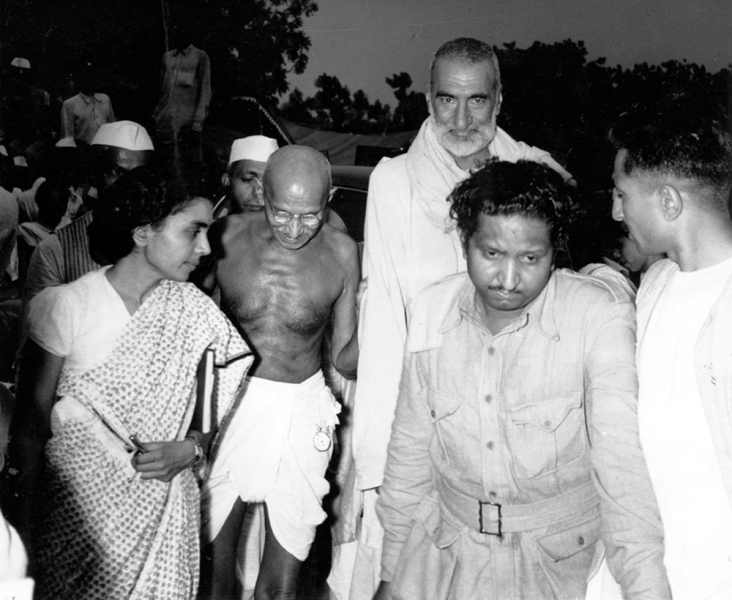
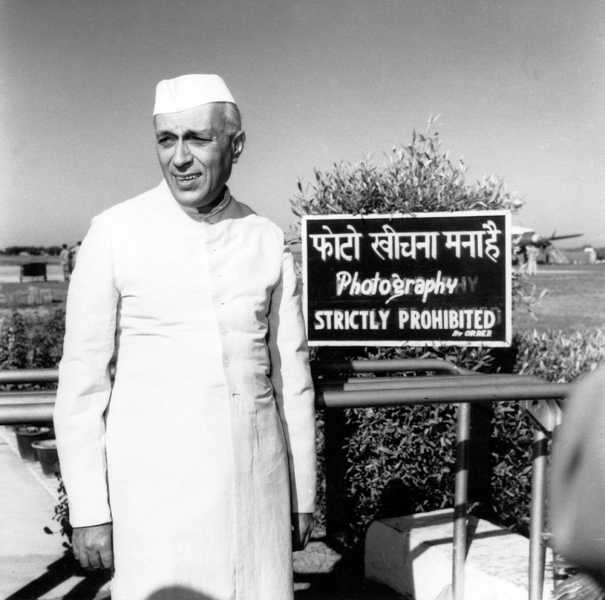
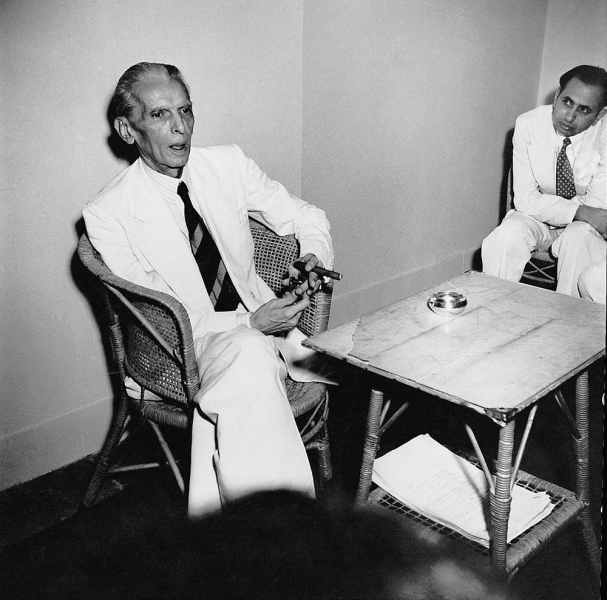
The series, Fatima Jinnah, a creative venture from Aur Digital, is set to air on TV screens in August 2024.
Featuring a stellar cast including Sundas Farhan, Amna Ilyas, Kubra Khan, Aamir Qureshi, Shehrzade Noor Peerzada, Mamya Shahjaffer, Saad Qureshi, Samina Ahmed, Manzar Sehbai, Omer Abdullah Khan, Komal Jamil, Shamim Hilaly, Mohammed Ehteshamuddin,Sarmad Khoosat, and Usman Mukhtar, created by Danial K. Afzal, this production is brought to life by Executive Producer Moazzam Majeed. The soundtrack, creatively conceived by Sana Ejaz and Danial K. Afzal, is complemented by Director of Photography Salman Aslam’s vision. With Lead Art Director Reza Shah, Line Producer Rumaan Afsar, and music by Shehreyar Khan.

