

I remember the nurse held Hasan and looked at me for a while before breaking the news to me, “Your child has Down syndrome”. … I vividly remember that moment clear as day and will perhaps continue to do so till the end. It was as if someone had crushed me. My first thought was, ‘Why me? How could you do this to me? After I was told that Hasan has Down syndrome, I refused to even look at him.
Dr. Ayesha Sorathia, mother of Down Syndrome baby Hasan
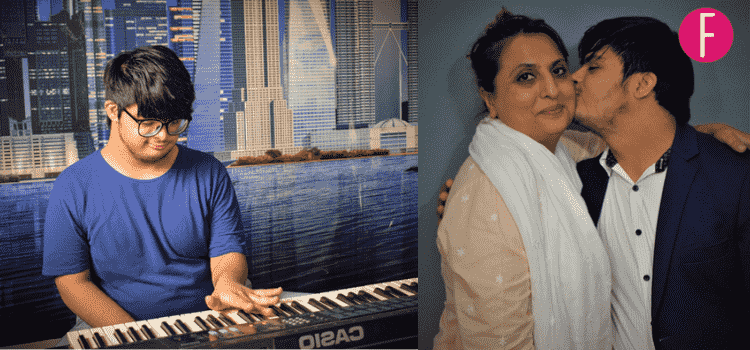
This article is a part of a series of articles written as part of a collaboration between The KDSP and FUCHSIA magazine to spread awareness about Down Syndrome. The following article is about Hasan Patel, an adult with Down syndrome who is part of KDSP’s Family Network. The article has been written from the perspective and experience of his mother – Dr Ayesha Sorathia.
The Miracle Baby
When I found out I was pregnant with Hasan, I was over the moon. Previously, I had two failed pregnancies, and so this time around I wanted to be extra careful. Like all other pregnancies, my pregnancy was no different. I struggled with constant nausea, lethargy and insomnia throughout the nine months. Given the nature of my pregnancy and my previous history, doctors advised complete bed rest. My love for my unborn child knew no bounds, so I smiled through all my struggles. Those 36 weeks seemed unusually long until it was finally time to bring my child into this world. To this day people tell me that, that day, my eyes sparkled brighter than the moon, and my smile told the world what words couldn’t. I believe, that the moment a woman conceives up to the day she brings her child into this world and every day after that is the testament of the strength mothers carry.
After my anaesthesia wore off, the first thing I wanted to do was caress Hasan, hold him in my arms closer to my chest. I remember the nurse held Hasan and looked at me for a while before breaking the news to me, “Your child has Down syndrome.”
I vividly remember that moment clear as day and will perhaps continue to do so till the end. It was as if someone had crushed me. My first thought was, ‘Why me? How could you do this to me?” After I was told that Hasan has Down syndrome, I refused to even look at him. It was a difficult time; I could not wrap my head around the fact that the child who I considered to be my miracle baby had an intellectual disability. Hoping against hope, I got various tests done; we even got the Karyotype test done twice to clear our doubts, but they all came back with the same result, Hasan had Trisomy-21, otherwise known as Down syndrome. Despite the tests and consultations my disbelief and denial were constant due to which I spiralled into depression.
“The heart of a mother is a deep abyss at the bottom of which you always find love, devotion and sacrifice.”
I had two battles to fight and win: one for my mental health and the other for Hasan.
The first few days were difficult and devastating. Hasan was not taking any milk, as a mother, I felt helpless and failed. We later found out that Hasan has a medical condition called Duodenal Atresia. In this condition, the stomach has absolutely no connection to the intestines. As young as three days old, Hasan underwent successful surgery for his condition. After the surgery, we stayed at the hospital for another 2.5 months, not for a single minute did I leave my child alone.
My mind may not have been ready to accept Hasan, but my heart did not allow me to bail on my child. You know how they say, “The heart of a mother is a deep abyss at the bottom of which you always find love, devotion and sacrifice.”
Ayesha Sorathia
I was always persistent that Hasan is just like any typical child and so he would do everything and anything a child is capable of regardless of what the world says. I have never treated Hasan any different from his brother, I’m strictly against any ‘special treatment’. “Fortunately, my stance on treating him like any other child has worked like a charm. I believe it is a blessing in disguise.” (laughs).
8 months after Hasan’s birth and finding out he had Down Syndrome, my husband decided to move back to Pakistan. We landed in Karachi on 14th August – I cannot explain how I felt. We had no family or friends in the city – we were back in our homeland but it still felt alien. Over time I had grown even more concerned about Hasan and his growth prospects specifically because of the lack of institutions to cater to his education and skills.
People around us were appallingly insensitive; they called Hasan names.
On top of all this, I was labelled ‘the worst mother’ only because I refused to give Hasan any special treatment; as if a mother wouldn’t want what’s best for her child! I did not understand what Hasan needed special treatment for, by the time he was two years old he was already walking and in another six months he was completely toilet-trained. He was capable of doing everything any other child does so what really granted special treatment?
Ayesha Sorathia
“Success is not an activity, but a whole process.”
I was determined to leave no stones unturned. I’m a big advocate for physical activity for children especially now when all physical activity is greatly limited – thanks to the palm-sized screens!
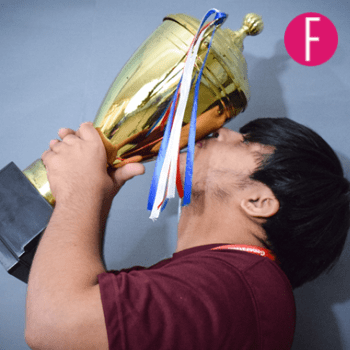
By the time Hasan was three and a half years old, I began engaging him in several activities so he could explore his interests. Over time, we realized that he was very fond of water, that’s when we decided to give swimming a shot. I short-listed Karachi’s leading sports complex to enrol Hasan for their swimming program. When we first arrived, we were turned away because Hasan was under the age limit; they only enrolled children six years and above. But Hasan was eventually enrolled, and now, he serves as a coach in the same sports complex. Like I said before, habits are taken up from an early age. Swimming has motivated him to be conscious about his fitness. He is very particular about looking his best – he goes to the gym thrice a week to maintain his shape.
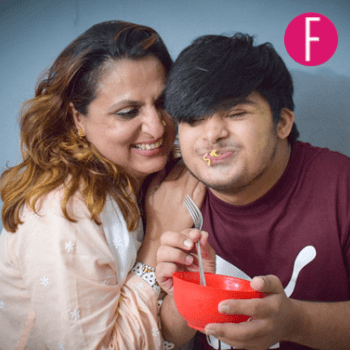
I’ll let you in on a secret though, noodles are Hasan’s weakness! He sneaks into the kitchen late at night to treat himself with his comfort food and also makes sure he leaves no evidence behind by cleaning up later!
Needless to say, we had our fair share of failures as well. However, what is more, important is that there was absolutely no loss of enthusiasm; we worked on things one day at a time and those daily efforts and small improvements over time led to Hassan becoming successful in all aspects of life.
“I learn from Hasan every single day. He has taught me how to put my heart and soul in everything I do.”

Hasan wants to be fiercely independent.
When he first shared this with me, I was a little surprised because this is not a priority for many teenagers. He believes in setting goals and crushing them. Hasan was previously working at a pharmaceutical company where his supervisors were extremely impressed by his skill set and work ethic. Like every other individual, Hasan also talks about finding a partner he can share his life with. He often jokes that the only reason he wants to be independent is so he can take his wife around in his fancy car!
“Life doesn’t come with a manual but it comes with a mother.”
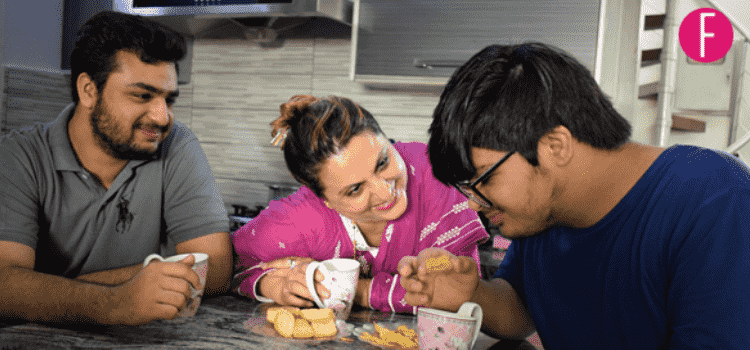
Ever since I held Hasan in my arms for the first time, I believed he was never less capable or different than the others. I brought him up in the exact same way I did my elder son, only because I did not want Hasan to think he was different or that he deserved to be treated any differently.
Ayesha Sorathia
At only 18, he earns for himself, loves entertaining people by playing the keyboard for them, and is a favourite among his colleagues despite having Down Syndrome. He is resilient and he knows how to voice his opinions.
What made him so strong, you ponder?
Just the acceptance of him being more alike than different. But who says different is bad, anyway? In a world where everyone is trying to blend in, why not strive to stand out with our own different sets of capabilities and empower those with unique talents? Hassan now keeps striving to turn his dreams into reality while I, despite battling cancer, keep breaking barriers and rejecting stereotypes for Hassan to blaze new trails.