

For anyone who finds comfort in chaos and calm in crime scene recaps, these are the shows that’ll leave you haunted and hooked.
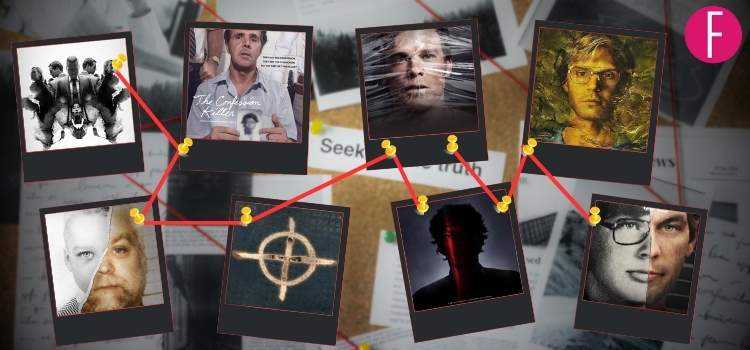
There’s something oddly satisfying about watching crime shows and documentaries where everything is unraveling and everyone’s either lying, spiraling, or both. Maybe it’s the quiet tension, maybe it’s the moral mess, or maybe we just like chaos as long as it’s not ours — but there’s nothing like the pull of a good crime story. Whether it’s a real killer calmly explaining his motives or a fictional cop with a caffeine addiction and commitment issues chasing justice on zero sleep, these are the stories that reel you in and refuse to let go.
Some are polished and haunting. Others are so unhinged they feel like fever dreams. But all of them hit the same nerve: dark, obsessive, and kind of addictive in a way that makes you wonder if you’re okay. These aren’t neat tales of justice — they’re uncomfortable, messy, full of grey areas, and somehow still feel like comfort watches. If you’ve ever fallen into a six-hour binge of interrogations, wiretaps, or criminal profiles instead of sleeping like a normal person, his list was made for you.
Ted Bundy: Conversations with a Killer
There’s something deeply unsettling about hearing Ted Bundy talk for hours on end – not just because of what he did, but because of how smugly detached he sounds the whole time. This Netflix docuseries isn’t your usual high-drama, cliffhanger-packed true crime binge. Nope. It’s Bundy rambling in third person, theorizing about what “someone like him” might’ve done, while pretending he’s just a curious bystander and not, you know, literally describing his own murders. It’s creepy, it’s calculated, and it’s pure delusion – all in his own voice, pulled from over 100 hours of interviews with two journalists who sat across from him and just let the tape roll.
What makes it hit different is how normal he starts to feel after a while – not in a comforting way, but in a bone-deep “evil isn’t always fireworks, sometimes it’s just empty narcissism on loop” kind of way. This isn’t a flashy retelling with dramatic reenactments or “gotcha” reveals. It’s a slow, quiet unraveling of a man who thinks he’s the smartest in the room while basically confessing without confessing. And honestly? That eerie calm, that casual manipulation, is exactly what makes it so disturbing. He’s not a criminal mastermind. He’s just terrifyingly ordinary, and that’s what’ll stick with you.
The Confession Killer
The Confession Killer is wild, messy, and deeply frustrating, in all the ways that make a true crime doc stick in your head for days. This isn’t about uncovering a criminal genius or a twisted mystery that finally unravels. Nope. It’s about Henry Lee Lucas, a drifter with a foggy past and a knack for telling cops exactly what they wanted to hear — even when none of it made sense. He confessed to hundreds of murders, and law enforcement lapped it up because it made their jobs easier. He didn’t need proof, motive, or logistics that actually added up- just a convincing lie and a little showmanship. And the worst part? It worked. He became a star behind bars, a human case-closer, while the real killers walked free.
This isn’t just about Lucas , it’s about how the system around him completely dropped the ball. The police fed him info, paraded him around like a trophy, and families were told their loved ones’ cases were “solved” when they absolutely weren’t. It’s less about the murders and more about the machinery of justice (or the lack of it), and how everyone, from detectives to the media, let it happen because it made for a good story. Lucas became a mirror, reflecting back our obsession with murder, closure, and a good headline. By the end, you’re not just side-eyeing him – you’re questioning every person who enabled the circus.
Night Stalker: The Hunt for a Serial Killer
Night Stalker: The Hunt for a Serial Killer pulls you straight into the chaos of 1980s Los Angeles, when a man named Richard Ramirez was attacking, assaulting, and killing without pattern, reason, or mercy. The series tries hard not to glamorize him – you barely even see his face until the very end – but the horror of what he did lingers heavy. It focuses more on the chase than the man, with detectives Gil Carrillo and Frank Salerno recounting how they pieced together the terrifying reality: that one person was behind an unthinkable string of crimes spanning kids, elderly victims, and everyone in between. What hits hardest though is the testimony of survivors like six-year-old Anastasia, who somehow made it out alive. Those interviews are raw, heartbreaking, and stay with you longer than any dramatized crime scene ever could.
And while the doc tries to stay grounded in justice and investigation, it’s hard to ignore the sensational edges -blood-soaked hammers, green-lettered Satan quotes, and shadowy re-enactments. At times it feels more interested in framing the detectives as heroes than in really getting into the mind of the killer or the weight of the victims’ stories. But even with its flaws, Night Stalker doesn’t flinch. It reminds you that monsters aren’t legends – they’re real, they walk into homes in the middle of the night, and they leave communities shattered for years. It’s not comfortable viewing, and maybe that’s the point. This isn’t just another true crime binge – it’s a peek into the darkest corners of humanity, and the messy, deeply human attempt to fight back.
This Is The Zodiac Speaking
This Is The Zodiac Speaking isn’t your usual serial killer documentary that gets stuck in the same timeline, same suspects, same foggy clues. This one shifts focus, choosing to tell the story not just through crime scene reports or shaky detective interviews, but through the eyes of a family who actually knew Arthur Leigh Allen , the long-rumored Zodiac killer, as their swim coach, teacher, and family friend. It’s eerie, because the Seawater siblings remember him with a weird fondness, even while reckoning with what they now understand were years of grooming, manipulation, and worse. It jumps back and forth in time, but never feels disjointed, it’s more like a slow unraveling of something you thought you already knew, only to realize you’ve been looking at it all wrong.
There are no over-the-top reenactments or gimmicky jump scares here, just grainy footage, awkward family photos, and quiet, devastating memories. It doesn’t care about convincing you whether Allen was the Zodiac, and honestly, it’s more haunting because of that. This isn’t about closure, it’s about the long, slow burn of trauma that generations of families carry when the system lets monsters hide in plain sight. It’s not easy to watch -and it shouldn’t be -but if you’re tired of crime docs that feel more like puzzles than people, this one sticks.
Making A Murderer
Now this is the kind of true-crime docuseries that doesn’t just tell a story , it slowly drags you into its chaos and refuses to let go. It starts off like a hopeful exoneration arc: Steven Avery, wrongly convicted, finally walks free after 18 years. But just when you think it’s about redemption, the narrative flips – suddenly, he’s accused of a whole new murder, and it spirals into something way messier, murkier, and deeply unsettling. The series isn’t subtle about what side it’s on, but it’s also not really trying to be. It’s about power, perception, and how a system that wrongs you once might just keep doing it again, no matter how much evidence is (or isn’t) on your side.
What makes it hit harder than your average crime doc is that you’re not watching it as a distant observer – you’re thrown into the courtroom, the interrogations, the family’s heartbreak. There’s grainy footage, awkward phone calls, and lawyers doing everything they can just to get someone to listen. Brendan Dassey’s scenes, especially, are rough — watching a confused teenager get manipulated on camera is enough to make your stomach twist. There’s no clean-cut ending or neat resolution, and that’s kind of the point. Whether you walk away thinking Avery is guilty or innocent, the real horror is how broken the process looks from every angle.
Monster: The Jeffrey Dahmer Story
You can’t claim to center victims and then spend 9 out of 10 episodes romanticizing the killer’s inner angst. That’s exactly what Monster: The Jeffrey Dahmer Story ends up doing. For all its claims about institutional failure and systemic racism, it just can’t stop zooming in on Dahmer’s dead-eyed stares and sad, sweaty spirals. One episode, “Silenced,” finally gets it right, showing Tony Hughes as a full, beautiful person with a life beyond how he died. But the show doesn’t commit to that lens. Instead, it rushes back to its usual formula: true crime that looks like a character study but acts like a horror reel.
And the harm isn’t just theoretical. Real-life victims’ families weren’t even informed, let alone asked. They had to relive it all over again — only this time as entertainment for strangers. Sure, Niecy Nash is phenomenal, and the production is polished. But what’s the point if the storytelling ends up retraumatizing the very people it claims to honor? There’s a difference between exposing cruelty and capitalizing on it and Monster lands on the wrong side of that line.
Mindhunter (Show)
You know a show’s doing something right when it doesn’t just tell you about evil, it makes you sit with it. Mindhunter doesn’t do flashy murders or twisty whodunits. It does long, slow conversations in fluorescent-lit rooms, where someone calmly explains how and why they butchered strangers , and somehow, you can’t look away. Season two takes that signature dread and deepens it, dragging us into real-world horror: the Atlanta Child Murders. And unlike most crime shows that pretend there’s always a clean answer, Mindhunter dares to admit that sometimes we don’t get closure. Sometimes we get a maybe. A probably. A still-unsettled ache.
What makes it hit harder is how it doesn’t separate the job from the people doing it. Everyone on the team is cracking under pressure , Bill Tench especially, whose home life starts to echo the same darkness he’s profiling. Holden Ford might be the one with the big theories, but even he can’t think his way out of the fog. And that’s the brilliance here: the evil isn’t just “out there.” It leaks in through every crack. There’s no jump scares, no big reveals just the slow horror of watching people chase monsters and wonder if they’re becoming them too.
Dexter (Show)
You think you’ve seen morally grey protagonists? Dexter doesn’t just blur the line, he slices it open, bags it up, and quietly dumps it in the ocean. He’s a blood-spatter analyst for the Miami PD by day, a very meticulous serial killer by night, and somehow… you find yourself rooting for him. Not because he’s misunderstood or secretly good-hearted, but because he’s so disturbingly self-aware, and the show leans into that instead of softening it. He knows he’s a monster. He just has rules. A code. A dead dad who trained him to channel his urges toward bad guys. It’s wild , but it works. Because beneath all the dark humor, voiceovers, and crime scene carnage, it’s less about murder and more about performance: what it takes to seem “normal,” and how fragile that mask can be.
Season one is addictive, not because of plot twists or cliffhangers (though there are plenty), but because it turns the idea of the anti-hero completely inside out. You’re not just watching Dexter escape suspicion; you’re watching him try to feel something, anything, and maybe even fool himself into believing he can. Michael C. Hall sells every second of it, balancing charm with cold calculation like it’s muscle memory. And the show doesn’t shy away from asking the uncomfortable stuff: If a killer only kills killers, does that make him less awful? What happens when your coping mechanism is murder? It’s smart, funny in the darkest way, and deeply uncomfortable – all the things good TV should be.
True crime isn’t just about what happened, it’s about how we watch, what we choose to believe, and why we can’t look away. Some of these shows make us feel smarter. Others make us feel gross. The best ones do both. Whether it’s a murderer in a pastel polo or a justice system breaking in real-time, these stories get under your skin and stay there. Not because they’re polished, but because they’re raw, flawed, and terrifyingly real. Honestly? That’s what makes them worth watching.
Sources: The Guardian, Rotten Tomatoes, Roger Ebert
Throwback Thursday: 3 Iconic Pakistani Dramas That Never Get Old!

