

Before this week’s tragedy, Broad Peak was already known as one of Pakistan’s most demanding mountains. Now, it has become the site of one of the deadliest climbing disasters in recent years. Ten experienced mountaineers from across the world disappeared after an avalanche struck their expedition high on Broad Peak in Pakistan’s Karakoram range. Days later, rescue teams confirmed what many had feared: none of the climbers had survived.
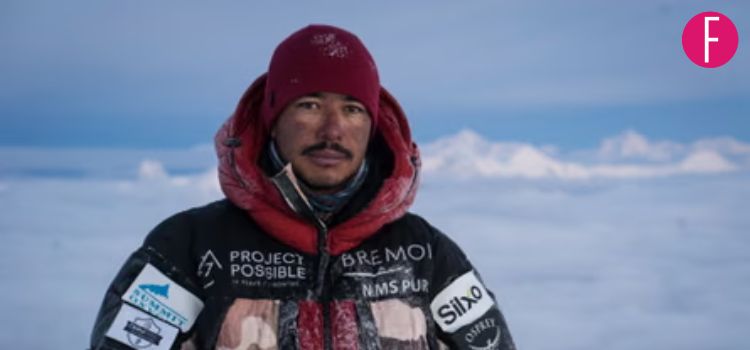
Among them was one of the biggest names in modern mountaineering – British-Nepali climber Nirmal Purja, better known around the world as “Nimsdai” – whose extraordinary achievements transformed him into one of the sport’s most recognisable figures.
What happened on Broad Peak?
The avalanche struck on Thursday while the multinational expedition was attempting to climb Broad Peak, Pakistan’s 8,047-metre mountain that ranks as the world’s 12th-highest peak. The group consisted of 10 climbers representing several countries, including Nepal, Pakistan, Oman, China and the United States. The expedition was being led by Nirmal Purja.
Search efforts began almost immediately, but the operation proved exceptionally difficult. Dangerous weather, the remote terrain and continued avalanche risks slowed rescuers trying to reach the area by both helicopter and ground teams.
The first recoveries confirmed the deaths of Nepali climber Pur Bahadur Gurung, Omani mountaineer Nadhira Al Harthy and American climber Mallory Geis. Rescue teams later located Purja’s body before his expedition company confirmed that all 10 members of the climbing team had died in the disaster. Authorities continue working to recover the remaining climbers from the mountain.
Who was Nirmal Purja?
For many people outside the climbing community, Nirmal Purja became a household name after the Netflix documentary 14 Peaks: Nothing Is Impossible chronicled one of the greatest achievements in mountaineering history.
Born in Nepal, Purja later served for 16 years in the British Army, including a decade with the elite Special Boat Service. After leaving the military, he turned his focus to high-altitude climbing—and quickly began rewriting the record books.
In 2019, he stunned the mountaineering world by climbing all 14 mountains higher than 8,000 metres in just 189 days, shattering the previous record by several years. His achievement was driven by a belief that seemingly impossible goals could be achieved through determination, preparation and resilience.
Beyond breaking records, Purja often spoke about giving greater recognition to Nepal’s Sherpa climbing community, whose expertise has supported Himalayan expeditions for generations but has often received far less global attention than the climbers they guide. Even shortly before leaving for Pakistan, Purja had written that climbing Broad Peak was not originally part of his plans. However, he realised that summiting it would move him one step closer to becoming the first person to climb all 14 of the world’s 8,000-metre peaks twice without supplemental oxygen.
The climbers the world lost
The tragedy claimed lives from several countries, highlighting how international modern mountaineering has become.
Among those confirmed dead was Nadhira Al Harthy, who made history as the first Omani woman to summit Mount Everest and later became the first climber from Oman to conquer K2.
American climber Mallory Geis had travelled to Pakistan for her first attempt at climbing an 8,000-metre peak after leaving her career behind to pursue high-altitude mountaineering full-time.
Nepali climber Pur Bahadur Gurung, widely known as Yukta, was one of Nepal’s most accomplished climbers, with multiple Everest summits and successful ascents of many of the world’s highest mountains.
The expedition also included Pakistani climber Sohail Sakhi and several experienced Nepali guides, whose contributions formed an essential part of the multinational team.
Why is Broad Peak considered so dangerous?
Although it is sometimes overshadowed by nearby K2, Broad Peak has long been regarded as one of the world’s most technically demanding mountains. Located in Pakistan’s Gilgit-Baltistan region, the mountain is known for unpredictable weather, unstable snow conditions and constant avalanche risk. Climbers also face extreme altitude, rapidly changing conditions and difficult rescue operations due to the mountain’s remote location.
Over the years, Broad Peak has claimed dozens of lives despite advances in equipment, forecasting and expedition planning. The latest disaster serves as another reminder that even the world’s most experienced mountaineers remain vulnerable to the unpredictable forces of nature.
A legacy that extends beyond records
For many, Nirmal Purja’s legacy will not simply be measured by the summits he reached.
He inspired a new generation of climbers to think beyond conventional limits while using his platform to shine a spotlight on the Sherpas and Nepali mountaineers whose work has long been central to Himalayan climbing.
His achievements proved that records could be broken, but perhaps more importantly, that ambition backed by relentless discipline could redefine what people believed was possible. Now, as the climbing world mourns Purja and the nine others who lost their lives on Broad Peak, their final expedition has become a sobering reminder that no amount of experience can completely eliminate the risks of the world’s highest mountains.
Sources: Al-Jazeera, Gulf News, BBC, CNN, Washington Post

