

As a Gen Z kid raised on Bollywood blockbusters, Coke Studio-fueled world, I was taught the Two-Nation Theory in classrooms, how it was the ideological foundation for the creation of Pakistan. But as a Gen Z, I often questioned it. Weren’t we beyond religion now? Didn’t art, cinema, and music prove we were more similar than different?
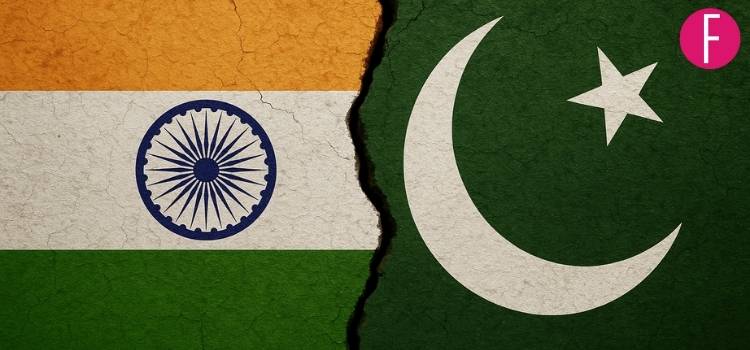
We laughed at the same memes. Cried over the same movie scenes. Shared admiration for Shah Rukh Khan and Mahira Khan, Fawad and Sonam, Atif Aslam and Arijit Singh. It felt like Partition was a wound that had begun to heal stitched together by art, music, and mutual fandom.
But last night shattered that hope.
The unprovoked Indian attack on Pakistani civilians on women, children, ordinary people asleep in their homes was not just horrifying. It was inhuman. But what stings more than the act itself is the response. The celebrations. The laughter. The cheering on social media. And heartbreakingly the applause from some Bollywood celebrities. Artists who we once thought transcended political boundaries. Artists we once adored.
When the Pahalgam attack happened, not a single Pakistani cheered. Our celebrities condemned it without hesitation. Not because it was Indian lives, but because they were human lives. There were no sides, just sorrow. And that, right there, is the difference.
How do you explain this difference in response?
The Two-Nation Theory, for years, has been dismissed by some as outdated, as a relic of the Partition. But today, in this climate of dehumanisation, it doesn’t feel so outdated anymore. Because if religion isn’t what sets us apart, then what is this compassion gap? This empathy void?
I used to think the Two-Nation Theory had expired. That we were ready for something new for unity, for shared identity, for love.
But love isn’t real when only one side shows up with flowers and the other with fire.
This isn’t about politics anymore. It’s about humanity and the lack of it. And I say this with a heavy heart: when you laugh as our children die, you prove why we needed a separate homeland to begin with.
And perhaps that’s the cruelest irony of all that the very people we thought were like us, reminded us why our ancestors chose to be apart.
But today, I understand why some bridges were never built. And why some borders, despite our songs and our screens, still exist.

