

In a recent incident that gained widespread attention on social media, renowned Pakistani singer Rahat Fateh Ali Khan found himself at the center of controversy after a video surfaced showing him behaving aggressively towards one of his employees. The brief clip, which quickly went viral, depicted Rahat grabbing the collar of the employee, apparently inquiring about the whereabouts of a ‘bottle.’
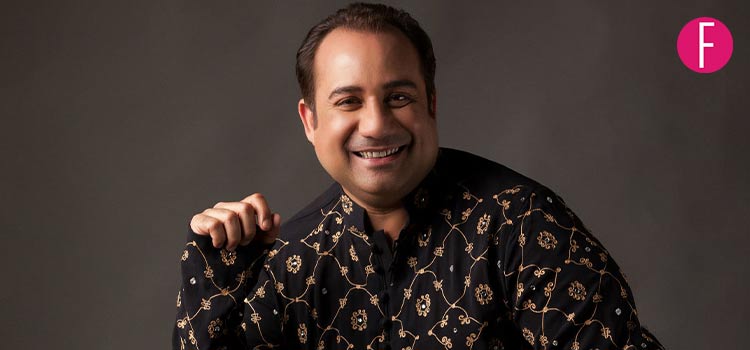
Facing the escalating backlash, Rahat released a video addressing the incident, where he introduced the employee in question, Naveed Hasnain, along with Naveed’s father, Nafees Ahmed. In an attempt to downplay the severity of the incident, Rahat framed it as a personal matter between a mentor and his pupil, emphasizing that such interactions were part of a disciplinary approach.
In further developments to the RFAK Controversy, Sufi singer Rahat Fateh Ali Khan has allegedly deleted the first clarification regarding his video that went viral on social media. (Read more below). He now appears in a second apology video to explain and apologize to his fans.
“The videos you’re watching are a personal matter between a mentor and his pupil…When a pupil does something well, we show them appreciation. In case of a mistake, we punish them as well,” Rahat stated in the video.
As a reaction to the events following the video, The British Asian Trust, an organization founded by King Charles III, has officially severed its ties with Rahat Fateh Ali Khan in the wake of a viral video capturing the singer physically assaulting an individual he referred to as his student. The decision to disassociate from Rahat was confirmed by a spokesperson for the trust, who stated that the organization had carefully reviewed the circulated video.
Expressing a firm stance against abusive behavior, the spokesperson declared, “The British Asian Trust has a strict policy towards abusive behavior and has ceased any association with Mr. Khan. We strongly condemn any form of violence whatever the circumstances.” The trust emphasized its commitment to taking all accusations of abuse seriously and assured a prompt investigation into the matter.
The trust’s swift decision to disassociate itself from Rahat Fateh Ali Khan underscores the gravity of the accusations, as they unequivocally condemned any form of violence. However, the larger question looms:
Will public figures like Rahat continue to evade lasting consequences for their actions?
In a society where celebrities and artists often escape severe repercussions for their misconduct, there’s a risk that Rahat’s career may weather this storm. Despite the British Asian Trust’s principled stance, the reality is that people may still hire him for events, and life may seemingly go on as before. This raises a fundamental concern about the efficacy of holding influential personalities accountable for their actions.
The way forward requires a united front in rejecting the normalization of abusive behavior by public figures. Organizations, fans, and fellow celebrities need to take a stand, emphasizing that talent or fame should never act as a shield against accountability.
Rahat Fateh Ali Khan’s attempt to downplay the alarming incident by framing it as a disciplinary matter within a “mentor and pupil” relationship adds another layer of concern to the controversy. The use of the teacher-student dynamic to justify an act of physical aggression is not only misleading but also dangerous.
The teacher-student relationship is one rooted in trust, guidance, and the pursuit of knowledge. It is a bond that holds a significant place in society, built on the foundation of mentorship, respect, and ethical responsibility. By invoking this relationship to explain an act of violence, Rahat not only misuses the dynamics of a mentor-student association but also risks trivializing the gravity of his actions.
In a genuine mentorship, the mentor assumes the responsibility of nurturing the growth, well-being, and character development of the pupil. It is a relationship that demands empathy, support, and encouragement, fostering an environment conducive to learning and personal development.
Such a portrayal of the teacher-student relationship is dangerous because it blurs the lines between authority, discipline, and abuse. It sends the message that physical aggression can be rationalized under the guise of mentorship, creating a troubling precedent that may be emulated by others.

