

Robert Redford’s passing at 89 marks the end of an era — not just for Hollywood, but for American culture. Tributes have poured in remembering the golden boy of Butch Cassidy and the Sundance Kid and The Way We Were, the rugged heartthrob whose tousled hair and piercing gaze defined a generation of cinematic leading men.
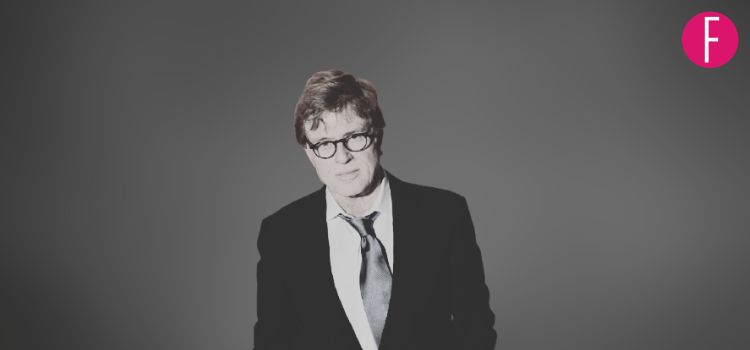
But to remember Redford only as a star is to miss the deeper story. His legacy stretched well beyond stardom: as an architect of independent cinema, a tireless environmentalist, and even a style icon whose presence shaped what “American cool” looked like for half a century.
The Godfather of Independent Film
In an industry ruled by studios and box office formulas, Redford dared to carve a new path. In 1981, flush from his Oscar win as director of Ordinary People, he turned his energy not toward another big-budget project but into founding the Sundance Institute. What began as a modest workshop for filmmakers in the mountains of Utah blossomed into the Sundance Film Festival — now the beating heart of independent cinema worldwide.
Sundance became more than a festival. It was a pipeline for voices Hollywood wasn’t ready for: Steven Soderbergh (Sex, Lies, and Videotape), Quentin Tarantino (Reservoir Dogs), Ava DuVernay (Middle of Nowhere), Jordan Peele (Get Out). Redford didn’t just create a festival; he created space for stories that questioned, disrupted, and reimagined what film could be. If Hollywood built the dream machine, Redford made sure outsiders had the tools to build their ownThe Reluctant Star Who Chose Activism
Redford never quite fit the mold of the Hollywood leading man. He was charming, magnetic, yes — but always with a streak of aloofness, even suspicion of fame itself. That same skepticism fueled his work as a director and activist. Whether in The Candidate dissecting political compromise, All the President’s Men exposing corruption, or later in Lions for Lambs questioning America’s wars, his projects reflected his unease with power and his instinct to challenge narratives rather than polish them.
Off-screen, his activism was even more profound. Long before climate change became a mainstream cause, Redford was lending his voice — and his platform — to environmental battles. From campaigns to protect Alaska’s Arctic Wildlife Refuge to his advocacy for clean energy, he aligned his celebrity with the urgency of conservation. Unlike many stars whose activism feels like a side hobby, for Redford it was central — part of the same restless, idealistic drive that made him walk away from easy Hollywood paths.
The Unintentional Style Icon
And then there was the look. Robert Redford may not have set out to be a fashion icon, but he became one nonetheless. His screen wardrobe — casual sweaters, sun-bleached jeans, the rugged western jackets — turned into archetypes of American masculinity. Unlike the sharp tuxedo elegance of Cary Grant or the rebellious leather of James Dean, Redford embodied a kind of effortless, outdoorsy cool: a man who looked as at home on a ski slope or in the Utah wilderness as on a red carpet.
It wasn’t just clothes — it was presence. Redford carried an ease that men tried to imitate and women adored. Designers still draw on that Redford aesthetic: sun-kissed hair, lived-in denim, workwear that whispered authenticity rather than screamed glamour. In an age when style is often manufactured, Redford’s was the real thing — the byproduct of someone more comfortable on a mountain than in a studio.
A Legacy Beyond Stardom
Robert Redford could have coasted on fame. He could have spent decades playing variations of the charming hero, cashing in on nostalgia. Instead, he used his career to build institutions, protect landscapes, and challenge the very industry that made him. His final years were marked by quiet exits — a cameo in Avengers: Endgame, a graceful farewell performance in The Old Man & the Gun — but his legacy will never be quiet.
Redford changed the texture of American film, reshaped the role of the celebrity activist, and left an imprint on style itself. He may have started as Hollywood’s golden boy, but he ended as something rarer: an artist, a builder, a conscience. More than a star, Robert Redford was a force — and the light he carried will not dim.
Sources: Al Jazeera, Variety, Times, Telegraph, CNBC

