

Hafsa committed suicide but what does it reveal about us as a society?
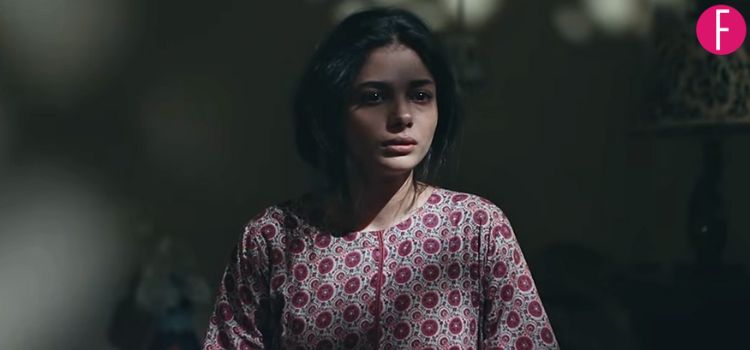
Hafsa’s death in SharPasand is a reflection of how easily a life can be destroyed when rumours are allowed to replace truth. Hafsa did not die because she was guilty of anything. She died because a manipulated narrative was given more credibility than her own voice.
Hafsa had an ovarian cyst and underwent surgery for it. Like any woman dealing with a medical condition, she visited a gynecologist for treatment. That should have been the end of the story. However, Rubina heard about Hafsa visiting a gynecologist and, based on her own assumptions, created a story in her mind and passed it on to Farasat. Farasat then secretly filmed Hafsa at the hospital to manipulate the narrative. His daughter Emaan, much like him, spread the video, deliberately twisting reality to give the lie a wider reach. Ironically, all three of them believed that what they assumed was, in fact, the truth.
The video was framed to suggest that Hafsa was pregnant before marriage and had gone for an abortion. With that single act of manipulation, a rumour was born – one that society was all too ready to believe. What followed was assumption. No one asked Hafsa why she was at the hospital. No one cared to hear the truth. The video circulated, whispers grew louder, and suspicion hardened into judgment.
One of the most disturbing questions SharPasand quietly raises:
Why is a woman visiting a gynecologist before marriage treated as something suspicious at all?
A gynecologist is not a moral checkpoint. Single women visit gynecologists for countless reasons – hormonal imbalances, cysts, irregular periods, infections, pain, fertility concerns, preventive screenings, or simply to understand their own bodies better. None of these have anything to do with being sexually active and none require marital status as permission.
Yet our society treats a woman’s visit to a gynecologist as an admission of wrongdoing. Her body is viewed as a moral symbol. The underlying assumption is deeply flawed – that women only visit gynecologists when they are pregnant. Farasat’s lie worked because it relied on this very belief: that an unmarried woman’s presence in a gynecology ward must be explained, defended, and justified. The issue was never Hafsa’s hospital visit; it was a mindset that confuses healthcare with shame.
As the rumour spread, Hafsa’s life began to collapse. Her fiancé called off the engagement without giving her the dignity of an explanation. Her private medical visit became a viral spectacle, and her workplace distanced itself once her reputation was questioned. Her extended family also disowned her. One by one, the structures meant to protect her failed.
Hafsa was not given a chance to justify herself. Society had already decided her truth. We live in a culture that believes what it sees without context and what it hears first without verification. Videos are treated as evidence, and silence – often born out of fear – is mistaken for guilt.
The most devastating aspect of Hafsa’s story is her isolation. Her pain was not just emotional; it was social. She was abandoned in every space that mattered – home, work, love, and community. Suicide, in this context, is not an individual weakness. It is the final outcome of collective cruelty.
SharPasand forces us to confront uncomfortable questions
Why do we protect honour more fiercely than human life? Why do we rush to judge instead of pausing to understand? Why is empathy so often absent when it is needed the most?
Hafsa is one of those victims who fell prey to rumours, fake news, and manipulated narratives – but she is also a victim of a society that values reputation over reality and judgment over justice. Her story is fictional, yet painfully familiar. Many real women have been silenced, shamed, and broken in the same way.
If Hafsa’s death is to mean anything, it must serve as a warning. The next time we encounter a rumour, a video, or a whispered accusation, we must ask ourselves whether we are willing to listen before we condemn. Because sometimes, all it takes to save a life is the courage to refrain from spreading negative news about someone, even if you believe it to be true.
Until we learn that truth does not always arrive loud or first – and that compassion is not weakness – stories like Hafsa’s will continue to repeat themselves, with devastating consequences for us all.
Catch Up All The Latest Drama Stories Here
Sharpasand is written by Sara Sadain Syed and directed by Aehsun Talish. It stars Naumaan Ijaz, Nadia Afgan, Hira Mani, Affan Waheed, Hassam Khan, Zuni Sheikh, and more. It is a project of iDream Entertainment.

