

US-Iran announced a framework ceasefire agreement aimed at halting months of escalating military confrontation and preventing the conflict from expanding into a wider regional war.
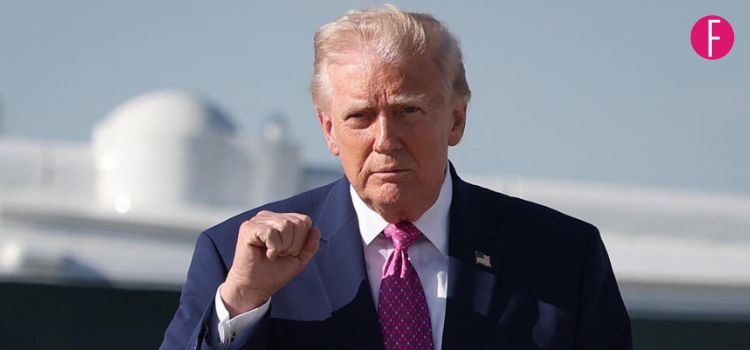
This deal was confirmed through a statement by U.S. President Donald Trump and further validated by Pakistan’s Prime Minister Shehbaz Sharif, noting that the deal will be formally signed on Friday in Switzerland.
Under the deal, there is a framework to observe a ceasefire where there shall be no more hostilities among the parties. This involves the end of military actions of any nature on both sides on all fronts, including direct confrontations between the United States and Iran as well as threat of conflict in the region. The ceasefire period will last for at least 60 days, while both sides will attempt to agree to the terms of a long-lasting agreement.
Despite being referred to as a “peace deal,” the text of the agreement has yet to be released to the public since some critical aspects are still under discussion.
Trump’s Announcement and Key U.S. Commitments
President Donald Trump announced that the United States had decided to call off active military involvement and to withdraw restrictions concerning access by Iran to its waters, portraying the move as a definitive effort to bring an end to the conflict.
The Strait of Hormuz emerged as a central element of the proposed agreement, with its reopening becoming one of President Trump’s top strategic priorities. Before the conflict, the waterway handled roughly one-fifth of the world’s oil and liquefied natural gas shipments, making its restoration critical to global energy markets.
According to Iran’s Supreme National Security Council, the deal calls for the immediate removal of the U.S. naval blockade on Iranian ports, which Washington had imposed during the conflict to curb Iran’s oil exports and trade. Iranian state-affiliated Mehr News Agency also reported that the draft agreement includes reopening the Strait of Hormuz, lifting the blockade within 30 days, and a U.S. commitment to withdraw military forces deployed around Iran.
In addition, the U.S. government has expressed its readiness for negotiation talks with Iran on its nuclear program, sanctions against Iran, and regional security challenges, insisting that Iran not be allowed to acquire nuclear weapons capacity.
Iran’s Position and Domestic Framing
Iran has officially joined the deal; however, it is being sold domestically as a win as Iran maintained its position in the face of opposition and had to negotiate with the US. The state-controlled media and Iranian officials have described this agreement as a sign that Israel and the US were not able to reach their objectives by force.
Kazem Gharibabadi, an official of the Iranian government, has stated that the deal encompasses the cessation of military actions as well as further steps towards negotiation, but at the same time maintains its strategic positions.
Reported terms circulating in Iranian media include:
An eventual easing of sanctions
A commitment not to develop nuclear weapons
Reopening of the Strait of Hormuz within 30 days
A 60-day negotiation period for final settlement terms
However, Iran has also stressed that implementation details and verification mechanisms remain under discussion, particularly regarding sanctions relief and nuclear material oversight.
Strait of Hormuz Reopens and Global Economic Impact
One of the crucial points in the new deal concerns the opening up of the Strait of Hormuz, one of the key energy transport channels in the world, through which approximately one-fifth of international oil and gas supplies flow.
The war had been putting international marine transport into jeopardy, threatening to cause a worldwide energy crisis. It was reported that after President Trump made his decision to lift the US blockade on Iran, the shipping industry resumed its operations, as evidenced by an oil tanker moving across the strait immediately after the statement.
The oil price decreased due to the new development in the relations between the two countries, as it became clear that there is less risk for the transportation of energy resources. Economic experts pointed out that although it may take time before total normalization takes place, the situation is more favorable now.
Pakistan’s Central Role as Mediator
It should be noted that Pakistan has become an important mediator in the ceasefire process, taking a leading role in ensuring a dialogue between Washington and Tehran through indirect talks held during several months.
Prime Minister of Pakistan, Shehbaz Sharif, reported in the national parliament that Pakistan was involved in mediation that led to signing the agreement framework. In addition, he mentioned Turkish, Chinese, Saudi Arabian, and Qatari support for these talks.
According to official statements and reporting, Pakistan’s role included:
Supporting diplomatic alignment among regional stakeholders
Facilitating backchannel communication between U.S. and Iranian officials
Hosting and coordinating indirect negotiation efforts
Helping draft and refine framework language for the agreement
Similarly, he thanked the Pakistani armed forces and the country’s foreign ministry staff for their involvement in maintaining negotiations amid periods of conflict.
This is considered to be one of the major diplomatic efforts of Pakistan in a major international conflict in recent times. It strengthens Pakistan’s position as an intermediary among rival world and Middle Eastern nations.
Lebanon Clause and Regional Military Dynamics
Another delicate issue that has been included in the agreement is the provision regarding military activities in Lebanon, where forces loyal to Iran and those from Israel have been fighting each other on a regular basis.
According to Pakistan, which was mediating between the US and Iran, the two sides had come to an agreement of ceasing military activities in Lebanon permanently within the ceasefire agreement. Joseph Aoun, President of Lebanon, received the news well and expressed hope that the violence could be stopped and stability achieved by taking appropriate actions.
Yet many uncertainties still exist. The Israelis have stated that their forces will continue to stay in some regions of Lebanon for a very long time without any intention of leaving the area. Moreover, there were reports that the Israeli army has been conducting military exercises in southern Lebanon despite the ceasefire agreement reached recently.
Israel’s Response and Political Tensions
There has been an intense reaction from Israeli political figures over the agreement, with the opposition stating that the agreement is compromising the strategic position of Israel in the region. The defense department has also emphasized that Israel is not obligated under the United States-Iran agreement, especially on their operations in Lebanon.
Some Israeli government members have said that the military strategies towards Hezbollah have remained constant, but some have threatened retaliatory action from Israel in case there is any form of escalation related to Iran. This shows that even as the U.S.–Iran conflict was addressed in the agreement, some other regional conflict remains unresolved, notably those involving Israel.
The general reaction from the international community is favorable, especially from Europe and the Gulf States. The leaders of the European Union have seen the agreement as a “potential breakthrough” that may lead to an end of energy crises and open doors for further negotiations regarding Iran’s nuclear program. The agreement has generally been referred to as a “managed pause in war” rather than an outright solution to the situation because the sustainability of the agreement will be influenced by factors in the coming weeks.
Although the agreement has led to economic benefits and de-escalation within just the first hours, the upcoming negotiations over the next 60 days will decide whether this is a temporary break in hostilities or a step towards peace.
Sources: Al Jazeera, BBC, and Reuters.

