

Doctor Bahu has sparked conversations about far more than just family drama. Salman’s character, in particular, has left viewers divided. Some see him as a loving husband weighed down by family pressures, while others view him as increasingly controlling and emotionally volatile.
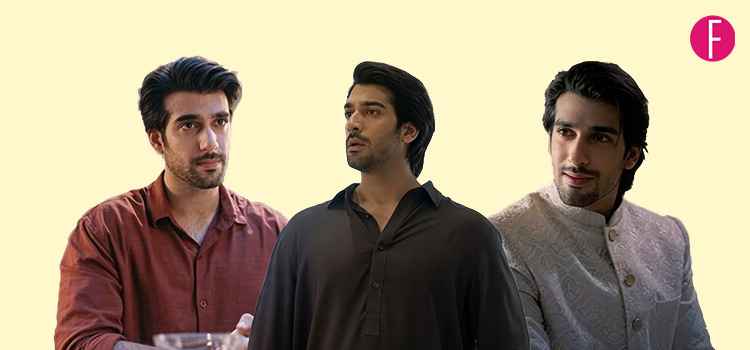
To better understand the psychology behind his actions, we spoke to our onboard therapist Dr Sheeza Mohsin about the emotional patterns, childhood experiences and relationship dynamics that may be shaping Salman’s behaviour. Rather than diagnosing a fictional character, these insights explore the psychological concepts reflected in his story—and why they resonate with so many viewers.
1. Salman often lashes out during moments of stress and later apologises. Is this poor emotional regulation, or could it point to something deeper?
While it does reflect poor emotional regulation, but poor regulation rarely develops in a vacuum. Salman appears to have spent much of his life feeling criticised, compared and fundamentally disappointing to his father.
When someone grows up without feeling emotionally safe or valued, stress in adulthood can trigger deeper feelings of shame, and inadequacy.
His anger may therefore be the emotion we see, but it may not be the emotion driving him. Underneath the anger may be fear, humiliation, grief and the belief that he is once again losing control or failing to measure up.
His apologies matter, but an apology after every explosion is not the same as emotional growth. Genuine regulation means learning to recognise the escalation earlier, communicate the vulnerable emotion underneath it and interrupt the behaviour before another person is harmed.
A lot of times in relationships Couples bring forth the argument that when they explore emotionally why doesn’t the partner accept the apology? They have to remember that a changed behavior is the most effective apology.
2. Salman grows up feeling overshadowed by his family and constantly seeking his father’s approval. How can childhood emotional invalidation shape someone’s adult relationships?
Children build their sense of worth partly through the emotional mirrors provided by their caregivers.
When a child repeatedly receives the message that who they are is insufficient, they may enter adulthood still trying to earn the approval they never securely received.
It’s a very unhealthy habit in our culture to compare brothers and sisters with each other whether it is grades or careers or family members comparing each other with their cousins.
That unfinished longing can follow them into marriage. They may become highly sensitive to disagreement, interpret feedback as rejection, avoid confronting powerful family members or expect a spouse to repair wounds created long before the relationship began.
Salman’s struggle could be that he wants Sania’s love, but he may resent her because her being a doctor also builds his legitimacy with his father, since he’s not good enough on his own. Emotional invalidation can undermine trust in one’s own feelings and contribute to chronic shame, insecurity and dysregulation.
3. Can being repeatedly criticised or dismissed by a parent create long-term feelings of inadequacy or inferiority?
Absolutely. When criticism is chronic—particularly when it targets a child’s identity rather than a specific behaviour—the child may internalise it as: “There is something wrong with me.”
Salman is not unsuccessful. He runs a successful business. Yet within his family, professional worth appears to be defined almost exclusively through medicine. He therefore continues to experience himself as inferior despite evidence of financial success.
This is an important distinction: self-esteem is not based only on what we achieve, but the people whose love matters most for us recognize, respect and consider it the same as well.
4. Is Salman trying to become the authority figure he never felt he had, or is he simply repeating unhealthy family patterns?
It may be both.
People often repeat what they have not consciously examined. Salman has grown up observing a model in which authority belongs to the person who controls the household, defines what success means and expects everyone else to accommodate him. Although Salman resents his father’s dominance, he may still have absorbed dominance as his primary template for masculinity and leadership.
When he feels powerless, becoming controlling may offer him a temporary sense of authority. In that way, he is not merely imitating his father; he may be trying to escape the helplessness he experienced as his father’s son.
This is one of the painful realities of intergenerational trauma: we can consciously reject a parent’s behaviour while unconsciously reproducing it under stress.
Research often confirms that the abused and perpetuating behaviors that went unchecked, make them the abuser.
5. How do unresolved grief and accumulated trauma affect emotional regulation? Is insight alone enough to change behaviour?
Unresolved grief and accumulated relational trauma reduce a person’s emotional capacity. The nervous system can become more reactive, ordinary disagreements can feel threatening and present-day events can awaken the emotional intensity of earlier losses.
Salman may not be responding only to what is happening with Sania in the present. He may also be responding to years of rejection, accumulated resentment, fear of losing his mother and the collapse of his place within the family.
Insight is essential, but insight alone is rarely enough. A person may understand exactly why they behave a certain way and still repeat the behaviour. Real change requires 3 critical factors among other things; the need or motivation for change; a consequence or boundary if the change doesn’t happen; tolerating discomfort, and a commitment to sustain the change.
6. Salman initially supports Sania’s career but later becomes controlling. What can explain such a drastic shift?
This is a fundamental question that affects a lot of families where the idea of a woman going to work and systemic change is something that requires family support is underestimated on top of the emotional and psychological factors that this drama portrays.
This is an issue that working Women face in general, not just Doctors.
It is relatively easy when it remains theoretical. The true test comes when a partner’s career begins to challenge family expectations, gender roles, routines or the other person’s sense of importance.
Initially, Salman may genuinely admire Sania’s independence. But once her career creates conflict with his family, exposes his inability to protect her or requires him to oppose his father, her sense of independence may begin to feel threatening.
Several psychological factors may also be operating simultaneously: insecurity, fear of abandonment, unresolved resentment, dependence on parental approval and an internalised belief that marriage should restore male authority.
He may also expect Sania to provide the emotional loyalty and admiration he never received from his father.
7. Why do some partners become more controlling during major life transitions such as pregnancy?
Major transitions can intensify pre-existing insecurities. Pregnancy changes roles, attention, finances, intimacy, family involvement and expectations about the future. A partner who already struggles with uncertainty may attempt to manage that anxiety by managing the other person.
Control can increase when someone fears being displaced, becoming less important or losing influence over the relationship. Cultural beliefs may also become more rigid. A man who previously supported his wife’s work may suddenly invoke ideas about what a pregnant woman or mother “should” do.
Pregnancy does not create controlling behaviour from nothing. It often reveals beliefs and vulnerabilities that were easier to conceal when the relationship was less demanding. Controlling behaviour should be taken seriously, particularly when it restricts a partner’s autonomy, healthcare, work, movement, finances or relationships.
8. Salman believes he is acting out of love, yet his actions cause harm. How can someone confuse control with care?
Control and care can sound similar because both may use the language of concern. The difference lies in whether the other person retains choice.
Care says, “I am worried about you. How can I support you?”
Control says, “Because I am worried, I have the right to decide for you.”
In many families, protection is presented as a loving justification for limiting women. Salman may sincerely believe that he is reducing Sania’s stress or preserving the family. But intentions do not erase impact.
Love without respect for autonomy can become possession. Care requires curiosity, consent and collaboration. When concern is used to silence another person, override their decisions or make their world smaller, it is no longer simply care.
9. How do we distinguish between understanding someone’s behaviour and excusing it?
Understanding asks, “What happened to this person that may help explain this behaviour?”
Excusing says, “Because something happened to this person, they should not be held responsible for the harm they cause.”
We can have compassion for Salman’s childhood wounds and still hold him accountable for how he treats Sania. His history may explain his sensitivity, anger and need for approval. It does not give him permission to control, intimidate or emotionally injure his wife.
A trauma-informed perspective should increase accountability, not remove it. Once we understand the source of a pattern, we become more responsible for changing it.
10. Would you describe Salman as emotionally immature, insecure, traumatised, or a combination of all three?
I would describe him as a fictional character creatively designed for our learning that I do not wish to diagnose.
He shows emotional immaturity when he reacts impulsively, centres his own distress and expects an apology to quickly restore the relationship. He shows insecurity through his continuing need for his father’s approval and is quick to feeling disrespected or displaced. He also appears to carry relational trauma from years of criticism, comparison and emotional exclusion.
These qualities are interconnected. His insecurity fuels his reactivity; his unresolved wounds limit his emotional capacity; and his immaturity prevents him from taking consistent responsibility.
The most accurate description may be that Salman is emotionally wounded and not held accountable for his behavior. His pain deserves understanding, but Sania should not have to become the container for it.
11. What would Salman have needed to do differently to prevent his struggles from damaging his marriage?
He would have needed to stop asking Sania to absorb the consequences of wounds created by his family, and justify his emotionally regulated behavior towards his wife.
That would require several changes:
He would need to work with a professional to:
- acknowledge his father’s emotional impact without continuing to organise his life around gaining his approval.
- establish clear boundaries with his family before expecting Sania to tolerate their interference.
- communicate fear, grief and insecurity before those emotions became anger.
- support Sania publicly, consistently and practically—not only privately when the risk is low.
- Present through acts of service, words of affirmation, public and private; to create emotional safety and respect for his wife in his home, with his family and in his life.
12. How can someone raised in a critical household break intergenerational patterns before they affect their own family?
That is a very difficult thing to do while continuing to live in that household.
A person must identify the toxic rules they inherited:
- Do I believe that when my loved ones don’t agree with me they are disrespecting me?
- Do I believe that if I have to motivate my loved ones I have to compare them with more successful people or criticize them?
- Do I withdraw love or give my loved ones silent treatment when I am disappointed with them?
- Do I believe my loved ones accept my final authority when they let me have the final word, even if it is not reasonable or fair?
- Do I feel threatened when my partner or child disagrees with me or tell me that I’m wrong and I lash out at them?
They then need to develop an alternative relational vocabulary—one based on validation, boundaries, emotional responsibility, repair and mutual influence and respect.
Breaking a cycle also means tolerating the discomfort of behaving differently from one’s family.
Salman would have to accept that becoming a healthier husband might require disappointing his father.
Differentiation is the ability to remain emotionally connected to one’s family without surrendering one’s values or allowing the family to govern one’s marriage.
Intergenerational patterns change when someone stops saying, “This is simply how our family is,” and begins asking, “What kind of emotional experience do I want to create in the family I am building?”
Dr Sheeza Mohsin is a Couples Therapist, and an Executive Coach, focusing on Mental Health for Men, with a Global Practice.Her newly created website www.dilkirecipes.com and related social media platforms are just now launching to support the South Asian diaspora in the United States and abroad.

