

Sudan is in crisis—millions are displaced, cities lie in ruins, and human rights abuses are rampant. Yet, the silence from the world is deafening. How is it that a catastrophe of this scale barely registers on our radars? When a country is caught in such turmoil, why does it go ignored? The answer is complex, pointing to media’s selective spotlight, a global hierarchy of empathy, and the uncomfortable reality of who gets noticed and who doesn’t.
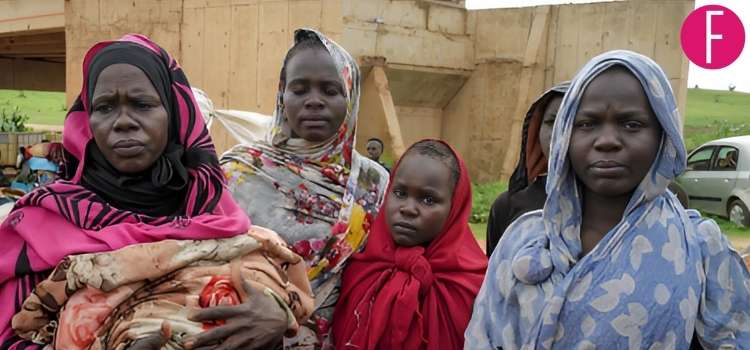
It’s the largest displacement crisis of the year, with reports of mass rape, ethnic cleansing, and violence against civilians. But despite this, we hear little about it, even as humanitarian aid is critically underfunded and millions of lives are left vulnerable.
Read on to find out more.
What is Happening and Why?
Sudan has been engulfed in a brutal war since April 2023, primarily involving two military factions: the Sudanese Armed Forces (SAF) and the paramilitary Rapid Support Forces (RSF). Initially, this clash stemmed from a power struggle between rival military leaders General Abdel Fattah al-Burhan (SAF) and General Mohamed Hamdan Dagalo (RSF). Yet, it’s the millions of Sudanese civilians who bear the burden of this relentless violence. With both factions vying for control, Sudan’s cities and infrastructure are being systematically destroyed, and humanitarian conditions are worsening by the day. The prolonged fighting has devastated Khartoum, Omdurman, and the Darfur region, effectively turning neighborhoods into war zones and rendering everyday life unliveable for many.
The Human Toll: Largest Displacement Crisis in 2023
The United Nations International Organization for Migration (IOM) recently declared Sudan’s crisis as the largest displacement event worldwide this year, with over 10 million people displaced. This includes 8 million people displaced within Sudan itself and more than 2 million who have sought refuge in neighboring countries such as Chad, Egypt, and South Sudan. In addition to displacement, the war has driven over 24,000 fatalities since it reignited, further highlighting the scale of devastation
As the conflict has worsened, the UN warns that nearly half of Sudan’s population now faces acute food insecurity. Around 17.7 million people are struggling to meet their basic nutritional needs, with 4.9 million on the brink of famine. Cholera and other diseases have started spreading among the displaced due to overcrowded camps and inadequate healthcare access—conditions exacerbated by a collapse in the healthcare system, with over 70% of hospitals no longer operational
Widespread Human Rights Violations and War Crimes
A recent report by the UN Independent International Fact-Finding Mission for Sudan revealed large-scale violations of human rights and humanitarian law by both the SAF and RSF. Both sides are implicated in atrocities such as mass rape, ethnic cleansing, and widespread violence against civilians, particularly in the western region of Darfur. The RSF has been identified as responsible for the majority of documented sexual violence cases, including gang rapes and actions amounting to sexual slavery. Shockingly, children are not exempt from these abuses, with reports of abduction and forced recruitment by the RSF.
A UN report revealed that since the conflict began, at least 400 survivors of conflict-related sexual violence have been documented up to July 2024, though the actual number is likely much higher.
“The scale of sexual violence we have recorded in Sudan is truly staggering,” said Mohamed Chande Othman, the chair of the UN panel that compiled the report.
The victims, aged between eight and 75 years, require medical treatment, but most hospitals and clinics have been destroyed in the ongoing fighting, according to the UN.
These violations are extensive, with the UN noting that both factions have engaged in pillaging, looting, and other acts that may amount to war crimes and crimes against humanity. Particularly alarming is the scale of violence against women; the RSF is accused of systematic sexual violence, creating an atmosphere of fear and suffering among the female population
Why Isn’t Sudan In The News?
Sudan’s crisis has been unfolding with devastating human suffering, yet it remains largely out of the global media spotlight, especially when compared to the heavy coverage of the Israel/Gaza and Ukraine conflicts. There are several reasons for this lack of attention.
First, communication lines within Sudan have been severely disrupted. The army and the Rapid Support Forces (RSF) have destroyed or shut down cellular networks and internet access across parts of the country, making it incredibly difficult for Sudanese citizens to share updates and get their voices heard internationally.
Second, international engagement in Sudan has dwindled significantly over recent years. Diplomatic, humanitarian, and peacekeeping missions have reduced their presence, leaving limited personnel on the ground to provide reliable information to the outside world.
Finally, Western media outlets, especially in the U.S., largely shifted focus away from Sudan after evacuating embassy staff from Khartoum early in the conflict. Other crises are prioritized for complex reasons: they may more directly impact U.S. politics, align with trending issues on social media, or drive higher engagement and revenue for news outlets. Additionally, there tends to be a broader disinterest in African issues in Western media.
Are There Any External Players?
Sudan plays a crucial role in the UAE’s broader strategy in Africa and the Middle East, where the Emirati government is working to solidify its influence and prevent the spread of democracy. Since 2015, the UAE has recruited fighters from Sudan’s warring factions to support its military campaign in Yemen. The UAE is also Sudan’s largest buyer of gold and has substantial investments aimed at developing port infrastructure along the Red Sea coast.
By supporting the Rapid Support Forces (RSF), the UAE has weakened Sudan’s democratic transition that started after the 2019 ouster of longtime dictator Omar al-Bashir. When the recent conflict erupted in Sudan, reports surfaced that the UAE helped the RSF by setting up logistics to supply weapons through connections in neighboring countries like Libya, Chad, and the Central African Republic. These supplies were allegedly disguised as humanitarian aid. Additionally, much of the RSF’s business, finances, logistics, and public relations operations are reportedly run out of the UAE, and injured RSF fighters are sent to Abu Dhabi for medical treatment. The RSF’s commander, Mohamed Hamdan Dagalo, also known as Hemedti, has been seen traveling on an Emirati-owned airplane to other African nations, allegedly backed by the UAE.
A United Nations report from January indicated credible evidence of UAE military support for the RSF, though the UAE denies any involvement. Despite this, the UAE’s ties to the RSF have become widely recognized, with some U.S. lawmakers criticizing the country’s involvement, although U.S. and U.K. officials tend to speak more cautiously, acknowledging only the “negative roles” of external actors in the conflict. Recently, American rapper Macklemore canceled a concert in Dubai, citing the UAE’s role in Sudan’s humanitarian crisis, which briefly refocused international attention on Abu Dhabi’s influence in the war.
The UAE’s involvement in Sudan reflects its foreign policy over the past decade, which involves aligning with local forces to secure its political and economic interests across the Middle East and East Africa. Hemedti is widely seen as a guardian of Emirati interests in Sudan, particularly in the gold and agricultural sectors.
Gold, in particular, has fueled the Sudanese conflict, with both sides profiting from it to support their military efforts. The UAE receives the majority of Sudanese gold, often smuggled through unofficial channels, and has become a key point for laundering this gold on the global market. In 2022, the UAE’s official imports of precious metals from Sudan were valued at about $2.3 billion.
Additionally, as a country that imports 90% of its food, the UAE has prioritized food security since the global food crisis in 2007. This has led to extensive investments in agricultural lands abroad, including Sudan, where two Emirati firms currently cultivate over 50,000 hectares. The produce is then shipped via the Red Sea, bypassing Sudan’s main port. In 2022, the UAE signed a deal to build a new port in Sudan, operated by the Abu Dhabi Ports Group, giving the UAE even greater control over Sudan’s agricultural exports.
Other People’s Problems?
Africa’s suffering is not a new story. It has been ongoing for decades. From the Rwandan genocide to the devastating wars in the Democratic Republic of Congo, the world has repeatedly failed to intervene in time to prevent unimaginable atrocities. Why are these crises always “other people’s problems,” left to fester while the global community turns to more “pressing matters”?
There is a stark hypocrisy in the way the world responds to crises. When conflict hits European or Western shores, there’s an immediate outcry. When it affects Africa, however, it’s as if those lives are worth less, their suffering somehow not as urgent. The reality is that the lives lost in Sudan, or anywhere else in Africa, are no less valuable. Yet, they are treated as if they are. Does racism have many faces, and is this, unfortunately, one of them?
The emotional and moral toll of ignoring these crises is immense. The people of Sudan, and countless others across the African continent, are not faceless statistics. They are mothers, fathers, children, and siblings — people with dreams, hopes, and aspirations, just like anyone else. They should not have to live in fear, in displacement, or in a perpetual state of violence because the world has decided that their pain isn’t worth attention.
This isn’t just a call to governments or international organizations. It’s a call to all of us. It’s time to demand more from our media, from our leaders, and from ourselves. Sudan and many African nations need more than just a passing mention. They deserve real action, real support, and real solidarity. We cannot afford to keep ignoring their suffering.
Source: IRC, Guardian, Al Jazeera, The Conversation

