

A powerful earthquake measuring 7.8 in magnitude struck the southern Philippines on 8 June 2026, shaking large parts of Mindanao and nearby provinces. The tremor hit early in the morning around 7:37 a.m. local time, catching many people during school hours and daily routines, which added to the level of panic across affected areas.
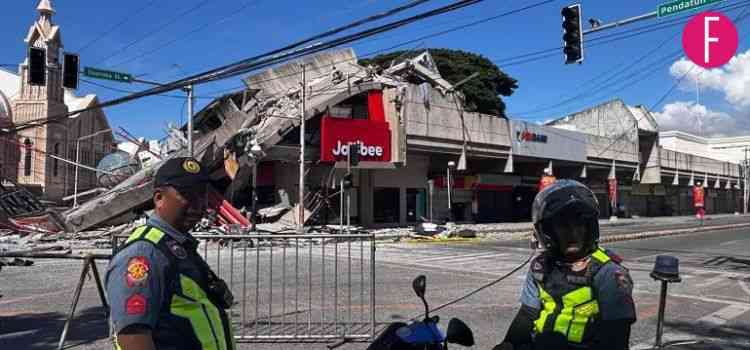
Image Credits: Al-Jazeera
The quake originated offshore near the southern Mindanao region, and due to its strong intensity and shallow depth, the shaking was widely felt across cities and smaller towns. General Santos City and surrounding districts reported some of the most severe impacts, with multiple buildings sustaining heavy damage or collapsing entirely within seconds.
Authorities confirmed that at least 32 people have died as a result of the earthquake, with more casualties feared as search and rescue operations continue. Over 100 people have also been injured, many of them pulled from debris or treated for trauma-related injuries after collapsing structures and falling objects.Emergency teams are working through damaged residential and commercial buildings, where the level of destruction has made rescue efforts extremely challenging. Hospitals in the region are also under pressure, with some facilities partially damaged and forced to shift patients into temporary outdoor treatment zones.
Officials have cautioned that the casualty numbers are still not final, as communication with remote and severely affected areas remains difficult. The toll is expected to change as more information becomes available.
Tsunami alerts issued across the region before easing
Following the quake, tsunami warnings were briefly issued in several countries across the Pacific region, including the Philippines, Indonesia, and Japan. Coastal communities were advised to move to safer elevations while monitoring potential sea level changes.
Although minor wave activity was observed in some areas, no major tsunami developed. After continuous monitoring, most warnings were lifted within hours. However, authorities continued to advise caution due to possible fluctuations in sea conditions.
The event once again highlights the Philippines’ exposure to seismic activity due to its location along the Pacific Ring of Fire, one of the most earthquake-prone zones in the world.
Government response and ongoing emergency operations
The Philippine government quickly activated national disaster response systems following the quake. President Ferdinand Marcos Jr instructed all relevant agencies to prioritise rescue operations, evacuation support, and immediate relief distribution in affected regions.
Schools in impacted provinces were shut down as a precaution, especially after several educational buildings suffered structural damage. Transport disruptions were also reported in some areas, with flights and airport operations temporarily affected for safety inspections.
Authorities have warned residents to remain alert due to continuing aftershocks, some of which have been strong enough to be felt across multiple provinces. People have been urged to stay away from damaged infrastructure until safety checks are completed. Relief and humanitarian assistance efforts are now underway, focusing on providing shelter, food, and medical care to displaced families while rescue teams continue searching for survivors.
Sources: BBC, Al-Jazeera, CNN, Khaleej Times
Head to our Instagram to catch up on the latest news!

