

If you’ve been scrolling lately and suddenly found yourself emotionally invested in a tiny monkey hugging a giant stuffed toy — you’re not alone.
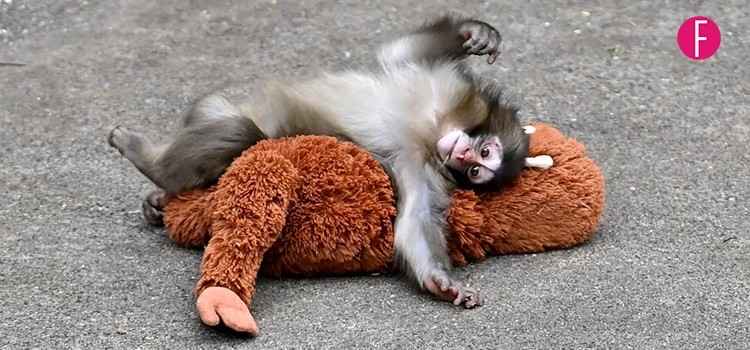
Meet Punch, a baby Japanese macaque born last July at Ichikawa City Zoo in Japan. What started as a quiet, heartbreaking situation inside a zoo enclosure has now turned into a global wave of sympathy, soft toys, and 40+ million views.
So… why is Punch going viral?
The Backstory That Broke the Internet
Shortly after birth, Punch was rejected by his mother — something primatology experts say is rare but not unheard of. According to Alison Behie, a primatologist at Australian National University, abandonment can happen due to factors like a mother’s age, health, or inexperience.
But for Punch, that meant one very important thing: no one to cling to.
Baby Japanese macaques instinctively hold onto their mothers immediately after birth. It helps build muscle strength and gives them a sense of security. Without that attachment, Punch was left alone in an environment where bonding and social hierarchy matter a lot.
That’s when zookeepers stepped in.
The IKEA “Surrogate Mother”
After trying rolled-up towels of different sizes for him to grip onto, caretakers finally gave Punch something that changed everything — a large DJUNGELSKOG orangutan plushie from IKEA.
And just like that, the internet had its main character.
Videos began circulating of tiny Punch dragging the oversized plush toy across his enclosure, clinging to it desperately, sleeping on top of it, and hugging it whenever he felt threatened. It wasn’t just cute — it was deeply emotional.
The toy wasn’t just a toy. It became his comfort. His security blanket. His stand-in mother.
The “Outcast” Narrative
If the plushie made people smile, what happened next made them protective.
Clips showed Punch attempting to socialize with older macaques — only to be pushed away, chased, and in some cases, aggressively dragged in circles by a much larger monkey. In one particularly distressing video, he runs to hide behind a rock, clutching his stuffed orangutan tightly.
That’s when hashtags like #HangInTherePunch (and its Japanese version #がんばれパンチ) started trending worldwide.
For many viewers, the story felt painfully relatable: the rejected baby, the outsider trying to fit in, the underdog holding onto comfort in a world that feels too big.
A Small Monkey, A Big Conversation
Experts have pointed out that without maternal guidance, Punch may struggle to learn proper submissive signals — crucial for navigating macaque social hierarchies. In primate societies, knowing how to respond to dominance isn’t just social etiquette; it’s survival.
The stuffed orangutan may be acting as what psychologists call an “attachment figure,” especially since Punch is still at an age when he would normally be nursing.
In other words: that plushie might be doing more than we think.
The Unexpected IKEA Effect
Here’s the twist no one saw coming — the DJUNGELSKOG orangutan plushie has reportedly seen a surge in sales in Japan, the US, and South Korea. Some stores even sold out after Punch’s videos went viral.
A baby monkey hugged a toy… and accidentally boosted global retail demand.
The internet truly works in mysterious ways.
Zoo Visits Surge — And So Does Concern
Since going viral, Ichikawa City Zoo has seen a spike in visitors wanting to catch a glimpse of Punch. Officials have had to enforce stricter barriers and ask guests to remain quiet and avoid disruptive photography setups.
Because at the end of the day, beyond the hashtags and heart emojis, this is still a real baby animal navigating a complex social world.
Sources: The Guardian, New York Times


Comments 1