

On Thursday, Israel reported that its forces had eliminated Hamas leader Yahya Sinwar during a Gaza operation. Khalil Hayya, head of Hamas in Gaza, has now confirmed the news that Sinwar was killed by Israeli forces.
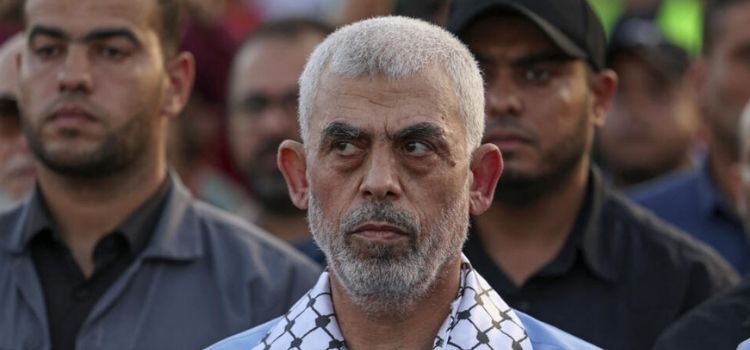
Read on to learn more about Yahya Sinwar and his crucial role in Hamas.
Yahya Sinwar was born in 1962 in the Khan Younis refugee camp in southern Gaza. His family had been forcibly displaced from their home in Ashkelon during the 1948 Nakba when hundreds of thousands of Palestinians were expelled. Sinwar studied Arab studies at the Islamic University of Gaza, where he became involved in student politics and activism.
His first arrest came in 1982, due to his participation in anti-occupation activities. Three years later, he was arrested again, and during this time, he met Ahmed Yassin, who would later found Hamas. Yassin invited Sinwar into his close circle, and Sinwar eventually co-founded Majd, an organization responsible for identifying and eliminating Palestinian collaborators with Israel, which became the first security apparatus of Hamas.
In 1988, Yahya Sinwar was arrested again by Israeli forces and sentenced to four life terms, totaling 426 years in prison. He was accused of being involved in the capture and killing of two Israeli soldiers and four suspected Palestinian informants. This led to his imprisonment for 23 years. During his time in captivity, Sinwar learned Hebrew, regularly read Israeli newspapers, and familiarized himself with Israeli politics and culture to better understand his adversary. While in prison, he also wrote a novel titled The Thorn and the Carnation, drawing inspiration from his experiences growing up in Gaza.
In 2011, Israel’s Prime Minister Benjamin Netanyahu brokered a deal to release 1,047 Palestinian prisoners in exchange for Israeli soldier Gilad Shalit, who had been captured in 2006. Sinwar was among the most prominent prisoners freed as part of that exchange.
While in detention, Yahya Sinwar wrote a 240-page novel titled Thistle and the Cloves, which captures Palestinian life from the 1967 Mideast War up to the start of the second intifada in 2000. In the introduction, Sinwar clarifies that although the incidents in the book are based on real events, it is not his personal story or that of any specific individual.
In 2008, Sinwar overcame an aggressive form of brain cancer, receiving treatment at a Tel Aviv hospital. Among his fellow prisoners, he was known for his charisma, sociability, and sharp intellect, connecting with detainees across various political factions. He rose to lead the Hamas members imprisoned alongside him, organizing strikes to improve their conditions. Sinwar learned Hebrew, immersed himself in Israeli society, and even shared homemade kunafa, a popular dessert, with his fellow inmates.
Anwar Yassine, a Lebanese citizen who spent 17 years in Israeli jails alongside Sinwar, remarked that his leadership experience in prison helped him develop negotiation skills and a deeper understanding of the enemy’s mentality.
Yahya Sinwar’s Rise Within Hamas
After his release, Yahya Sinwar quickly rose within Hamas, joining its political bureau within a year. He played a significant role in coordinating with the Qassam Brigades, Hamas’s military wing. Sinwar was both politically and militarily involved in Hamas’s actions during the seven-week conflict with Israel in the summer of 2014. Following that war, the United States designated him a “specially designated global terrorist.” In 2017, Sinwar became the leader of Hamas in Gaza, a position he held until recently. That same year, he led reconciliation efforts with Fatah and the Palestinian Authority, mediated by Egypt, with whom he maintained a strong security relationship.
Sinwar has employed both non-violent and armed strategies. In 2018, he was instrumental in organizing the “Great March of Return” protests, demanding the lifting of Gaza’s siege and the right of return for refugees. Israeli forces responded with force, killing 230 protesters. He also led Operation Sword of Jerusalem in 2021, a response to Israeli airstrikes on Gaza.
Most notably, Sinwar is believed to have orchestrated Operation Al-Aqsa Flood, which culminated in Hamas’s attack on October 7, 2023.
In August, a week after the Israeli assassination of then-Hamas political chief Haniyeh, Sinwar was chosen as successor.
As Israel’s ongoing actions in Gaza have claimed over 42,400 Palestinian lives, with countless more trapped under rubble and facing illness, the toll of this war continues to devastate Gaza. Sinwar’s legacy, marked by both armed resistance and political leadership, remains tied to the broader struggle of the Palestinian people.
Source: AP News, Middle Eastern Eye

