

There’s a reason K-dramas and C-dramas don’t just “trend” among Gen Z – they settle in. They take over our comfort watch, emotional references, aesthetic inspiration, and sometimes even a way of understanding relationships and life itself. For a generation that grew up online, constantly exposed to content yet often emotionally overwhelmed, storytelling is no longer just about entertainment. It’s about recognition – about finding something that says, “I get what you’re feeling.”
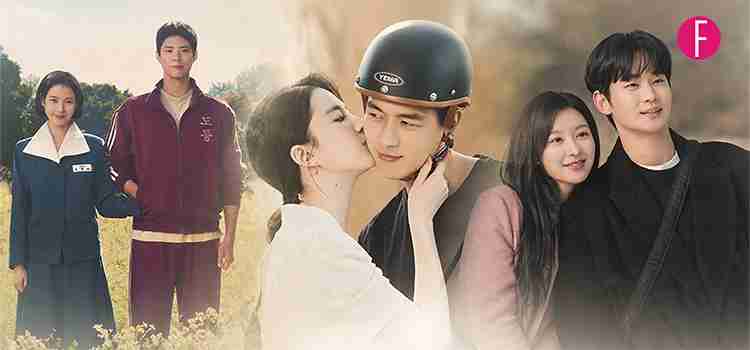
And that’s where Korean and Chinese dramas enter the picture. This is not meant as a substitute for any other industry, but rather because this generation understands emotions differently – through visuality, depth, gentleness, and digital culture. As you observe the trends around you in Pakistani society, this is not too far from reality either. A common thing you might notice is a girl convincing her guy friend by saying that all he has to do is “watch just one K-drama, and then you will understand how relationships work.” You might also realize that almost every household has at least one or two youngsters who are completely into K-dramas and C-dramas – not just casually watching them, but fully immersed in their fashion sense, love language, visual style, emotional expressions, symbolism, and yes, even ramen somehow happily sneaking into the experience.
K-Dramas depict Gen Z life in a very direct, grounded way. College pressure, workplace stress, the expectation to be “first,” to be better than everyone, to earn more, to constantly prove yourself – these are not side themes in many K-dramas and C-dramas, they are central to the narrative. You’ll see bullying in schools, toxic competition in universities, exhausting office culture, and the emotional toll of trying to keep up with society’s expectations. Pakistani dramas are also increasingly moving toward addressing these social issues, which is a positive shift, but K-dramas and C-dramas have been exploring these themes for much longer and in a more consistent, mainstream way. Even shows like Weak Hero Class 1 openly confront school bullying and violence, while Cheer Up and Sky Castle highlight academic pressure and elite competition. In C-dramas, A Little Thing Called First Love touches on youth insecurity and self-worth struggles. These stories don’t just show problems – they often teach a lesson through them, whether it’s about empathy, kindness, mental health, or the consequences of pressure-driven environments. For Gen Z, this feels extremely real because it mirrors their own lived experience of competition, comparison, and constant self-improvement pressure.
Here’s why we think Gen Z all over the world has emotionally shifted toward K-dramas and C-dramas!
1. Emotional realism: Gen Z finally seeing their inner world on screen
One of the strongest reasons Gen Z connects with K-dramas and C-dramas is because they don’t hide pain – they center it. These dramas don’t only show what happens in life, but what it feels like to go through it. Struggle is not treated as background noise; it is the core of the story.
For example, My Mister portrays deep emotional exhaustion and loneliness in a way that feels painfully real, focusing on survival rather than quick healing. Move to Heaven handles grief with extraordinary sensitivity, showing how loss reshapes people slowly and permanently. Twenty-Five Twenty-One captures ambition and youth alongside disappointment and heartbreak, showing that not everything in life ends the way we imagine. These dramas don’t romanticize pain – they respect it, giving it time and emotional weight.
In C-dramas, Meet Yourself reflects burnout and emotional emptiness, showing the desire to escape a life that feels too heavy to carry. Reset places characters under extreme pressure, but underneath the suspense is a very human portrayal of responsibility, fear, and emotional survival. Even when the genres shift, the pain is never ignored – it is acknowledged as part of being human.
For Gen Z, this hits deeply because it doesn’t feel like pain is being used for shock value. It feels like someone finally understands that struggle is not dramatic – it is often quiet, exhausting, and ongoing.
2. Romance as emotional safety, not emotional chaos
In addition to this, romance in K-dramas and C-dramas has changed the perspective of Gen Z about love stories. Rather than promoting love as being based on toxicity and mental imbalance, the majority of these shows depict a kind of romantic love relationship that is founded on dignity, patience, and security.
When Life Gives You Tangerines shows love in its most grounded form – slow, steady, and shaped by shared life rather than constant conflict, Hometown Cha-Cha-Cha builds romance through healing and emotional presence in everyday moments. Crash Landing on You develops trust and care even in extreme situations. Our Beloved Summer reflects how love changes over time without turning destructive, while Hidden Love captures soft, long-term affection that feels deeply personal and emotionally warm.
This represents a completely new emotional paradigm for Gen Z, where the emphasis shifts from passion to security. The central question that comes up is no longer “how passionate is this love?” but rather “is this love safe and emotional enough to be real?”
3. Aesthetic culture: when storytelling, pain, and beauty become a visual movement
Apart from storylines and romances, both K-dramas and C-dramas have created an iconic visual style for themselves that has now turned into a cultural phenomenon. These dramas not only tell us stories but also visually depict emotions that are associated with suffering, love, and healing. For instance, the use of light and colors in K-dramas such as Goblin, Queen of Tears, and Alchemy of Souls can convey the essence of suffering or healing without saying a single word. Similarly, the visual style used in Hometown Cha-Cha-Cha is very soothing, while the one used in Our Beloved Summer evokes nostalgia.
C-dramas such as Hidden Love and When I Fly Towards You incorporate gentle lighting and a camera style akin to that of memories, which imbues the emotions with softness yet makes them last for long. Even dramas from the previous years, such as Meteor Garden, played a role in contributing to an aesthetically oriented cultural phenomenon that persists to date online.
However, the beauty about the phenomenon is in the ability of people to move beyond watching videos and use them as aesthetic inspiration for their own creations. This way, emotional outbursts and sad scenes become something that people can recreate using TikTok.
Thus, C-dramas do not only portray emotional distress; they provide visual representation of it.
When looking at why these shows are popular among Gen Z, it is necessary to understand that it goes beyond mere entertainment or preference. The popularity of dramas is not based on the need for entertainment but rather on emotional compatibility and the ability of the story to reflect and convey specific feelings and experiences relevant to young people.
Are you more of a K-drama or C-drama fan? And which drama has stayed with you the most? Share your favorites in the comments!

