

Jo Bichar Gaye comes to an end leaving us sad & regretful for what was lost in 1971, how it happened & the price that had to be paid. Above par direction,
a script that gave out multiple messages & mesmerising performances make Jo Bichar Gaye an unmissable project.
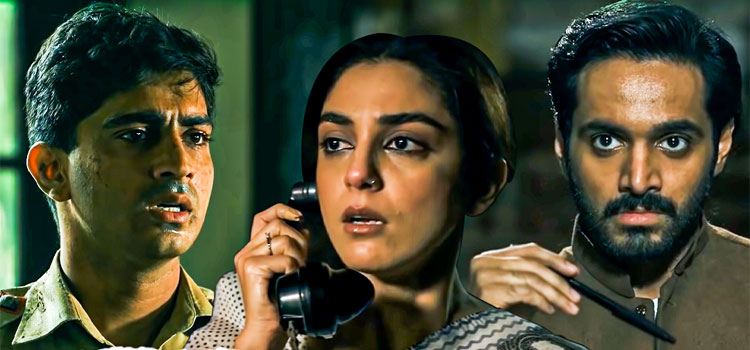
It was in great panic & fear that Sonia called Captain Farrukh. We could almost hear the silent screams inside our head telling him to go save her, but alas he was too late! That scene depicted the reality of so many women, Sonia’s story told the story of so many families – a dastaan of helplessness & ruin.
Rumi’s address to the warden & committee was layered with multiple messages & meaning. It made us think and question. But Rumi’s character & subsequent end left us confused – was he punishing himself for Haroon’s death by following the deadly agenda of Mukti Bahani? Or did he simply view himself as a pawn in the hands of these people who made him resort to violence despite his academic ideology.
A brilliantly executed scene of Sonia trying to hide from Shil & then Rumi coming to her rescue left us in tears. Alas we lost Rumi… but even in that final moment, Sonia stayed true to her beliefs, not caring for her own life, she wanted to save the other women too.
Captain Farrukh was left to deal with the trauma & regrets from the war for the rest of his life… do you think death would be a better alternative in such cases? But then, he lived to tell the story which, as we now know, was so very critical.
The army battle scenes across the river were also impactfully executed, making us feel as if we were part of the events of at the time.
Taking the flag down ceremony was perhaps, the most heartbreaking. The truth hit hard on the heart as we realized that Pakistan broke that day.

