

If you haven’t watched Zard Patton Ka Bunn, here’s the storyline for you.
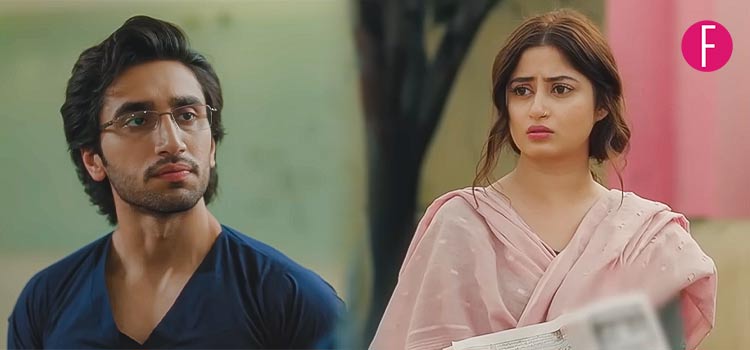
The drama is set in the rural village of Kesar Kallan, a place where life is bound tightly by tradition, poverty, and rigid gender roles. Education for girls beyond a certain age is almost unheard of, healthcare is nearly non-existent, and villagers are weighed down by superstitions and outdated practices. In this suffocating environment lives Meenu (played by Sajal Aly) – a bright, outspoken girl who refuses to accept the limitations imposed on her. She dreams of becoming a doctor, not only for herself but to save the women of her village who die needlessly in childbirth and suffer from neglect.
Meenu’s dream, however, becomes the central conflict of the story. Her five brothers mock and oppose her every step, believing her ambition brings shame to the family. They see a woman’s place as inside the home, cooking and serving, not pursuing education or work. Yet, she finds strength in her father’s steady support. He sees his daughter’s potential and tries to shield her, even though the rest of the family resists.
Into this village comes Dr. Nofil (played by Hamza Sohail), a young doctor posted to the local hospital. What he finds is shocking – a non-functional building with no resources, medicines, or staff. Initially, he feels out of place and considers leaving for the city, but the harsh realities he witnesses – maternal deaths, families crushed under the burden of too many children, and young girls forced into labour or abuse – shake him to the core. Slowly, Nofil begins to see that his presence here has meaning, especially when he meets Meenu, whose courage and conviction ignite a sense of responsibility in him.
The story then weaves together their journeys. Meenu continues to fight with her family and community, determined to study further and prove that a woman’s education can bring change. Nofil, meanwhile, tries to revive the hospital, offering treatment where he can and advocating for better healthcare. Together, they become the voice of resistance against old traditions, often standing alone against ridicule and opposition.
Alongside the struggles, the drama also explores deeply human stories: a mother who dies during her fifth childbirth because of no medical help, a young girl exploited as child labour, women silenced in the name of honour, and men unwilling to embrace family planning despite the toll it takes. These narratives are not side plots but part of the larger tapestry, showing how systemic neglect keeps the cycle of poverty and suffering alive.
Amid this darkness, a delicate romance develops between Meenu and Nofil. Their relationship is never about grand gestures but about understanding, respect, and shared ideals. Meenu, who at first sees him only as an outsider, slowly realizes that his empathy mirrors her own passion. For Nofil, Meenu becomes the reason he chooses to stay, to fight, and to believe in change.
The drama moves with patience, showing that transformation in a place like Kesar Kallan is slow and painful. Meenu is mocked, punished, and even ostracized by those closest to her, but she never lets go of her dream. And while the resistance does not vanish overnight, her resilience plants the first seeds of awareness in the village. By the end, she stands not only as a young woman achieving her goal but also as a symbol of hope for an entire community.
Zard Patton Ka Bunn is more than just Meenu’s story. It is about the struggle against patriarchy, the urgent need for education and healthcare, and the courage it takes to challenge generations of silence. Through Meenu and Nofil’s journey, the drama shows that even in a forest of yellowing leaves, where decay and despair seem permanent, the possibility of new life and change is always waiting to bloom.
Catch Up All The Latest Drama Stories Here
The project is written by Mustafa Afridi and directed by Saife Hasan. Momina Duraid Production and Kashf Foundation produced the project. The cast includes Sajal Ali, Hamza Sohail, Rehan Sheikh, Samiya Mumtaz, Ali Tahir, Adnan Shah Tipu, Saad Azhar, Syed Tanveer Hussain, Chaudhary Muhammad Usman, Mubashir Mehmood, Adeel Afzal, Najma Bibi, Zaryab Haider & others.


Comments 2