

Now, if you’re a pop culture junkie or not, you know — or have at least stumbled across — the whole Diddy, aka Sean Combs fiasco. You may be fully up to date, you may only know bits and pieces, but generally there’s one universal understanding: this man is no good.
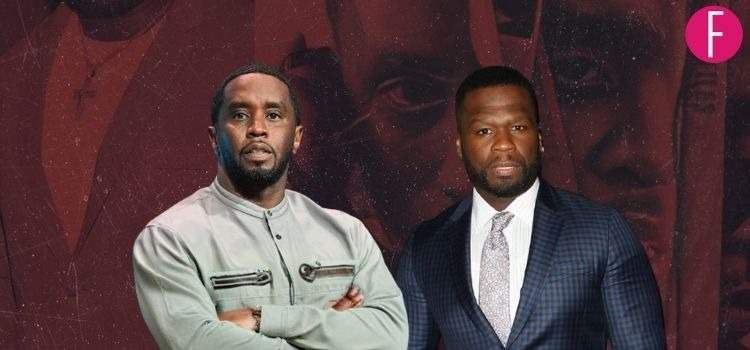
I watched Sean Combs: The Reckoning — the docuseries produced by 50 Cent and, from what it feels like, very much his mission.
My thoughts before pressing play: “Okay, it might be a lot, but let’s see.”
My thoughts after each episode: “Oh my God. How messed up. What did I willingly walk into?” Here are 15 reactions and realisations that stayed with me — the ones that disturbed me enough that I genuinely needed breaks between episodes.
- 1. What struck me first was how every person described Sean Combs’ power in almost identical ways — quiet, constant, suffocating. It wasn’t loud rage or dramatic episodes; it was the kind of control that creeps into people’s everyday lives. The way he managed their time, dictated their movements, controlled their access to opportunities — it felt less like celebrity behaviour and more like someone who built an entire ecosystem around himself where fear was the currency.
- The emotional intensity of the confessionals caught me off guard. There’s a difference between someone “recalling” a bad memory and someone still living inside it. The way voices cracked, the way eyes welled up, the way long pauses sat in the room — these weren’t interviewees looking for attention. These were people untangling trauma they had sealed away for decades. You can feel the cost of surviving him.
- Even though Cassie isn’t physically present in the doc, her story is everywhere. Every woman’s account mirrors pieces of what she described in her lawsuit — isolation, manipulation, emotional terror, and sexual assault. Listening to these testimonies back-to-back, it stops feeling like “allegations” and starts feeling like a consistent, systematic abuse he inflicted on the women around him. It’s horrifying to realise this wasn’t random — it was part of the control he exercised over their lives.
- When men who benefitted from him — friends, collaborators, people who partied with him — say they felt abused or controlled, it shakes you. Because that means it wasn’t just women or vulnerable newcomers. It was anyone within his orbit. Hearing someone who once had loyalty toward him describe the emotional and psychological hold he had is almost more chilling than hearing from strangers.
- Somewhere around episode two, it hits you that nothing about this was impulsive. The chaos he created wasn’t random. It was built. Layered. Maintained. There’s a terrifying precision in how he isolated people, financially trapped them, blurred professional boundaries, and made himself the center of their world. The “bad boy” persona wasn’t branding — it was camouflage.
- And then the bigger, uglier question forms: how did an entire industry watch this for 30 years and say nothing? The record labels, the award shows, the media, the collaborators — all of them saw enough to know something was deeply wrong, and still he was protected, celebrated, rewarded. That tells you this isn’t a “one man problem.” This is an industry problem.
- When the doc touches on Tupac Shakur, everything you knew — or thought you knew — feels heavier. Those old whispers, the unsettled tension after the 1994 Quad Studios shooting, the betrayal Tupac always hinted at… suddenly it doesn’t feel like rap folklore. It feels like a real, dangerous tension that people dismissed for years.
- And Biggie. Hearing insiders talk about how manipulated Biggie was, how he was pushed into situations he didn’t want, how little protection he had despite being one of the biggest artists in the world — it adds a new layer of sadness. LA, that night, that car, that drive-by… the documentary almost forces you to reconsider whether his death was just a tragic coincidence or the result of people playing games far above his head.
- The East–West rivalry — the one we grew up hearing about — suddenly looks manufactured. The doc makes it hard to believe this was really artists fighting each other. It looks more like powerful men pulling strings, creating narratives, and letting artists take the fall. The fame, the money, the headlines — they benefited the ones behind the scenes while the people on the front lines paid with their lives.
- It’s infuriating to see how many careers, friendships, and literal lives were shaped — or ruined — because of ego. Sean Combs’ need to be untouchable, to be the center of every room, every deal, every moment… it didn’t just affect his direct victims. It shaped the entire landscape of hip-hop and shattered countless futures.
- The fact that Sean Combs’ name even hovers anywhere near the tragic ends of Tupac and Biggie is something you cannot unhear. Whether proven or not, the idea that credible insiders feel confident enough to speak about his possible involvement in the events surrounding those deaths is chilling. It tells you how deep the fear ran and how powerful the silence was.
- Watching the documentary almost feels like reopening a wound the world forgot existed. Suddenly, the past doesn’t feel like history — it feels like undone business. Like we collectively overlooked the signs, dismissed the rumours, let the narrative move on too quickly, while people were quietly dealing with the aftermath.
- The psychological damage described by survivors is some of the most haunting testimony I’ve heard. These weren’t people talking about a few bad nights. They were talking about losing themselves — their confidence, their identity, their sense of reality. You realise the violence wasn’t just physical. It was emotional warfare.
- At a certain point, I found myself feeling… complicit. Because we all danced to the songs. We reposted the moments. We called him a “legend,” a “mogul,” a “game-changer.” We helped build the myth that allowed him to hide in plain sight. And watching these testimonies makes you confront the uncomfortable truth of how fandom can silence accountability.
- And the biggest realisation of all: monsters don’t hide in shadows — they hide behind fame, behind money, behind influence. Sean Combs didn’t just operate in the dark; he operated in the spotlight, protected by admiration and power. And that’s what makes this entire documentary so disturbing. It’s not just an exposé of him. It’s an exposé of everything that let him thrive.
Watching Sean Combs: The Reckoning isn’t just about watching a docuseries — it’s about watching decades of power, manipulation, and carefully constructed myth unravel. What makes it even more compelling is that 50 Cent didn’t just produce this; it feels like his mission. He’s the one holding up a mirror to the culture, the industry, and the man who shaped it all, asking us to stare at the truth we’ve long ignored.
This isn’t a story about rivalry, fame, or music history. It’s a story about accountability, about the people who survived, and about the systems that allowed someone like Sean Combs to operate unchecked for decades. By the end, you’re left unsettled, enraged, and more aware of how much power can warp lives when it goes unquestioned. And perhaps, most hauntingly, you realise that the monster isn’t just the man on the screen — it’s the culture that let him thrive.

