

Tired of the endless cycle of tears, tantrums, and kitchen politics? Noor Jahan is your ticket to a world where women are more than just emotional punching bags.
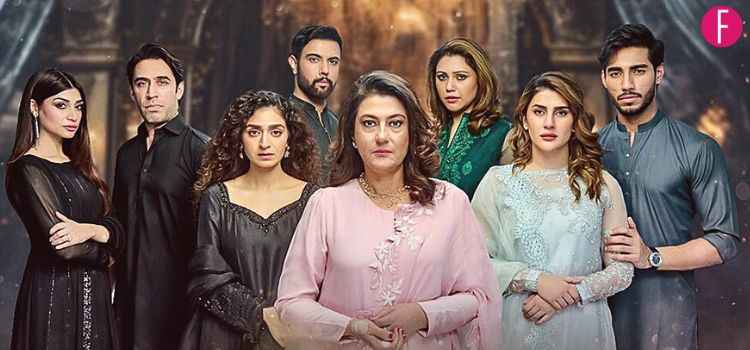
Pakistani dramas have long been synonymous with the quintessential saas-bahu narratives, often revolving around domestic conflicts, patriarchal structures, and unrealistic portrayals of women. These dramas have traditionally perpetuated stereotypes, confining women to roles of domestic servitude and emotional dependence. Moreover, while they have entertained audiences for decades, they have also contributed to the reinforcement of archaic societal norms. However, the landscape of Pakistani television is gradually evolving, and Noor Jahan stands as a testament to this positive shift. Even though it is being considered as the perfect Saas-Bahu story, the drama boldly departs from the tired tropes of the genre, offering diverse narratives in all 3 bahus of Noor Jahan that are not only refreshing but also profoundly impactful.
Here are 5 reasons why you should say goodbye to the stereotypical saas-bahu dramas and enjoy Noor Jahan!
1. Empowering Women: The Single Mother Who Defied Prejudice
In a society often characterized by gender inequality in a corporate world, Noor Jahan shines a spotlight on the strength and resilience of women. The central character, Noor Jahan, defies conventional norms by building a successful jewelry business after facing rejection and discrimination from her in-laws due to class differences. Hence, her journey is a testament to the indomitable spirit of women who refuse to be confined by prejudice. By overcoming adversity and transforming her passion into a thriving enterprise, Noor Jahan inspires viewers to challenge the status quo and pursue their dreams. Her character serves as a powerful symbol of female empowerment, demonstrating that with determination and perseverance, women can achieve extraordinary heights, and bring up their family as a single parent, tending to their emotional and financial needs.
2. Challenging Gender Bias: Sons vs Daughters
The drama addresses the deeply ingrained preference for sons in Pakistani society. The storyline of Safina expecting a baby girl and Hunaid and his mother’s reaction to it highlights the inherent bias a girl child is born with even before she is born. Safina’s words to Hunaid that how can his mother be so biased about daughters, she is being one herself, is a harsh truth that stayed with Hunaid, (and viewers) despite him overtly siding his mother. The fact that the couple is expecting another daughter (after they lost the first one) is a welcome relief in the narrative as Hunaid will possibly accept and celebrate this child. Sometimes, it takes painful loss to highlight a societal prejudice that transcends generations, and class as well. The desire for a son over a daughter rein powerful in families of all social backgrounds, privileged or under privileged, and Noor Jahan is a great example of the same.
3. Redefining Marital Bonds: Respect vs Ego
Noor Jahan presents a nuanced portrayal of marital relationships, moving beyond the stereotypical depictions often seen on screen. The love story between Noor Bano and Murad is a testament to the enduring power of companionship and mutual respect. Murad going against his mother when he thinks she’s wrong, and despite being such an overpowering presence in his life, transcends the complexities of a revenge-driven marriage, showcasing the resilience and honesty. Murad being a man and clearly the socially more powerful partner, respects Noor Bano’s rights as a daughter, not laying claim to her inheritance and even admiring her ability to manage her father’s estate so competently after his death – agreat role model for other husbands who could clearly feel insecure in such a situation.
4. Celebrating Female Resilience: Surviving Adversity
The character of Sumbul exemplifies the strength and compassion of women even when they are cornered and appear to have zero options. Her unwavering support for her husband Safeer, even after his second marriage, is a poignant portrayal of her survival instinct. Despite facing immense emotional turmoil, Sumbul’s character challenges the notion of women as passive victims, demonstrating their ability to find strength and dignity in the face of adversity. Hailing from a humble background and orphaned at a young age, Sumbul’s journey is particularly inspiring. Her unwavering faith in Allah and her patient endurance in the face of challenges serve as a beacon of hope, inspiring viewers to find strength in their own beliefs and persevere through life’s trials.
5. Breaking Stereotypes: Daughters As Suitable Inheritors of Wealth
Noor Jahan subverts traditional expectations by showcasing a father who entrusts his entire business empire to his daughter. This progressive stance challenges the patriarchal mindset that often-side lines women from financial decision-making. Noor Bano, a remarkable character, successfully balances the demands of her in-laws’ household with the responsibilities of running a thriving business inherited from her father. Her ability to excel in both spheres defies societal stereotypes and inspires viewers to re-evaluate gender roles and expectations. By demonstrating that women are equally capable of handling domestic duties and high-powered careers, the drama encourages a shift. Thus, Noor Bano’s journey empowers women to break free from limitations, proving that gender should not be a barrier to success.
Noor Jahan certainly transcends the boundaries of a mere drama, emerging as a powerful social commentary that challenges deeply entrenched societal norms. By showcasing a diverse array of strong, independent women in pivotal roles, the drama offers a refreshing departure from the stereotypical portrayals often seen on screen. Noor Jahan might be your saas-bahu Pakistani drama watch, but its defiantly different in its narrative, and that is perhaps, its biggest win so far.
Catch Up More On Drama Gup With FUCHSIA
Noor Jahan is written by Zanjabeel Asim Shah and directed by Musaddiq Malek. It is a project of Six Sigma Productions. The cast features Saba Hamid, Ali Rehman Khan, Kubra Khan, Ali Raza, Noor Hassan, Alina Abbas Shah, Hajra Yamin, Yousuf Bashir Qureshi, and others. The drama airs every Friday & Saturday at 8 pm on ARY Digital.

