

Life as an astronaut is nothing like life on Earth. From how they eat to how they communicate with family and mission control, astronauts have to adapt to a world where gravity barely exists, space is confined, and resources are limited.
With the latest NASA project Artemis II spacecraft launch which is now orbiting the Earth, the astronauts driving this lunar mission are centre stage of a 10 day mission that is precisely wired right down to the minutest detail. Artemis 2 is the first crewed mission to the Moon in half a century. After completing a 24-hour orbit over earth, the crew will head to the moon. The project entails circling the moon, not landing on it, but if successful, this launch might well mark a significant first – the farthest any space mission has ever travelled from earth.
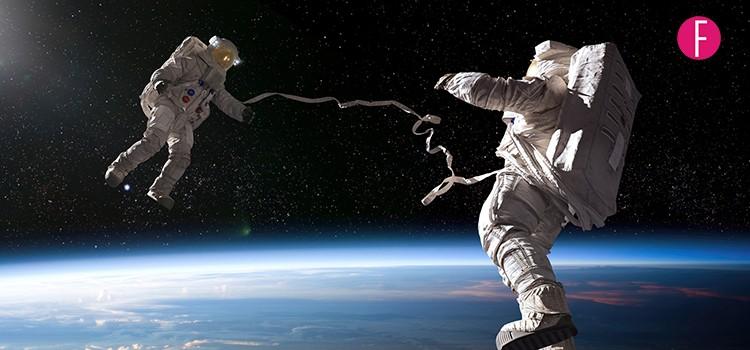
During their time in space, ordinary life events take on an extraordinary spin – reimagine simple activities like eating, sleeping and drinking water in a state of free fall. Astronauts in orbit appear to float not because gravity is gone, but because they are in a constant state of “free fall“—falling around the Earth, not toward it. This condition is more accurately called “microgravity.”
Read on for a bite-sized view of what the astronauts daily lives might look like in space.
Daily routines that seem simple on Earth become complex tasks in orbit, and every action requires careful planning and execution. Understanding how astronauts live offers a fascinating glimpse into human adaptability and ingenuity. Astronauts face challenges that most people on Earth never imagine. Microgravity affects everything from muscle strength to sleep patterns, and resources like water and food must be carefully managed.
Here are 5 things astronauts do differently from people on Earth that you might not know!
1. Eating In Space
If you like tortillas, dried fruits, grilled chicken, rice, pasta, chili, nuts and chocolate, your culinary expectations might be met in space!
One of the biggest differences is how astronauts eat. Space food isn’t your usual home-cooked meal – it’s specially prepared to be safe and practical in zero gravity. Meals are often freeze-dried, vacuum-sealed, or thermostabilized to prevent spoilage and minimize crumbs (tortillas are less crumbly than bread), and floating liquids that could damage equipment or become a hazard. Astronauts also have to rehydrate many foods by adding water from special pouches, and they often eat in smaller portions more frequently to maintain energy levels. Food variety and taste are also important for morale, so NASA and other space agencies continually develop new menu options to keep meals interesting over long missions.
Source: NASA
2. Drinking Recycled Water
Water in space is a precious resource, and astronauts often drink water recycled from sources such as urine, sweat, and condensation. Advanced purification systems on the ISS remove impurities and ensure it meets rigorous safety standards, but the concept can still feel unusual for newcomers. Astronauts also have to be mindful of conserving water during daily routines, including brushing teeth and cleaning up. Drinking water in zero gravity requires specialized pouches with straws, because ordinary cups or bottles won’t work – liquids float freely and can cause damage if not contained properly.
Sources: ESA, and Embrace Relief
3. Sleeping in Microgravity
Sleeping in space is another challenge that affects astronauts’ health and performance. Without gravity to hold them down, astronauts float while sleeping, so they need sleeping bags attached to walls or small compartments to stay in place. The absence of gravity can alter circulation and body orientation, making it harder to get deep rest. Additionally, astronauts experience 16 sunrises and sunsets each Earth day on the ISS, which disrupts natural circadian rhythms. To compensate, spacecraft lighting is carefully controlled, and astronauts may use eye masks or earplugs. Good sleep is critical because it impacts cognitive function, reaction time, and overall well-being in the high-stakes environment of space.
4. Using the Toilet in Space
Using the toilet in microgravity is a completely different experience than on Earth. Space toilets use airflow to pull urine and solid waste into storage containers, preventing floating particles that could contaminate the cabin. Solids and liquids are separated, and urine is often processed for water recycling, making it a critical part of resource management. Astronauts must carefully position themselves and use handholds to remain stable, and cleaning procedures are more detailed to ensure hygiene. These systems are essential for long-duration missions and require training to use effectively before astronauts even leave Earth.
Sources: Space.com, and Smithsonian Magazine
5. Communication with Earth
Communication with Earth is a lifeline but also comes with unique challenges. Astronauts rely on radios, video calls, and scheduled messages with mission control. For missions further from Earth, like the Artemis program aiming to return humans to the Moon, there can be delays of several minutes for messages to travel. This means astronauts must plan communications carefully, anticipate possible problems, and make independent decisions when immediate help isn’t available. Maintaining frequent and reliable communication is essential for safety, coordination of experiments, and psychological support during the long periods away from family and friends.
The Artemis Program
The Artemis program is NASA’s ambitious plan to return humans to the Moon, including landing the first woman and the next man on the lunar surface. Unlike the Apollo missions, Artemis aims to establish a sustainable presence on and around the Moon, with long-term habitats, scientific research stations, and advanced life-support systems. Astronauts participating in Artemis missions will face challenges similar to those on the ISS, like microgravity, limited space, and strict resource management, but on a larger scale due to the distance from Earth and harsher environment. Every task – from moving around in a spacesuit to handling equipment – requires careful planning, training, and precision.
Communication, water, and food management become even more critical during Artemis missions. Messages between Earth and lunar astronauts experience several seconds of delay, meaning astronauts must make timely decisions without immediate support. Systems for recycling water and air, preparing meals, and maintaining hygiene are all optimized for long-duration missions. Artemis not only pushes the boundaries of exploration but also serves as a testing ground for future human missions to Mars, where astronauts will encounter even greater isolation and resource challenges. These missions highlight the ingenuity, adaptability, and resilience of space travelers as humanity ventures further into the solar system.
Life in space is full of challenges that most people on Earth could never imagine. Programs like Artemis show just how far human exploration has come and hint at the incredible possibilities that lie ahead – whether it’s sustainable lunar bases or missions to Mars. The daily routines of astronauts remind us that space travel is not just about adventure, but also about problem-solving, teamwork, and pushing the boundaries of what humans can achieve.

