

This has been the worst rains Dubai has seen in over 75 years, leading to widespread destruction. Here’s how some of your favourite tourist spots have been impacted…
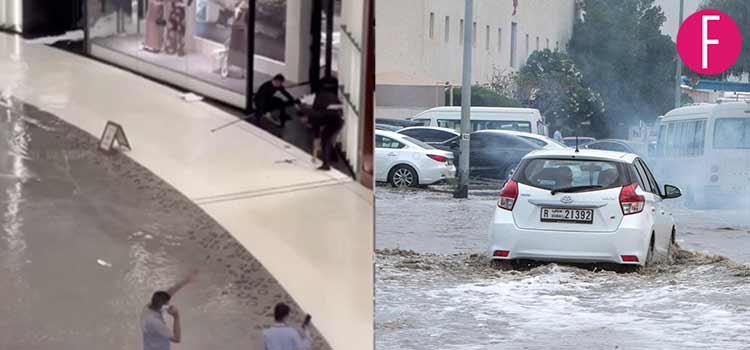
Home to the second busiest international airport, a multitude of diverse ethnicities, international brands spanning from A to Z, and a tourist hub, Dubai is grappling with the catastrophic aftermath of intense torrential rains. The continuous downpour flooded the geographically barren city with countless stories and scenes of chaos, damage, and the city coming to a standstill.
The UAE witnessed the heaviest rainfall in 75 years, with some areas recording more than 250 mm (around 10 inches) of rain in fewer than 24 hours, the gulf state’s media office said in a statement on Wednesday. The rain, causing flooded streets, uprooted palm trees, and damaged buildings, is the worst ever recorded in the Middle Eastern nation since 1949. In Dubai, a popular tourist spot, flights were canceled, traffic stopped, and schools shut down.
The Extensive Destruction & The Tourist Spots Impacted
The flooding and extraordinary rainfall have caused extensive destruction in the tourist city. Many tourist spots have been submerged, suffered damage, and become inaccessible. Numerous places that hold sentimental value for Pakistanis and tourists around the globe, with cherished memories, have been impacted.
Shocking videos depicted the tarmac of Dubai International Airport – recently named the second-busiest airport in the world – submerged underwater as massive aircraft attempted to navigate floodwaters. Large jets resembled boats maneuvering through the flooded airport, partially submerged in water and barely visible amidst the storm.
The Horrific Scenes In Dubai
Sheikh Zayed Road was blocked for several hours due to traffic and chaos. Citizens shared tales of horror, recounting how their usual 15-minute commutes stretched into 12 hours or more. Elevators in high-rise buildings malfunctioned, forcing residents to climb flights of stairs numbering 10, 27, or even 30, just to reach their homes safely. Sounds unbelievable? Sadly, it’s true. Dubai boasts some of the world’s largest malls, such as Mall of the Emirates and Dubai Mall, which have been submerged. Major brands like Dolce & Gabbana and Kate Spade, for example, have suffered immense damage, with water leaking through rooftops and damaging structures.
The Criticism The UAE Government Is Facing For…
Apocalyptic scenes are spreading through terrifying social media posts. Some individuals are using this as evidence to challenge those who still consider cloud seeding and geoengineering as mere crazy conspiracy theories or fallacies. They argue that such events exemplify the potential consequences when humans tamper with Mother Nature. Recent cloud seeding efforts by the UAE government are facing criticism from both netizens and residents, who assert that they have exceeded reasonable bounds, are uncontrollable, and have exposed everyone to the consequences of these actions.
Here is how some of your favourite tourist spots have been impacted:
Keeping It Posh Even Through The Floods & Rain
What THE Place for Desert Excursions Looks Like
The 2nd Busiest International Airport Where Now Planes Float In Water
Emirates Crew Among Many Suffer To Reach The Airport & Home
Malls, Super Markets & Metro Stations Are All Submerged
The City Centre Views
The Dubai Mall Faces Absolute Chaos!
Screams & Terrifying Scenes At Dubai Gold Souk
Is It Cloud Seeding Gone Wrong Or The Adverse Impact of Climate Change?
The prevailing opinion and the primary cause of this disaster as per the public revolves around the government’s extensive cloud seeding efforts. According to a video by Nas Daily, the UAE government deployed approximately 300 planes last year to disperse salt into the clouds as part of their cloud seeding operations. Cloud seeding entails the introduction of chemicals and minute particles — often natural salts like potassium chloride — into the atmosphere to stimulate increased rainfall from clouds. However, the UAE’s weather bureau has confirmed that no cloud-seeding missions occurred during Tuesday’s torrential rain.
Then as per an Al Jazeera report, Climatologist Friederike Otto, a specialist in assessing the role of climate change on extreme weather events, said it was “highly likely” that global warming was to blame for the worsened storms.

