

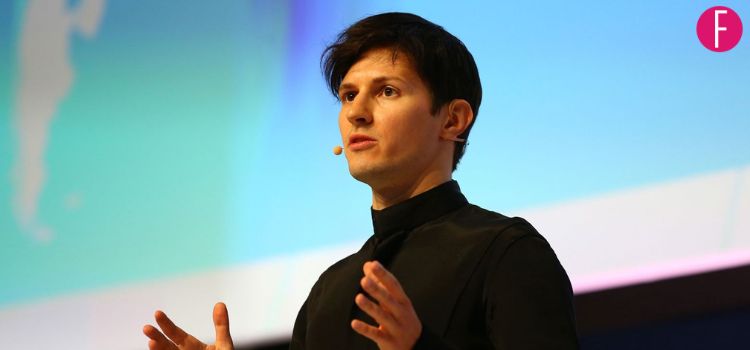
Pavel Durov, the visionary behind Telegram, has revolutionized digital messaging with his focus on privacy and security. Yet, his recent arrest has shifted the narrative from technological success to legal controversy. This article delves into Durov’s background, the impact of Telegram, and the arrest that has brought his story into the public eye.
Read on to find out more.
Who Is Pavel Durov?
Pavel Durov, a tech entrepreneur often compared to Mark Zuckerberg, gained prominence as the founder of VKontakte (VK), a social network that became Russia’s equivalent to Facebook. His refusal to comply with the Russian government’s demands to shut down opposition accounts in 2011 and to provide the personal data of Ukrainian pro-democracy protesters in 2014 put him at odds with the authorities. Faced with a tough decision, Durov resigned from the company and left Russia rather than submit to these pressures. He eventually settled in Dubai, attracted by its business-friendly environment and geopolitical neutrality. After leaving Russia, Durov and his brother Nikolai turned their attention to developing Telegram, an app he co-founded at 28.
What Is Telegram?
Telegram is a messaging app that allows users to create channels to broadcast messages to large audiences. Known for its emphasis on encryption, Telegram claims to be faster and more secure than other platforms. Launched in August 2013, it’s a cloud-based app where users can send messages, photos, and large files, as well as create groups that can accommodate up to 200,000 people or channels for unlimited audiences.
Since its launch, Telegram has grown rapidly in popularity and now boasts nearly one billion active users (as opposed to approximately Whatsapp’s 3 billion). Telegram has become a crucial communication tool, especially in conflict zones like the Russia-Ukraine war. According to a report by Statista, Telegram is the third most downloaded messaging app worldwide, following WhatsApp and Snapchat.
One of the reasons Telegram is popular is because of its lightly moderated messaging services, which allows content that might be banned on other major social media networks. This has made it attractive to a variety of groups, from right-wing factions to organized crime figures and militant organizations. The app’s encryption is particularly appealing to criminal syndicates and terrorist groups.
For someone unfamiliar with technology, encryption means that messages are scrambled into a code while being sent, making them unreadable to anyone except the intended recipient. This ensures that even if someone intercepts the message, they won’t be able to understand it without the proper decryption key. This level of security makes it difficult for law enforcement to monitor illegal activities on the app.
Why Was Pavel Durov Arrested?
Pavel Durov, the CEO of Telegram, was arrested at an airport near Paris on Saturday night, according to French media reports. The 39-year-old Russian-born billionaire is facing allegations related to criminal activities on his messaging app, including organized crime, drug trafficking, fraud, cyberbullying, and the promotion of terrorism. These charges were brought by France’s Ofmin, an agency responsible for protecting minors from violence, which issued an arrest warrant for Durov.
Telegram, now based in Dubai, responded to the situation with a statement on Sunday, asserting that its moderation practices are “within industry standards and constantly improving.” The company emphasized its compliance with European Union laws, including the recently enacted Digital Services Act, which requires platforms to more rigorously monitor and control harmful content and disinformation. Telegram called the accusations against Durov and the platform absurd, stating that it is unreasonable to hold a platform or its owner accountable for the misuse of the service by others. The company expressed hope for a quick resolution to the situation, reassuring users that Telegram stands by them.
An investigation conducted by The Washington Post and its media partners earlier this year uncovered a network of Telegram users who were sharing child pornography, abuse footage, and advice on how to manipulate children. While Telegram did not directly address questions about this network, the company stated that it removes “millions” of harmful content pieces daily and has shut down several groups identified as central communication hubs for this network.
It has been pointed out by independent analysts that Telegram, a smaller concern than other larger apps, does not have enough people manning or monitoring questionable content to ensure that it is taken down in time.
Concerns Regarding Freedom Of Speech
A lively debate has emerged online about the balance between freedom of speech and governmental influence on social media platforms. Durov’s arrest, coming amid heightened global concerns over digital rights and governmental control, highlights a critical juncture in the ongoing struggle between state power and individual freedoms. The controversy centers around whether government officials are crossing the line into censorship when they communicate with social media companies about content they deem harmful, particularly during crises like the COVID-19 pandemic.
On one side, critics argue that the government’s actions amount to coercion, forcing platforms to suppress certain viewpoints. They claim that these efforts infringe on free speech rights, as the government allegedly pressures platforms to remove content that contradicts its preferred narratives. This concern is amplified by fears that such influence could extend to other areas, potentially stifling diverse opinions and open discourse.
On the other hand, defenders of the government’s actions point out that communication between government agencies and social media companies is not new. They argue that these interactions are necessary to protect public safety, particularly during emergencies. The government maintains that it is simply advising and persuading platforms, not forcing them to take down content. Supporters also emphasize the importance of keeping the public informed with accurate information, especially during health crises, and argue that the government’s involvement is crucial in preventing the spread of misinformation.
This debate touches on broader questions about the role of social media in society and the responsibilities these platforms have in moderating content. It also raises important issues about how much influence the government should have over these companies, especially given the power that social media wields in shaping public opinion.
An additional layer to this discussion is the role of tech CEOs in overseeing the use of their platforms. Should they be held accountable for how their platforms are used, particularly when it comes to the spread of misinformation or harmful content? As leaders of these influential companies, tech CEOs have significant control over the moderation policies and practices of their platforms. The question arises whether they should bear responsibility for ensuring that their platforms are not exploited for harmful purposes, even as they navigate the complex landscape of free speech and governmental influence.
The discussion is complex, with valid concerns on both sides. As the legal battle unfolds, it will likely continue to fuel discussions about the limits of free speech and the extent of government influence in the digital age.
Sources: Al Jazeera, Washington Post, CNN

