

Mehdi Hasan, a prominent British-American journalist, has long been a powerful voice for truth and justice, particularly in his advocacy for Palestine. Known for his unapologetic stance on human rights, Hasan has continuously challenged mainstream narratives, using his platform to raise awareness about the struggles of Palestinians under occupation.
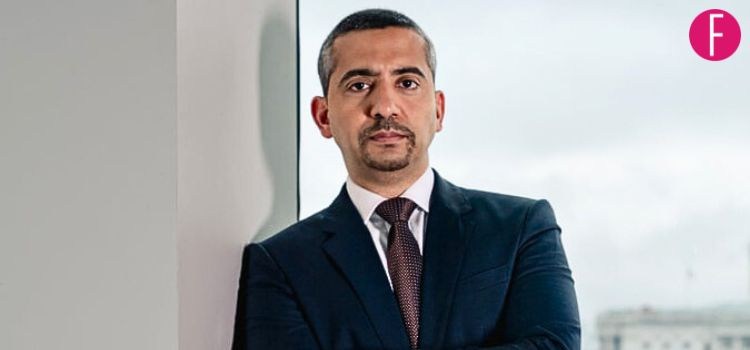
However earlier this year, Hasan made headlines for a different reason. He announced his departure from MSNBC, choosing to step away rather than accept a demotion that would have seen him lose his regular Sunday night program, The Mehdi Hasan Show, which he hosted for three years. At the close of his final episode, Hasan revealed, “I’ve decided to look for a new challenge. This is not just my final episode of The Mehdi Hasan Show, it’s my last day at MSNBC.”
The network had offered to keep him as an analyst and fill-in anchor, but Hasan chose to move forward independently. Shortly after, he launched his news portal, Zeteo, to provide unbiased journalism and give voice to underreported global issues, including the ongoing plight of Palestinians.
What Happened?
In a particularly heated episode of CNN’s NewsNight with Abby Phillip, conservative commentator Ryan Girdusky was ejected from the panel after a fiery exchange with progressive commentator Mehdi Hasan. The discussion revolved around the controversial rhetoric at a recent rally held by former President Donald Trump in New York City, where several speakers, including Trump himself, made racist and sexist remarks targeting minority groups, including Black Americans, Latinos, and Jews.
Girdusky, founder of the 1776 Project PAC, defended the event, accusing the media of unfairly branding rally attendees as “fascists” or comparing them to “Hitler.” Host Abby Phillip swiftly corrected him, saying, “That did not happen.”
Mehdi Hasan criticized the rhetoric from the rally, pointing to comments from various speakers, including comedian Tony Hinchcliffe, arguing that they were using “the language of the far right.” He remarked, “Look, I get it—no one wants to be called Nazis. It’s inflammatory. But if you don’t want to be called Nazis, stop using that kind of rhetoric.”
The exchange became even more charged when Girdusky took a personal shot at Hasan, saying, “You’ve been called an antisemite more than anyone at this table.” Hasan retorted, “By people like you. I support Palestinians, I’m used to it.” Girdusky then replied, “I hope your beeper doesn’t go off,” making an apparent reference to Israel’s recent targeting of Hezbollah fighters in Lebanon, where exploding pagers, walkie-talkies, and other communication devices were used in attacks that killed nearly 40 people and injured thousands.
Shocked, Hasan immediately responded, “Did you just say I should die? Did you just say I should be killed?”.
After a tense commercial break, host Abby Phillip chastised Ryan Girdusky for his inflammatory remark and apologized to Mehdi Hasan. Phillip expressed regret over the exchange, acknowledging the inappropriateness of Girdusky’s comment and informing viewers that he had been removed from the panel of guests.
CNN Issues An Apology
Following the heated exchange on NewsNight with Abby Phillip, CNN issued a statement addressing the incident, reaffirming its commitment to maintaining civil discourse on the network. In the statement, CNN emphasized, “We aim to foster thoughtful conversations and debate, including between people who profoundly disagree with each other, to explore important issues and promote mutual understanding.”
However, the network clarified that Girdusky’s comments had crossed a line, adding, “But we will not allow guests to be demeaned or for the line of civility to be crossed.” CNN confirmed that Ryan Girdusky would not be invited back, stating, “Ryan Girdusky will not be welcomed back at our network.”
As the world watches, the upcoming U.S. elections carry immense global weight, especially in the context of Israel’s onslaught on Palestine. The decisions made by the next administration will have profound implications on U.S. foreign policy, and perhaps no issue captures this more aptly than the deeply entrenched battle over Israel and Palestine. Both sides of the political spectrum, in the U.S. and globally, have become increasingly passionate—and often unyielding—in their positions. What was once a topic marked by diplomatic caution has now transformed into a litmus test for politicians and voters alike, with few willing to tread the middle ground.
The implications of this shift cannot be overstated. The Palestinian issue is no longer just a matter of foreign policy for the U.S.; it has become a highly charged, moral battleground that influences domestic politics, electoral strategies, and even social movements. For instance, Mehdi Hasan’s staunch support for Palestinian rights has often made him a target of accusations like the one Girdusky hurled at him, labeling him an antisemite. On the other hand, staunch defenders of Israel view any criticism of the Israeli government as tantamount to antisemitism, deepening the divisions.
This incident reflects a broader trend in U.S. political conversations, where strong opinions on both sides of the Israel-Palestine issue have led to heightened polarization, making it difficult to engage in constructive and respectful dialogue. As the topic becomes more central to political debates, finding common ground is becoming increasingly rare.

