

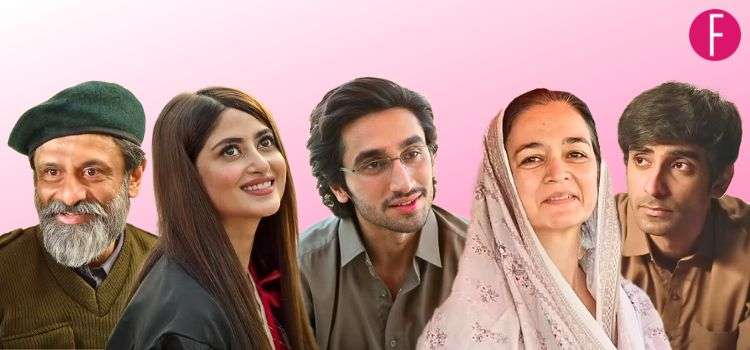
Some stories enter our lives with a loud knock on the door, making us take note and listen, not because they are the best at storytelling, but maybe, because they are the loudest. And often, these stories are left halfway through by the listener, like a half-finished book with a great cover, but not much between the pages. I can name quite a few, and I believe, so can you.
But then, there comes along a story that enters with a whisper, a quiet tapping on the door, it urges you to listen, not because it wants to break through the clutter, but because it is the breakthrough. It doesn’t need unnecessary fanfare – the story is the fanfare. Zard Patton Ka Bunn is that story…If the makers struggled to convey multiple messages, it didn’t seem so onscreen. Just like, before a lavish party, the hosts run around in a frenzy to lay the table, prepare multiple dishes, each with a flavor its own, and make their home appear just the right blend between homely and festive.
Zard Patton Ka Bunn, the final story, was like a well-hosted dinner party. With attention to detail. The dishes were the characters in Kesar Kala, and the distinctive flavors in every dish were the messages being dished out, some with humor, others with thought provoking clarity and yet others, with brave defiance.
I loved all of them.
Poetic much? Well, the drama has driven me to write about the characters that endeared, the storytellers whose sensitive take on characters is truly humbling, and a narrative that evolved over the span of a few months, from smile moments to instant tear jerkers, all in a matter of an episode. But enough of the rhetoric as I give you Meenu, Nofil, Roshan, Chacha Afzal, Nasreen, Rani, Malik Nadir, Mairajuddin, Bhoora and all the people who made Kesar Kala the mini-Pakistan we’d love to inhabit (minus Malik Nadir of course).
This love story for Zard Patton Ka Bunn will be told through the characters, well, because I feel every character deserves his (or her) own space. And always, if you didn’t know it yet, it’s ladies first, and so we begin with Meenu.
Meenu: Defiant, Pure, Determined, Brave, I’m running out of adjectives here.
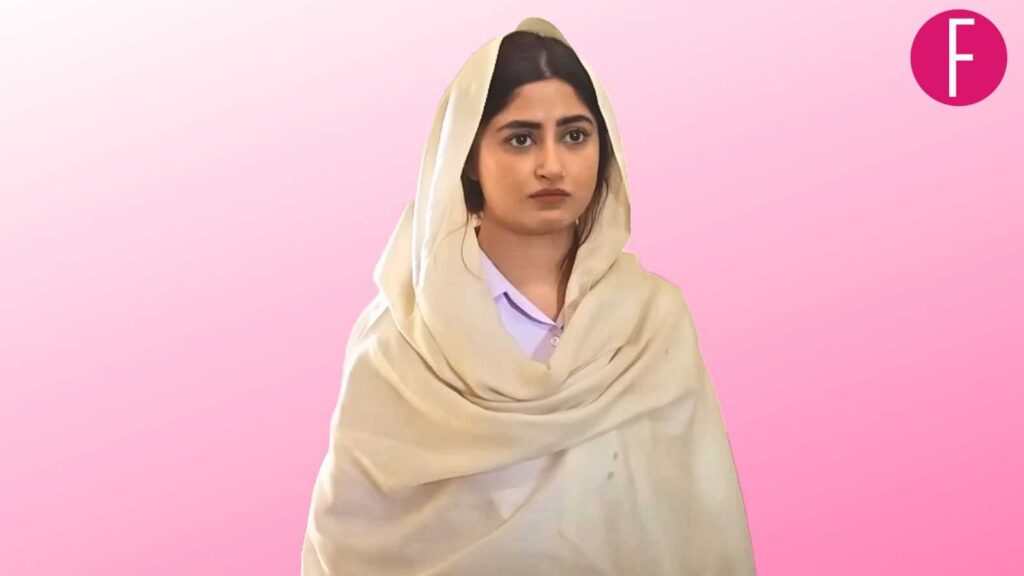
Whenever we tell women-centric stories, it is often a fine balancing act between, “should we let our heroine do this, or will the audience question her actions? Should she represent the women of today, but wait a minute, (writer scratching his head), what do the women of today represent? Are they outspoken, daring, risk taking, don’t take any, ahem B.S. from the ugly enemy… (the man of course), and trick question…do they resort to a resounding slap in a fit of uncontrollable fury?”
Oh well, guess you’ve seen many of those littered across Pakistani drama screens.
In a way, I would argue, Meenu’s character could be very easy to depict, because all the writer had to do was, turn that definition of the “emancipated woman of today” captured in many Pakistani dramas on its head and what you get is the real woman of today – determined yet acknowledging real life challenges, pure, yet able to err, for that is, after all, human, and we want our heroine to be human, and on the same human note, ability to apologize for an error, dream big, have a heart that is capable of love, and of course, the best part, a “jugaad brain” this one, was the rabbit out of a hat pulled by the creators, that mirrored Meenu’s inner spirit. She could construct that ladder from a pile of wood, fit a car battery on her bicycle, write a love letter with formulas and of course, another one with the purest of pre marriage conditions that tugged at your heart strings with a real feel.
Meenu’s foray into Nofil’s house late at night has come under divided scrutiny, hence I feel it relevant to address it here. Scaling walls in the middle of the night to see someone she loves because the entire village warned her not to do so (and so, she couldn’t possibly do it in the day), was a desperate attempt to ensure her beloved is fine, after being labelled with a serious crime – sexual assault.
Now, whether a heroine should be shown scaling walls in the middle of the night to meet someone in darkness, is a question that irked many audiences. And here’s my simple take. If it was Meenu, and if we were shown her intentions, then yes, it is perfectly okay. I do get it, that a random villager might not get it, but I also get it that an adult (young) girl must be allowed the freedom to understand her situation, the person she loves, and act on her own advice at times, and perhaps, also, learn from a mistake, if that is what it was. Her subsequent embarrassment when relating the scene to her father was enough to show us, she knew she had acted in haste.
And while every girl might not be as lucky as Meenu to get a Dr. Nofil who would not take advantage of her, I’ll let that slide, because, well, firstly, she should have been allowed to see him in daylight, through the front door, which she was warned against. Often, it is us, society, who make our youth take the backdoor, and if anything, we should be chastised for not allowing Meenu and Dr. Nofil their moment.
And that, dear folks, closes the chapter on Meenu, have to say the scene was very well executed and I wondered if she really sprained her foot jumping those walls! So dear Meenu, while you won my heart as gold, I need to move on to our hero, Dr. Nofil.
Dr. Nofil: A Journey Of A Man May Span a Thousand Years, But All He Needs Is Someone To Show Him the Way, And He’s Ready!
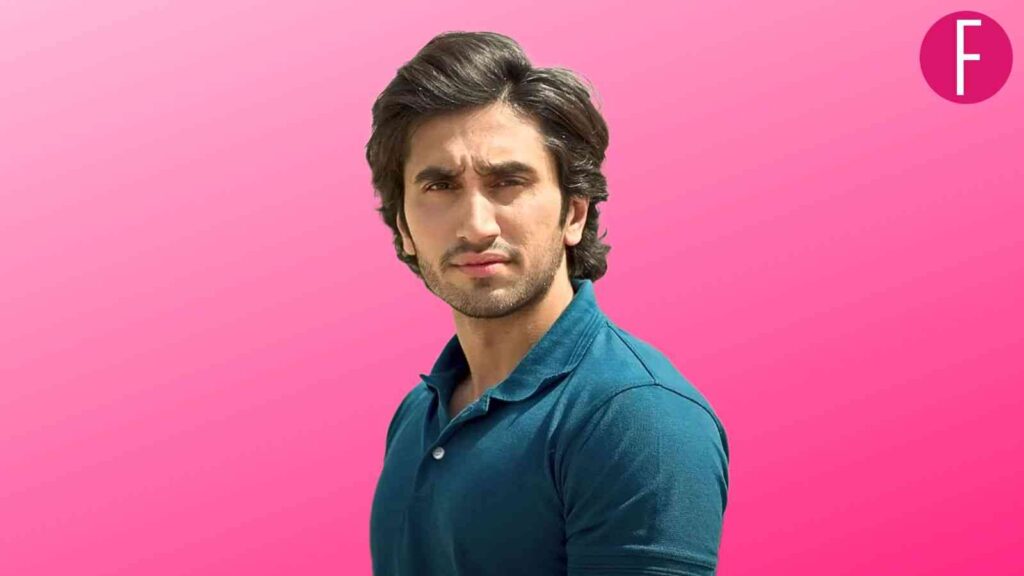
Dr. Nofil is my man. He cries for his beloved, he tries to distinguish between a crush, an impulsive attraction and true love. He has a thing going with his dad, a precious thing. He communicates.
Dr. Nofil does not judge Meenu for staking her ahem (honor) to land them both in hot water, his love supersedes all. He becomes all cute-silly when he wants to snatch a ride with Meenu to college, smiles when she’s upset with him, explains that the friend up a tree was really just a friend up a tree, and not a romantic interlude, Dr. Nofil understands matters of the heart.
He might have been about to turn back from Kesar Kala and all the mess that comes with it, but Meenu and later, Chacha Afzal hammer some good old courage into him. He’s Nasreen’s savior, and she, his. Dr. Nofil carves out a path for himself over the course of the story, draws courage from the villagers, and in his quiet, unassuming mannerisms, shows us what chivalry really is, without having to ride a dark horse (or a Prado) in the modern world. He rides to a Wi-Fi accessible destination late night to get notes for Meenu. Dr. Nofil doesn’t fear showing his feelings.
Dr. Nofil is love in the 21st Century. And that said, let’s talk about Afzal Chacha, the silent warrior who’s not so silent. The man has landed in Kesar Kala before his time, yet he holds on to old world courage. From sourcing Meenu with a helmet, conspiring to drive out Dr. Nofil, acknowledging his mistake, trying to urge on Meenu’s love story and last but not the least, having the courage to voice his feelings for Nasreen.
It is people like Chacha Afzal, the silent warriors who drive our society forward, set examples, brave the log kya kahenge brigade and just do what they know, and feel is ultimately right. For a man his age to show unfiltered emotion for doing the right thing, saying the right thing, Chacha Afzal fit like a glove. One should never feel it’s too late and one should always have hope – hope and a sense of humor with unbridled passion is ultimately, the spice of life. And Chacha Afzal is my man!
Nasreen, You Represent The Lost Mothers Of Our Nation, But Your Courage Might Show Them The Way
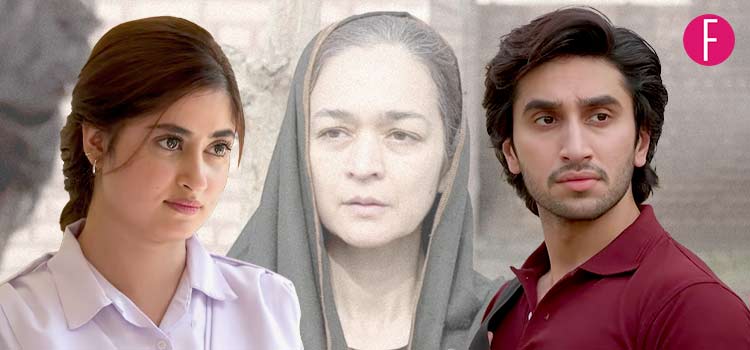
Throwback to first few episodes of Zard Patton Ka Bunn when Nasreen was this inert, accepting human being who was vaguely unaware of the perils of sending a minor child, a young girl, to work away from home, performing manual labor, helping add to the family income and make life comfortable for the family back in the village.
Rani’s tragic end changed Nasreen’s life. From guilt, anguish, trauma and intense sadness, rose a woman, and a mother who broke free from a toxic marriage, fought for Rani’s justice and, changed the way she was bringing up the rest of her children. She faced multiple obstacles, and her path wasn’t a bed of roses, but she labored on.
Why? Because, above all else, she realized her duty to her children, and, in tandem, to herself. If the children’s father is going to endanger their lives, then she needs to break free. And that was the wheel of change, set in motion by Nasreen, who, hopefully, also brought a wave of change among the mothers in the village, who understood the unspoken and traumatic repercussions of child labor.
Nasreen’s courage won hearts and the fact that she made space for love in her life, mirrored beautifully that above all, she is also a woman. And after tending to her children first, like all mothers do, she did not deny herself a second chance at love with Chacha Afzal. What a message in the village of Kesar Kala where divorce and remarriage of a woman her age might have been unheard of. Well done and cheers to you and Afzal for following your hearts!
Oh dear Roshan, here we come!
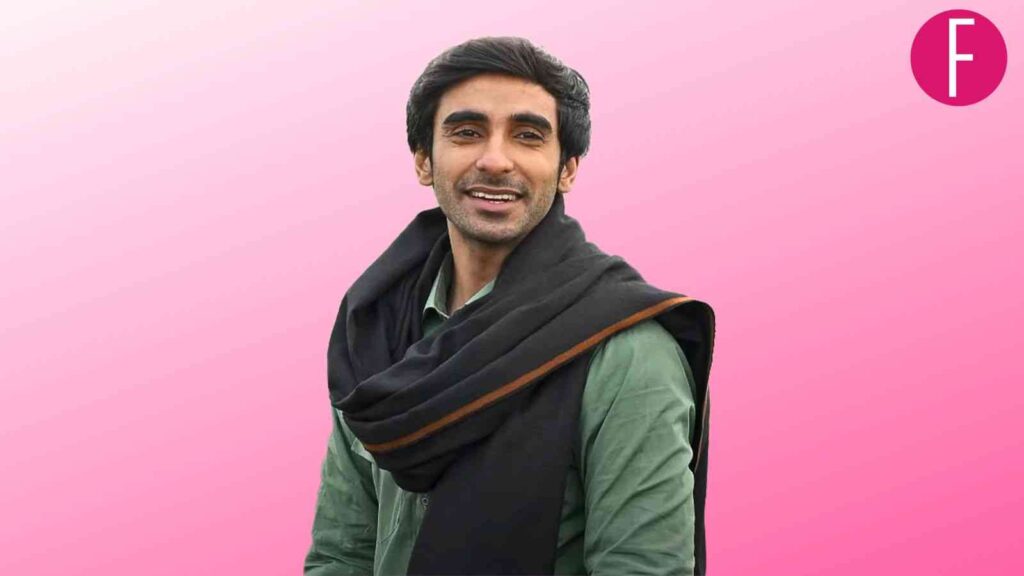
You, my dear Roshan, provided comic relief, and not much else. But what I learnt from your story was that we have many Roshans among us. They need society to tend to them, and that’s why we say that it takes a village to raise a child…obviously, the village might have succeeded in making a good human being but not with career ambition goals, because Roshan had none.
Yet, he had courage and an inner goodness, and when he dropped Meenu to college, got a beating from his dad, or persistently trailed his elusive love Muqaddas, one could have argued; my man, get a job first! But like I said, Roshan needed others to show him the way, and perhaps, Mairajuddin’s wise words, that he is the fallout from our lack of family planning, hence I will try and get him a job, is perhaps, what we need to do with the Roshans in our life.
Else, they will lose the spark they have and lead an aimless existence. I’d take a Roshan without a job to any of Meenu’s brothers with a job. Hence, Roshan did what Roshan was supposed to do. Give us a few smiles and possibly, nothing more, nothing else. Happy he got his Muqaddas and hoping he could make the wait worth it for her!
Bhoora, The Dad Who Has My Heart!
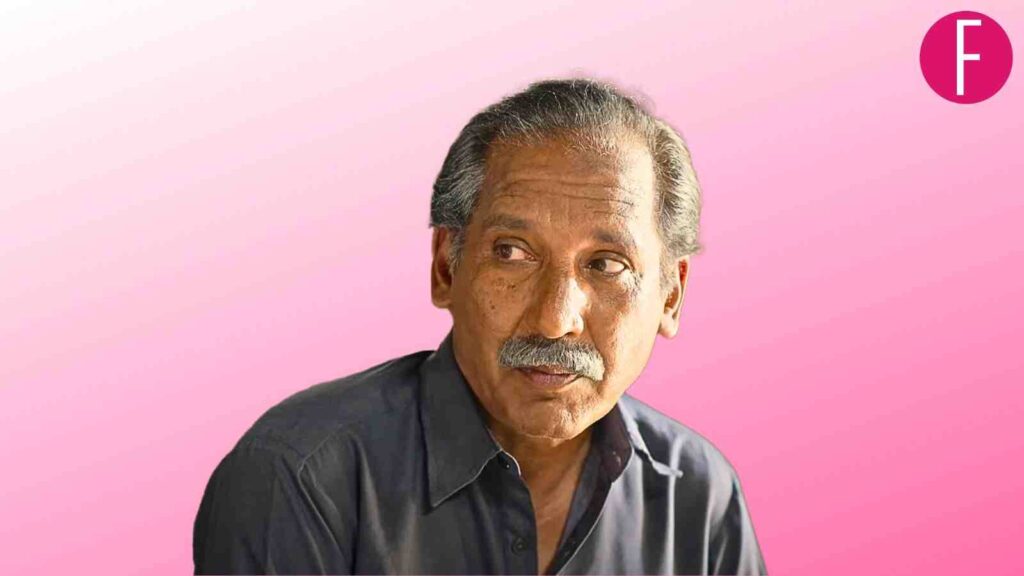
Now Bhoora is that father whom we all grew to love from day one. His bond with Meenu, his watchful eye, his protection from her brothers was all well and good, but you know what raised this man in my eyes a hundred-fold? You guessed it. It was his conversation with Malik Nadir.
When Bhoora defended Meenu, when he called out Malik Nadir’s blackmailing, he just raised the bar for all dads in every part of the world. His unwavering trust in Meenu, his desire to provide love, affection and understanding for the women of his house, bringing biscuits for his wife and communicating with Meenu when he saw her upset, were the cherry on top.
Bhoora wasn’t without his flaws, as all Zard Patton Ka Bunn characters. Else, how would they be human? His hobby of betting on his birds, leading an idle life, and failing to bring up his sons as honest, good human beings and productive members of society, was a big failure, and he acknowledged that. It also represented many like him who grace our villages. But at least Bhoora had the self-awareness to recognize his failings, and the courage to stand up for his daughter, and that, to me, endeared him forever.
Mairajuddin, You Deserve a Mention In My Love Letter
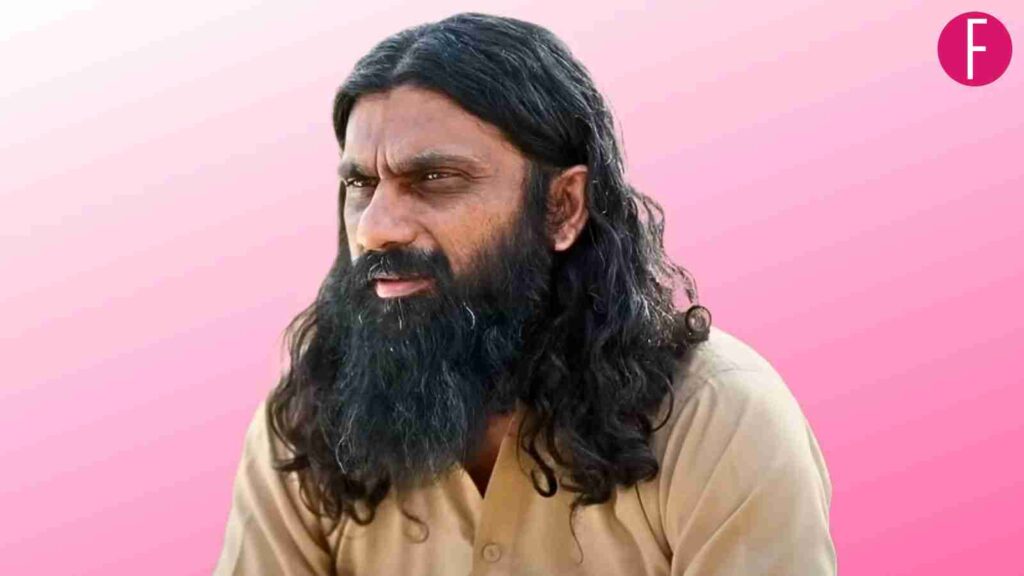
You had your priorities right. Except for the drugs. I could say that the drug addiction made you a wasted man, which it did. I could say that if you had been an active and contributing member of society, you could have added miles to the progress and wellbeing of the Kesar Kala community, but I can say that at least you were the voice of reason and progressive thinking among your siblings.
Mairajuddin stood out as that male representation who is devoid of judging people and their actions. He respects an adult woman when he sees one and refrains from interfering in the lives of others. He held a wisdom beyond his years and if, only if, he could have rid himself of that drug problem, he would be a gem of a man.
But that’s just it, right? The story tells us that even good people can be consumed with a bad problem, one that sucks the lifeblood out of them and deprives us of individuals we dearly need amongst us. To all the Mairajuddins and their families, the loss is real and undoubtedly, intensely tragic.
Dr. Nofils’ Dad: It Takes A Father To Raise A Son
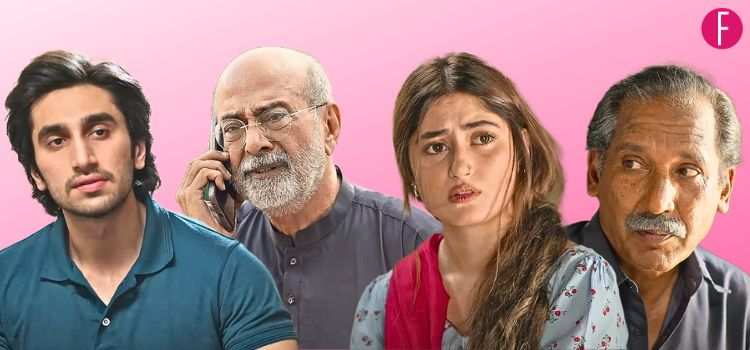
If father-son bonds could be that sublime… this is a man who must be lauded for bringing up sons like Dr. Nofil. It takes a father to raise a son, rightly so, in this narrative. From the moment Nofil laid his head on his father’s lap in the first few episodes, confiding in him, drawing courage from him, seeking him out in troubled moments to calm the storm within, Dr. Nofil’s dad was a shining example of sensible, sensitive and super parenting rolled into one. He is the reason we are lucky to have the Dr. Nofils in this world. More power to them.
And lastly, (if you managed to get this far, you are indeed a reader)! I just wanted to appreciate the makers for beautifully zeroing in on the family planning narrative and all the connected ills we face in society as a direct result of having too many children too soon, and trusting Allah to tend to them eventually. We end up with a large family, but perhaps, too many people who are a burden on society; from child labor to joblessness, drug addiction to failing to inculcate upright values in them, a burden on healthcare and ultimately, falling prey to the Malik Nadirs of this world. Because they too, exist, with all the Nofils and Bhooras among us.
It is also laudable that the story has shown us the good, the bad and the ugly faces of human beings, and men, especially. Where some men facilitated Meenu’s journey, others thwarted it; not every man is a villain, and not every woman, an angel (reference, Meenu’s friend who labelled a fake harassment charge on Nofil). But it is up to the good among us to take things forward and make sure that at the end of the day, humanity wins.
Just like in the lives of the inhabitants of Kesar Kala!
Catch Up More On Drama Gup With FUCHSIA
Zard Patton Ka Bunn is penned by the talented duo of Mustafa Afridi & Saife Hasan. The project is produced under Momina Duraid Production & Kashf Foundation. The cast includes Sajal Ali, Hamza Sohail, Rehan Sheikh, Samiya Mumtaz, Ali Tahir, Adnan Shah Tipu, Saad Azhar, Syed Tanveer Hussain, Chaudhary Muhammad Usman, Mubashir Mehmood, Adeel Afzal, Najma Bibi, Zaryab Haider & others.

