

After 13-year-old Faiza was raped and killed, a jirga “compensated” her family – a brutal reminder that this system still operates above the law.
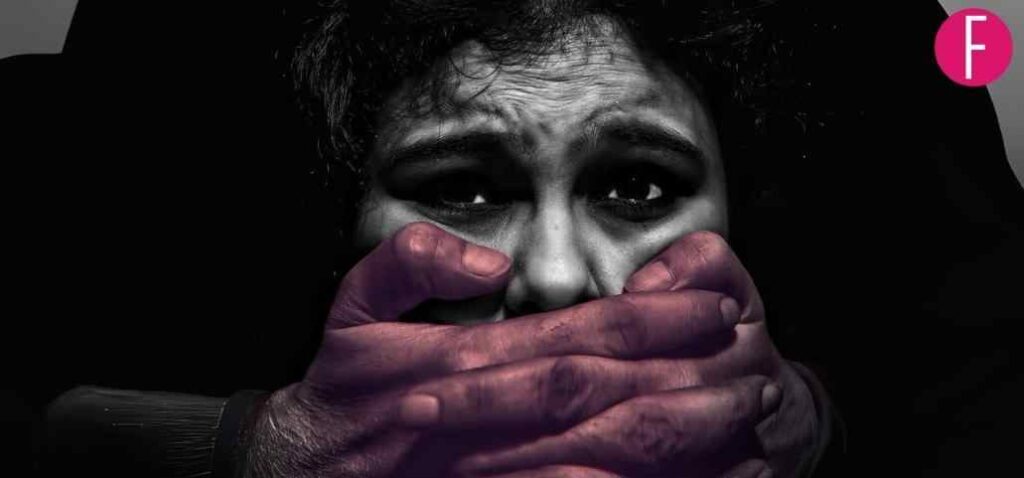
The jirga system still exists across Pakistan and what it’s doing to women and girls should be enough for us to say: enough is enough.
Despite being declared unconstitutional by the Supreme Court back in 2019, jirgas, the all-male tribal councils, continue to operate like parallel courts in rural Sindh, Balochistan, and parts of Khyber Pakhtunkhwa. And while some defend them as a quick alternative to a backlogged formal system, what they actually deliver is something else entirely: unchecked, unlawful decisions that often end in further violence and human rights abuse.
Take the case of 13-year-old Faiza in Naushahro Feroz. She was raped by her own relatives, then sent to a local landlord for protection. She was kidnapped near his house, poisoned with sleeping pills, and killed. The jirga that followed, led by a local influential figure, didn’t push for legal action or accountability, instead, it fined the rapist’s family and suggested they offer girls in exchange to Faiza’s family as compensation. They even implied Faiza should’ve just married her rapist.
This is the kind of sentencing we’re still seeing in 2025.
Even after years of court orders and outcry, jirgas are still functioning above the law, making decisions that have no legal standing, yet are treated as binding in the communities they control. There are no appeals, no formal evidence, no protections for victims and in most cases, women aren’t even allowed to be present, even when the decision directly involves them.
A Pattern We Can’t Ignore Anymore
Faiza’s story isn’t an exception, it fits into a long pattern of how jirgas handle serious crimes. In many cases, men accused of rape or murder walk away after a compensation deal is made: usually money or a girl from their family, handed over in a tradition known as swara, vani, or sung chatti. The girl, often a minor, is married off without a wedding ceremony, and sent to live with the victim’s family. It’s meant to shame the accused’s family, but all it really does is destroy the life of another girl.
A survey by the National Commission on the Status of Women in 2017 found that in areas where jirgas operate, 70% of married women were bartered through jirga decisions, and most of them faced domestic violence. You’ll almost never hear of a wealthy family giving away their daughter. In fact, for many, receiving a girl this way is treated as a symbol of status and control, not the clear violation it is.
The Law Says One Thing. Reality Says Another.
According to Pakistan’s Constitution, any custom or parallel system that violates basic rights is illegal. Articles 4, 8, 10-A, 25, and 175 all make this clear. The 2019 Supreme Court ruling also pointed to Pakistan’s international obligations under the Universal Declaration of Human Rights (UDHR), ICCPR, and CEDAW – all of which protect due process, equality before the law, and the right to remedy through formal legal channels.
But despite the legal clarity, the practice goes on – mostly in areas where the formal legal system is either inaccessible or too slow to trust. In those places, jirgas are often seen as quicker, cheaper, and easier to navigate. According to a 2022 study, almost 60% of respondents in Khyber Pakhtunkhwa said they preferred jirgas for resolving civil disputes over courts or police.
The problem is: fast doesn’t mean fair.
In these systems, men dominate every part of the process. There are no written rules. Decisions are based on customs, hearsay, or personal judgment. Victims are pressured to settle instead of seeking justice. And for women, especially, there’s no place to speak, resist, or appeal.
We See It on TV Because It’s Still Happening
This reality has been captured in recent dramas as well and it’s hard to miss the parallels.
In Razia, Mahira Khan’s character is married off as punishment for her brother’s mistake. In Sang-e-Mah, a jirga rules on the practice of ghag, where a man announces a woman as his intended bride without her consent, staking public claim over her future. These aren’t just dramatized plot twists, they’re real issues faced by women across Pakistan today. And the fact that these stories hit home with audiences is a sign that we know, deep down, that this is still happening. The question is: are we doing anything to stop it?
Moving Forward – Without Jirgas
But even with everything this system has gotten wrong, even with Faiza’s case and countless others like it, saying “shut down all jirgas” isn’t a real solution. Not when these councils are so deeply woven into the cultural fabric of the villages that rely on them. The law can’t reach everywhere, and most people within these communities still see jirgas as legitimate, familiar, and sometimes the only accessible form of justice.
What we really need is a shift from the ground up. Like we push awareness around family planning or girls’ education, we need similar grassroots campaigns that challenge harmful practices and unpack the cost of this so-called justice. Because jirgas didn’t start out this way. They used to be community-led forums for quick dispute resolution, something like a speedy out-of-court settlement. But today, their decisions are not just outdated, they’re dangerous. The system has lost its way, and it’s long past time we questioned who it’s really protecting, and who keeps getting sacrificed in the name of “peace.”
Yes, jirgas may have once filled a gap where state systems didn’t reach. But that excuse doesn’t hold anymore. Today, they’re often or mostly as the news shows, used to silence victims, dodge accountability, and uphold a system where honour means more than human life.
And if that same system still allows a 13-year-old to be raped, killed, and then “compensated” with another girl, then maybe reform isn’t enough. Maybe it really is time to shut them down altogether.
Sources: Voice PK, Dawn, NCSW, PIDE, Research Gate, BBC

