

In Pakistan, the war on women doesn’t happen in the shadows – it’s public, brutal, and ongoing.
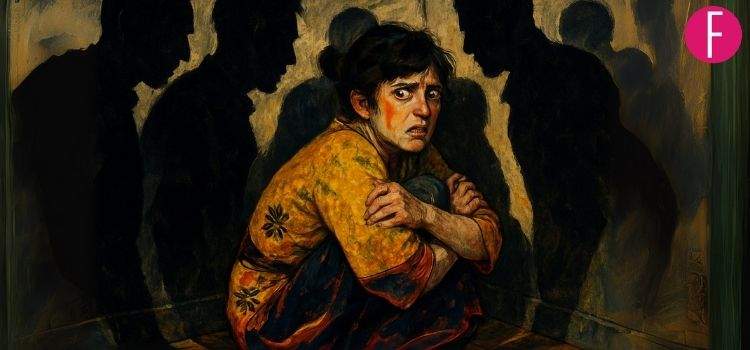
Every day, we wake up to a new horror story — like the nightmare won’t end. That’s the reality of living in Pakistan in 2025. While one half of the world moves forward, here we’re stuck in reverse, or worse — a loop of violence and silence. Women in this country don’t just fight for rights; we fight for survival. The simple dream of walking safely at night, of being visible without threat, of saying “no” without fear, remains just that: a dream. And those who dare to chase it are punished.
The gender-based violence cases aren’t isolated. Every age, every class, every city – the violence doesn’t discriminate. But the system does.
The UNFPA paints a grim picture. Nearly 1 in 3 women in Pakistan faces physical abuse in her lifetime. Among married women, 34% report spousal violence -emotional, physical, or sexual. Most don’t speak up. Why would they? In a country where a rapist can walk free, a victim is blamed, and a girl’s word is worth half a man’s — silence becomes survival.
Despite strong pro-women laws on paper; against rape, honour killings, harassment, and child marriage, weak implementation means impunity is the norm, not the exception. Nearly 56% of women who face violence don’t even tell another person, let alone report it. Because they know what will follow: questions, shame, delays, threats, and often, more violence.
18% of girls in Pakistan are married before 18, and 3.6% before 15, their childhood exchanged for childbirth. Many die giving birth. Many more just disappear into the cycle of silent suffering.
The System Isn’t Broken, It Was Built Like This
Justice is often performative. Khadija Siddiqi was stabbed 23 times in public. Her attacker got bail. In the Motorway gang rape case of 2021, a woman traveling with her children was raped after her car broke down. The response? A senior officer blamed her for taking the motorway late at night. As if that justified what happened.
The louder you scream, the harder the world tries to silence you.
Noor Mukadam’s killer, Zahir Jaffer, was given every benefit of the doubt. His family tried to shield him. His therapist testified. His domestic staff stayed quiet. For months, the case dragged on, with media distractions and judicial absurdities. Even in death, Noor had to fight. And still is with Zahir Jaffer aiming to seek a Presidential appeal.
So did Mukhtaran Mai. Raped by order of a village panchayat to “settle a dispute,” she became a global symbol of resistance. In 2002, six men were sentenced to death for the gang rape of Mukhtaran Mai, but by 2005, five walked free and the last had his sentence reduced to life. She took her fight to the Supreme Court, but in 2011, the appeal was rejected, and even her request for a larger bench was denied. Justice, it seemed, was only ever halfway delivered. What does it say about a country where women are shamed for being victims, and criminals become cultural martyrs?
In 2025, 17-year-old TikToker Sana Yousaf was shot dead in her own home for rejecting a man – again and again. That’s all it took. A girl said no, and it cost her life.
This wasn’t about “social media.” It was about male ego, the kind fueled by centuries of patriarchy that teaches boys a woman’s “no” is something to conquer. And when they can’t, they kill.
Years before Sana, Qandeel Baloch was also murdered for the same reason: defiance. She dared to be loud, unashamed, so her brother strangled her in the name of ‘honour.’ He wasn’t punished for her murder because his parents forgave him, the system let him walk free.
These women didn’t die because they committed a crime. They died because men believed they had the right to decide how women should live, what signifies a crime in their eyes, and when they should die, because in the man’s court of law, the crime he deems she committed is punishable by death – no judge or jury or even a formal sentence – just a life taken too soon.
And the Children? Still Unsafe. Still Ignored.
In Kasur, another little girl playing outside her house was molested. Her abuser was arrested only after CCTV footage forced the police to act. But the rot runs deep. Kasur is the site of the largest child abuse scandal in our history, hundreds of kids violated, filmed, and sold. In 2018, it was Zainab Ansari, a 6-year-old girl raped and dumped like trash, who briefly woke the country up. But it didn’t last. It never does.
Even the disabled are not spared. Dua Batool, 12, deaf, autistic, and disabled was brutally raped and murdered. She couldn’t scream. She couldn’t run. She couldn’t fight. Her body was found discarded in a sack. The horror is not just what was done, it’s how easy it was to do it.
These aren’t just stories. They’re blood-stained warnings. In Pakistan, being a woman means walking a tightrope over fire. You can die for saying no. Or for saying yes. For being too quiet, too loud, too beautiful, too visible, too successful or just for existing. This isn’t random. It’s a pattern, stitched deep into the fabric of our society. And the thread that holds it together is male power, the kind patriarchy handed down for generations, unchecked and unchallenged. That power doesn’t just kill. It is protected after the killing, by silence, by broken systems, by communities that treat women’s lives like they were always meant to end in tragedy.
It is protected by the culprits; rapists and murderers who walk free, making it easy for the next generation of men to act the same.
And sometimes, after we read about girls like Sana, Qandeel, Noor, Faiza, Dua, Sania – we break down. We log off. We deactivate. Because it hurts. Because we’re exhausted. Because we know it could have been us. But we don’t get to look away. We don’t get to shut down. These stories are not the exception, they are the rule. And we are all in this battlefield, whether we choose to be or not.
If this doesn’t stir your soul, nothng will:
A single scene in Gangubai Kathiawadi hits like a truck. After her friend Kamli dies, Gangubai orders her legs to be tied before the funeral. Why? Even in death, she wasn’t safe. That wasn’t fiction. That was a mirror. The war on women doesn’t end when we stop scrolling. It doesn’t even end when we die. So no, we can’t stay silent. We can’t keep adjusting. Because survival isn’t enough – we deserve to live. And we deserve to live free.
Credits: UNFPA, Dawn, DW News, Guardian, BBC

