

Let’s be honest: gaming is no longer Pac-Man in an arcade or Mario on a Nintendo. It’s Fortnite on the iPad, Call of Duty on the PlayStation, Roblox on the laptop, and Minecraft on every device you own. These games aren’t just pastimes — they’re virtual playgrounds where your child builds, fights, chats, and competes with millions of strangers.
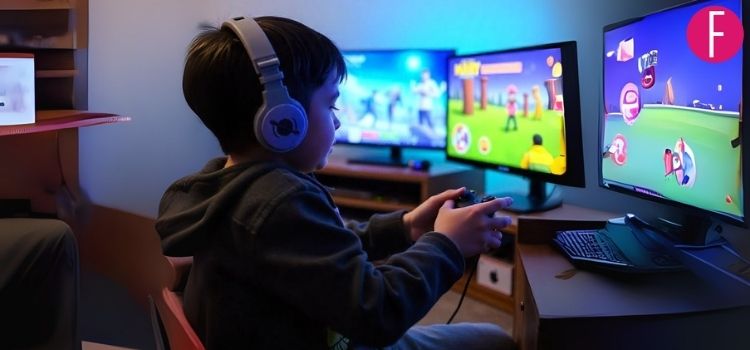
For kids, this is the new normal. For parents, it can feel overwhelming — like trying to understand an entire language you never learned. The big question is: what is all this doing to our children’s minds, their moods, and their physical, social and emotional development?
The Psychological Effects of Violence in Online Games
Not all games are created equal. Some genuinely build creativity and resilience. Others — especially violent, fast-paced shooters — can hardwire unhealthy behaviors. Here’s a breakdown of the biggest psychological effects parents need to know:
1. Aggression & Desensitization
Games like Call of Duty, Grand Theft Auto, or PUBG don’t just show violence — they reward it. Shoot someone, level up. Blow up a car, earn points. Over time, this repeated exposure lowers a child’s natural sensitivity to violence. What used to shock them becomes “normal.” Psychologists call this desensitization. A 10-year-old who spends hours in GTA watching characters beat, shoot, or steal begins to see aggression as just another problem-solving tool. Even if they never act it out physically, the way they process conflict can shift — anger becomes more acceptable, empathy less natural.
2. Addiction & Dopamine Loops
Games are designed to keep players hooked. Every “Victory Royale” in Fortnite, every new “skin” in Roblox, every loot box in FIFA triggers a dopamine release — the same brain chemical linked to gambling addiction. Kids get caught in what psychologists call a variable reward cycle: they never know when the next win will come, so they keep playing “just one more round.” This is why prying an iPad out of your child’s hands can feel like a battle. Their brain is literally wired to crave the next hit of excitement.
3. Attention & Sleep Issues
Fast-paced, visually stimulating games train kids to expect constant novelty. The downside? Shorter attention spans in school. Teachers notice it: kids who can focus on a 20-minute Fortnite match struggle to focus on a 20-minute lesson. Add in late-night gaming sessions, blue light from screens, and the adrenaline rush of competing — and you’ve got disrupted sleep cycles. Tired kids are cranky kids, and cranky kids are more impulsive and less resilient.
4. Social Risks: Strangers, Bullying & Grooming
Multiplayer platforms like Roblox or Fortnite open doors not just to friends, but to strangers. Some are harmless teens. Others use these games to bully, scam, or worse — groom children.
It’s not just the predators. Toxic gaming culture can expose kids to slurs, offensive language, or relentless taunting. If your child comes out of a game angry, upset, or repeating words you’ve never used at home — chances are they didn’t just “play,” they absorbed.
5. Identity & Self-Esteem
Avatars, skins, and rankings aren’t just fun. For kids, they’re identity markers. If your child’s friends all own the latest $20 Fortnite outfit and they don’t, they can feel excluded. If they lose repeatedly in competitive games, frustration can morph into shame. Psychologists note that online identity bleeds into offline self-esteem. A child who feels “weak” in-game can internalize that outside of it. A child who rages at losses isn’t just struggling with a game — they’re struggling with emotional regulation.
How Gaming Shapes Development
Gaming isn’t only about behavior — it shapes the brain itself. Here’s where it gets more layered:
- Cognitive Development: Puzzle games, building games, or strategy-based platforms like Minecraft or Chess.com boost problem-solving, memory, and spatial reasoning. These are positives. But shooter games often bypass deep thinking in favor of reflex-based action, which doesn’t nurture the same skills.
- Emotional Development: A child who learns to lose gracefully in a board game develops resilience. A child who throws the controller across the room after losing in FIFA is struggling with frustration tolerance. Gaming exaggerates these traits — the highs are higher, but the lows can be explosive.
- Social Development: Online co-op games can foster teamwork — kids really do learn collaboration in Minecraft or Among Us. But unsupervised, the same platforms can teach toxic norms: trash talk, rage-quitting, or unhealthy competitiveness.
- Moral Development: This one’s subtle. Games that reward violence or deceit (GTA, Mafia, even certain quests in Skyrim) nudge children into “role-playing” morally questionable actions. Kids don’t always separate fantasy from reality — especially under 13.
Bottom line: the kind of games they play will either sharpen skills or slowly normalize behaviors you don’t want to see in the real world.
5 Golden Rules To Keep Kids Safe When Gaming Online
Here’s the part parents ask me most: What can we actually do?
1. Choose Games Wisely (Violence Isn’t Neutral)
Age ratings exist for a reason — but they’re not enough. A 10-year-old in Call of Duty will experience war differently than a 17-year-old. Stick to games designed for their age group. For younger kids, pick creative or strategic games: Minecraft, Lego Worlds, Animal Crossing, Chess.com. And remember: exposure matters. A few hours in GTA does more damage than 20 hours in Minecraft.
2. Don’t Let Them Play With Strangers
Multiplayer is fun, but strangers bring risks. Encourage kids to play with friends they actually know in real life. Roblox “friends” they’ve never met? Not safe. For younger children: no microphone, period. Typing can be monitored, but live voice chat is a free-for-all. Predators thrive on voice contact.
3. Use Parental Controls & Set Limits
Every console and platform now has parental control settings — use them. Block mature games, cap screen time, disable in-app purchases. You don’t want your credit card funding your child’s Fortnite “battle pass” addiction. Also, set limits: experts recommend no more than one hour of recreational screen time per day for primary schoolers. Breaks are non-negotiable. When kids say “just one more match” — hold firm.
4. Watch Their Mood, Not Just Their Minutes
Time isn’t the only factor. Pay attention to how they act after gaming. Do they come away happy, calm, excited to share what they built? Or irritable, aggressive, withdrawn? The mood tells you more than the clock. Example: A child who plays 45 minutes of Minecraft and comes running to show you their castle? Healthy. A child who slams the iPad after losing a FIFA match and storms off? That’s your red flag.
5. Play With Them
This is the golden rule most parents underestimate. Join them. Play a round of Mario Kart. Build in Minecraft. Even if you’re terrible, the point isn’t winning — it’s being present.
When you play, you see the content firsthand. You hear the chat. You understand the culture. And your child learns that gaming doesn’t have to be isolating — it can be family bonding.
Final Word
Online gaming is here to stay. For this generation, it’s the new playground, the new after-school hangout, even the new classroom. But like any playground, it has bullies, strangers, and unsafe corners.
The point isn’t to ban gaming. It’s to guide it. The games your child plays will shape their brain, their behavior, and their worldview. By choosing wisely, setting boundaries, and staying involved, you turn gaming from a risk into a resource.
Because here’s the truth: kids don’t just need limits — they need leaders. And when you lead them through the digital world with wisdom and presence, you give them the best of both worlds: the fun of gaming and the safety of growing up whole.
Credits: UNICEF, Child Mind, St. Martin’s Academy, Mississippi Mom

