

Donald Trump, president of the United States, has declared new tariffs on 60 trading partners with tariffs between 10 percent to 12.5 percent imposed under section 301 of the US Trade Act of 1974.
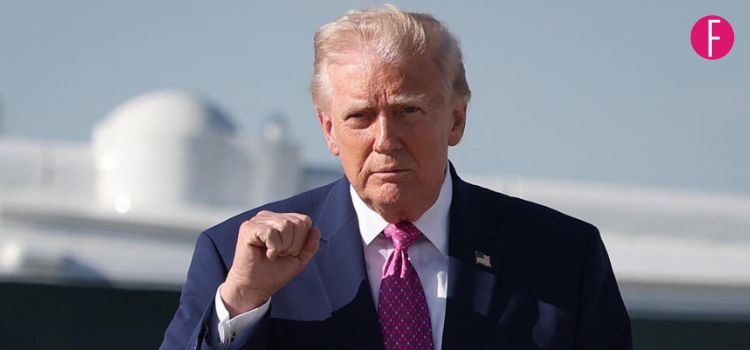
The new measures came into effect immediately after the expiration of the temporary 10% global tariffs that had been in place following a US Supreme Court ruling earlier this year. As per the US government, the tariffs are aimed at those countries which either do not ban or do not implement the ban on the items that are made from forced labour. The policy is meant to raise the global labour standards and ensure fair trade practices.
Why the Tariffs Were Introduced
According to the government, the United States has always had stringent measures regulating the importation of goods from countries practicing forced labor, whereas other trading partners do not have similar measures in place.
For the new system, those countries which would be able to demonstrate progress on the basis of either having established or committed themselves to forced labor import prohibition would be subject to a 10% tariff. On the other hand, countries that did not do enough would have a 12.5% tariff imposed on them. This is after several months of research into trade practices in 60 different economies by the USTR.
Countries Affected
These tariffs affect the products coming into the United States from 60 economies around the world. They include the biggest trading partners of the US such as Europe, China, Canada, UK, Mexico, Pakistan, India, Bangladesh, Malaysia, Indonesia, and Cambodia, among others.
Countries such as Pakistan, Canada, the European Union and Mexico are subject to a 10 percent tariff owing to their actions or planned actions that will result in increased import restrictions related to forced labour. Those that have made little progress are subjected to a 12.5 percent tariff. The total effect of these tariffs covers most of the goods being imported into the United States.
Global Reaction
This move has caused a lot of criticism from some of the trading partners who are affected by this move, as the tariffs are seen to be not justified and can cause disruption of global trade. The representatives of European Union, Australia, Brazil, China, Canada, and others have dismissed the claims by the US government that they did not do anything about the forced labor issue, claiming that their laws on labor are up to the mark as per international standards.
Brazil described these tariffs as “arbitrary and unjustified,” and stated that it will fight against the tariffs through the World Trade Organization (WTO), under its Reciprocity Law. Australia termed the tariffs “completely unjustified.” The European Union also found the decision to be “a negative surprise,” and questioned the legality of such an action.
Moreover, the measures have been met with protests in many countries by various industries, labor organizations, and exporters who fear the negative effects on employment, logistics, and foreign trade. The economists say that the conflict may escalate into a new round of trade conflicts as other countries take retaliatory actions or even challenge the dispute through legal means.
Economic Impact
Although the tariff rates are almost similar to the provisional tariffs that ended last week, experts have noted that the prolonged use of such tariffs may lead to higher prices for importers and consumers while at the same time introducing uncertainty into the international market.
In the case of the Trump administration, this trade policy has been defended as not only protecting US workers and producers but also promoting trading partners to combat forced labor in their supply chain.
This is a developing story.
Sources: Reuters, and Al Jazeera.

