

As Maham and Faris in Aik Mohabbat Aur, Qudsia Ali and Abbas Ashraf are bringing to life one of television’s most uncomfortable but important conversations: emotional abuse and toxic relationships. Their performances have sparked discussions around manipulation, control, and the warning signs many people often ignore. Sitting down with FUCHSIA, the two actors opened up about landing the drama, the responsibility that comes with portraying difficult subjects, why victims should never suffer in silence, and whether today’s generation is really learning from the conversations happening around them.
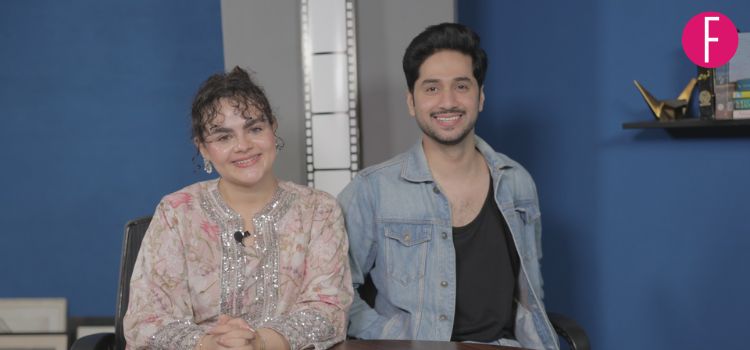
This article This article is an excerpt from the YouTube interview.
How Aik Mohabbat Aur Came Their Way
For both actors, Aik Mohabbat Aur arrived as the kind of opportunity every performer hopes for—a project that excites you long before the camera starts rolling. Qudsia smiles while recalling that working with director Farooq Rind had been on her wishlist for years. It wasn’t simply admiration from afar; she had even messaged him on Facebook in the hope that one day they would collaborate. When that wish finally turned into reality, she made sure to remind him on set that she had manifested this long before the drama ever existed.
Abbas’ excitement was no different. He credits Green Entertainment’s content team, particularly Alina and Faiza, for believing in him and helping him reach the project. But everything changed the moment he learnt that the drama would be directed by Farooq Rind and penned by Faiza Iftikhar. Reading the script only strengthened that feeling.
“This isn’t an ordinary project,” he remembers thinking. He recalls immediately sensing that the story demanded sincerity and complete emotional investment. It wasn’t a script you simply performed; it was one you had to live. The moment his casting was confirmed, Abbas says he offered a prayer of gratitude before embracing his mother, who perhaps celebrated the news even more than he did.
For both actors, Aik Mohabbat Aur wasn’t just another drama on their résumé – it was the chance to become part of a story that had something meaningful to say.
‘Tell Your Parents’: Why Staying Silent Only Gives Toxicity More Power
With Aik Mohabbat Aur exploring emotional abuse so closely, the conversation naturally shifted towards the reality many women face away from television screens.
If there is one message Qudsia hopes young girls take away from the drama, it is this: speak up. She believes far too many women continue tolerating emotional abuse because they worry about society, family reputation or whether anyone will believe them. But remaining silent, she says, only allows the behaviour to continue. The first conversation should always be with parents. If that support doesn’t come immediately, don’t stop there. Find someone who will listen. Raise your voice.
For her, the fear of “log kya kahenge” has become one of society’s biggest traps. People may gossip for a few days, she says, but they rarely stand beside someone when they’re actually suffering. No opinion is worth sacrificing your peace or your safety.
Abbas agrees that silence often removes consequences for the person causing harm. When unacceptable behaviour keeps being tolerated, it slowly becomes normal. Unless someone decides to break that pattern, the cycle simply repeats itself – not just between partners, but sometimes across generations.
Why Aren’t Girls Changing? And Are Boys Struggling Too?
Despite growing conversations around red flags, therapy and healthy relationships, many young women continue finding themselves trapped in the same patterns. Why?
For Qudsia, it often begins with insecurity. She feels many girls grow up searching for emotional validation they never fully received. When someone finally gives them that attention, they begin overlooking behaviours they would otherwise question. Slowly, boundaries disappear, self-respect takes a back seat and the relationship becomes their entire identity. It is something she understands personally. There was a time, she admits, when she was deeply insecure about her appearance, her weight and even her hair. That confidence didn’t arrive overnight – it came through self-awareness and learning to stop comparing herself with everyone else.
Social media, she believes, has only intensified that comparison. Constantly watching other people’s seemingly perfect lives creates the illusion that everyone else has something you don’t. Instead of looking around, she encourages young women to focus inward, trust their own journey and believe they are capable of creating the life they want.
Abbas feels insecurities aren’t exclusive to women. Men go through them too, whether professionally or personally. He admits there have been moments when watching others progress faster made him question his own path. But comparison, he says, is endless. There will always be someone ahead of you. Instead of measuring your life against everyone else’s, he believes people should learn to appreciate how far they themselves have come.
Breaking Stereotypes, One Character at a Time
Even as Aik Mohabbat Aur brings them widespread recognition, both actors are already looking ahead.
Qudsia hopes the industry gradually moves away from placing actors into fixed categories. Too often, she says, performers become known as “the bubbly one,” “the sister,” or “the serious character,” leaving very little room to explore different shades of performance. Actors have layers, she insists, but those layers can only be discovered if directors and producers are willing to take creative risks. For her, the dream isn’t simply to stay busy. It’s to tell stories that challenge audiences and explore subjects television still hesitates to discuss—whether emotional unavailability, narcissism, therapy or mental health.
Abbas shares a similar outlook. Despite the attention Aik Mohabbat Aur has brought him, he sees this phase as only the beginning of a much longer journey. Success, in his eyes, isn’t reaching a destination but continuing to grow. More than anything, he hopes his own journey eventually inspires others and makes the road a little easier for the people who come after him.
Perhaps that is what makes Aik Mohabbat Aur feel different. For Qudsia Ali and Abbas Ashraf, it isn’t simply another drama. It is a story that has given them the opportunity to entertain, start uncomfortable conversations and, hopefully, encourage someone watching to recognise the signs of toxicity before it is too late.
Cath up on the conversation here:

