

Dar-e-Nijaat is serving up a hero who seems too good to be true to audiences, called out for being too robotic, AI-generated version of the Pakistani drama hero, never to be realized but an ideal that exists in our minds, forever loved, forever unachievable.
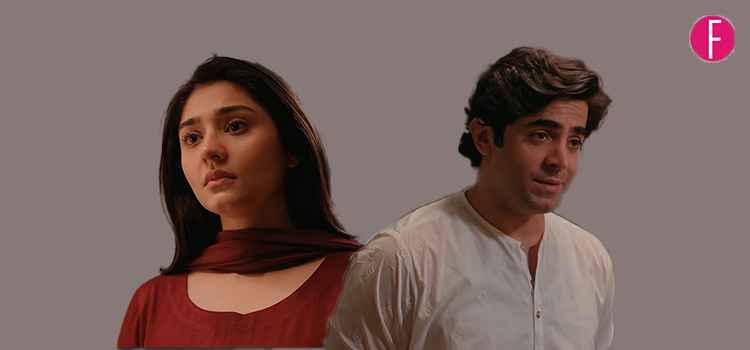
And perhaps that’s what makes him so irresistible for a lot of Pakistani fans – the restrained anger, a guy in control of his emotions at all times, not giving into the perpetual rage-baiting from Zaryab, bowing to his mother’s wishes, and possibly, in love? We’ll talk about that later. But for now, Abu Bakar is your perfect manifestation of a man who follows his Faith to the tee – mindfully, mind you, and totally present in the moment.
So, while one contemplates if Dar e Nijaat is a love story wrapped in religious messaging, or just a message about men like Abu Bakar embrace their Faith and become a walking, talking encyclopaedia of the right man, or, is it merely a love story, one that certainly pulls us in with some great performances and direction, but yet, marred by too many messages that spoil the final version of the hero we see onscreen.
But in between all these contemplations, the question that comes to mind then is:
Why is Abu Bakar being so good to Zaryab?
Is it because he is following the principles of the religion he manifests so inspiringly – the calm, collected, patient, understanding husband? Or, is it because he’s in love? The moment Abu Bakar says ” But I think about you” to Zaryab, is a moment that throws her off balance, as it throws us off too. Oh, so is that why he’s all nirvana before this woman who’s purposely acting difficult, rage-baiting him into giving a reaction, because the man is in love! Surprise, surprise, we didn’t see that coming… or then again, is his Budhha-like stance, more a product of his religious bearing?
There is certainly a level of confusion as one struggles to understand a possible love that we didn’t see in earlier interactions with Zaryab. Yeah Zaryab, we’re as stunned as you!
Or, true to writer Umera Ahmed messaging history, is the drama attempting to highlight the sanctity and power of nikah? How this single, pure act can bring two people closer to become each other’s guardians.
On the contrary, perhaps if the drama were to choose which version of the story takes precedence, message or romance, we might be able to clear the confusion in the Dar e Nijaat characterizations. Is the power of Nikah explicitly driving Abu Bakar’s behavior? This perspective would have made so much more sense, and audiences would not complain that Abu Bakar and Khushbakht seem like they were AI-generated Chat GPT versions of the latest Pakistani drama characters.
In defense of the latter argument (the power of Nikah) – the messaging in Dar e Nijaat, the drama is also showing how a husband should be: caring, sensitive, respectful, firm, and loving toward his wife. Thus, Abu Bakar may not be a reflection of reality, but of what a husband should be—an ideal to aspire to, not a savior to wait for.
Lastly, if it is a pure and simple love story, and an aesthetic one for sure, one needn’t overwhelm the viewer with multi-messaging tactics, from Quranic ayats in smart phones sets to posters of Iblees before the camera pans to Zaryab’s silhouette – one could have done without the (very overt) messaging – because, best kept secret – love always holds a place in the hearts of Pakistani drama fans and this is one genre that, if done right, will tell its own story…
This is also possibly why audiences are perplexed, questioning a hero whose perfection needs a cause – religion or love? Therefore, it is not surprising that the question on everyone’s mind – Is Abu Bakar: AI-Generated or Just Manifesting The Best Version of Him? is perhaps, a valid one.
But which one is it for you – messaging or love?Tell us in comments below!
Dar e Nijaat is penned by Umera Ahmed, directed by Saqib Khan and features Nameer Khan, Sheheryar Munawar, Dur e Fishan Saleem, Romaisa Khan, Sania Saeed, Faran Tahir, Saba Hamid and more.

