

When you climb the highest mountains, you are often the only one who reaches the summit – Ia Aik Hai Nigar testament to “It’s lonely at the top” vibes? – it sure is, but was it worth the climb?

But let’s start from the beginning. Last night, I settled in to watch Aik Hai Nigar at one stretch. I didn’t want to spoil my experience by watching it in bits and pieces, so 1 hour 42 minutes of watch time from the comfort of my living room couch, a soothing cup of herbal tea in hand, was all I needed to embark on a journey of the woman who made it as the only and first, (so far) three-star general in the Pakistan Army.
Let’s Settle Expectations Here At The Onset

Aik Hai Nigar is a monumental project to undertake for any filmmaker. It relates a narrative about a woman, an institution steeped in stringent rules & traditions, a daughter, wife, doctor, an ambitious woman, and … a period drama retelling a real-life story.
Oh to wrap your head around all that and come out a winner in under 2 hours is a herculean task even for the greats amongst drama makers. But to attempt is divine or foolish? – or perhaps …, we fall in between? Team Umera Ahmed, Nina Kashif & Adnan Sarwar attempted to do just that, and this is how it went for me.
A Heartfelt Project

It is critical to point out, that barring performances, which I’ll come to in a bit, the attention to detail in keeping to the period the story was retold is praiseworthy. From the army housing furniture to the cast’s wardrobe, appearance, and feel, the effort to keep it true to the original shone through. Mahira’s deep black hair (to match with the original Nigar), the accentuated laugh lines (as she grows older) to Bilal Ashraf sporting a paunch was not only endearing but helped us, the viewers, visualize Johar and Nigar – the couple who grew old together – with a smiling warmth in our hearts.
The Shaadi ka jora – red-gold with glittery eye makeup and the mirror scene sent out emotional throwbacks to an era we missed fondly. The vintage car, a couple thriving in the simple pleasures of life, made us long for the simplicity that we seem to have lost over the years. When Nigar attempts to cook & fails miserably, we see a flawed human being in an otherwise flawless exterior and we smiled at husband Johar’s loving acceptance of not very Michelin star dishes placed at the table. Bhindi ka Qorma might never taste the same again for many, by the way, did they mean bhindi gosht?
Aik Hai Nigar leaned heavily towards defining General Nigar Johar as a wife and homemaker, yet, one who didn’t compromise on her career goals. Working late at night, submitting to delayed marriage plans due to work demands, and not letting the inevitable cadet college ragging get under her skin is the strong girl Nigar we were expecting to see onscreen.
What we weren’t expecting was perhaps, the insurmountable losses she bore, again and again. When she lost nearly her entire family, it was a tragedy, but when she lost her husband later, it was devastation. When she walked into the Surgeon General’s home alone, it was, perhaps, a goosebump moment, a bitter-sweet summary of her successes, without the sweetest by her side.
The story was equally tragic because the real Nigar Johar had been through these life experiences and as recent as 2019 – one cannot but shed a tear, many tears, for a loss that was perhaps, the unfairest to bear.
Writer Umera Ahmed penned the couple’s story so intensely, the chemistry between Bilal Ashraf and Mahira Khan, so beautifully complete, that we felt the loss deep inside our hearts. A love story cut short is a tragedy, a love story fulfilled yet, left halfway, with no one to share the final trophy, is deeply tragic.
Let’s Come To The ‘General’ Bit Now

This will be a critique in immense humility, in no way meaning to undermine a project that has wrapped itself around my heart, and the heart of all women who watched it. It is, but a gentle suggestion to aim for even higher rewards in future endeavours!
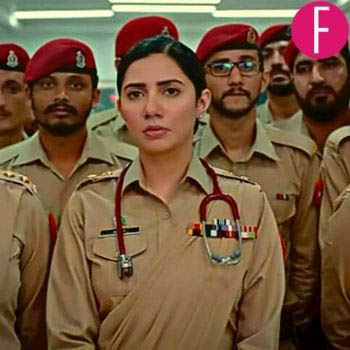
As much as the narrative highlighted the family, married life, and professional commitment of General Johar Nigar, there seemed pieces, several pieces missing in transition. It was admirable to watch her fighting for her rightful position in the darbar, to take a seat amongst the most powerful men in the country, of influence and bearing, and demand her right to do so.
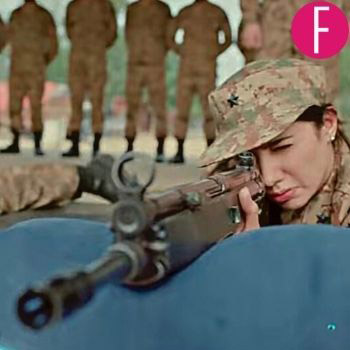
It was oh so gung ho to watch her as a champion markswoman which she is, according to army records, and acing it in a world full of men. It was inspiring to watch her take on the two erring officers who had indulged in thievery and pronouncing the court-martial on them. All that definitely helped cement a true to life and inspirational image of General Nigar Johar in our minds – the brave, courageous, gutsy young girl who grew up to make a beeline for her dreams, never so much as glancing sideways to check who or what’s blocking her, if at all.
But, and here’s the but. Again, with a great deal of respect for the project and its makers, so don’t get me wrong!
Becoming General Nigar Johar Must Have Had Its Fair Share Of Challenges In The Army
The competition, rivalry, ambition to get ahead is real – should it really be diluted into a scatter of scenes depicting female cadet ragging? Where was the journey with fellow officers, male officers who sought the same position as the General, and didn’t quite make it? Where was the moment she stepped into her first surgery, the moment she made a mistake, (as humans do), and learned from it? Where was the moment she broke down because the struggle was too real? And then, got back on her feet again.
Heroes are made of successes AND failures … the failures are the route to success. We wanted to see her fall, and rise again because that is the material she’s made of, she is the first 3 star female General in the Pakistani Army – she is not, and never will be, a woman who did not learn from her way up!
The Lahore blast moment depicted a glimpse of her struggle, a moment that was nearly too hard to fathom for any human being, but for a woman like Nigar, it was a challenge. And that is what we wanted to see more of, and in greater expanse. Her leadership qualities, her strength, her ability to keep calm in the face of immense pressure – the aah moment could have been a bit more aah-worthy?
It is said that General Johar Nigar led the Covid facility at the Army Medical Facility in Pakistan and we would have liked to see the genius behind the strategy. How did she cope with Covid in the midst of fighting intense personal tragedy as her dear husband fought for his life? Now that is the struggle I missed.
Not taking away from the project, which I found laudable in what it gave us, by the way, I was just lamenting on what it didn’t. And now, a shout-out to some stellar performances!
Mahira Khan As General Nigar Johar

The transformation from a young girl to a General who took on an institution and walked alongside her male counterparts was a proud moment indeed. Mahira is taking on and embracing roles that speak volumes more than the pretty girl next door. In fact, you could catch it in her stance, she threw herself in whole-heartedly, and the appeal of the project was evident in the manner she played Nigar. As a determined daughter, a wife, who will balance career and home, a strong girl image that spoke to her instantly and to the audience as well – positive female roles that are not submissive and yet, stand strong are hard to come by, Mahira felt cut out for this one.
But that’s not all.
Bilal Ashraf Played Johar With So Much Endearment That We Couldn’t Get Enough Of The Loving Husband Role!

Never OTT, never underplaying it, it was almost as if, he sat down and played chess with the real Mr. Johar every day to slip into his skin. So spectacular was the chemistry between Mahira and Bilal that these two will be etched for a long time as Johar and Nigar in our minds, if not forever!
Sohail Sameer showed us that a brief appearance does not mean a forgettable one. His expressions were on point, his mannerisms so fatherly and so relatable that it was hard to believe he was, in fact, handing out a sharply crafted performance. We felt for him in his absence.
While all actors brought their A-game to the project, a notable performance came from the young gentleman, Khushhal Khan aka Shahid. This young man will go places. To weep before the Mahira Khan and do it in effortless sync is the work of seasoned talent – for Khushhal to do it and with heartfelt believability and emotion, yet minus the loud theatrics was the cherry on top!
Was Aik Hai Nigar An Essentially Woman-Centric Narrative?

Image Credits: ARY
Not really.
The messages were many, but they came from the men.
When Johar celebrated his wife’s success (over his own rank), when wives who are unable to cook do not serve as deal breakers in marriages, when childless couples do not translate into lifelong misery, when fathers & brothers support the women amongst them, and finally, when an institution such as the Pakistani Army is able to provide a platform for women such as Nigar & enable her to touch the skies…change is inevitable.
These narratives hold special meaning because they were not shoved down our throat, but delivered subtly through gentle, natural characterizations of male roles who can serve to influence mindsets in positive ways.
As General Nigar Johar states herself, and admirably:
Gender discrimination can exist in any office and on any level of management, but that is not the problem. The problem occurs when we fail to teach our daughters and sisters to recognize that they are being discriminated. Being a woman requires you to work at least twice as hard, but once you are recognized for your resilience and work, you are respected twice as much. I have always focused on my work in order to succeed. I have worked with male colleagues and not against them. The glass ceiling is pretty high but Pakistani women are getting there, slowly but surely.
So, Did Aik Hai Nigar Hit The Winning Strokes?
Oh well, it made it to the top – a story that’s worth watching for the love and sheer commitment with which it was brought to life. Was there something missing? Yes. Perhaps the project had boundaries it could not cross, perhaps the team had to work within a framework, and that too, is challenging and must be noted for brownie points on creativity.
But is there enough in the narrative to give it a watch? Yes, a resounding yes! Watch it for the triumph of the human spirit, against all odds and because, this is the age when we need to see so many more Nigar Johar’s take the darbar, not just one!

