

Aik Mohabbat Aur is now nearing its end, and if you haven’t been following the drama or need a quick refresher on how Khushbakht Naz and Haroon Malik’s story began, this one is for you.
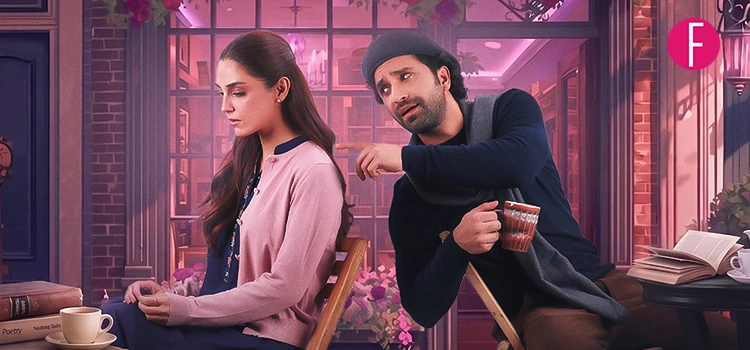
At its heart, Aik Mohabbat Aur brings together two people who come from very different worlds. Khushbakht Naz, played by Maya Ali, is an Assistant Commissioner and a single mother who has already experienced marriage, divorce and the kind of scrutiny that comes with being a woman who chooses to rebuild her life on her own terms. Haroon Malik, played by Ahad Raza Mir, is a journalist and news anchor whose world revolves around stories, current affairs and the constant pressure to find something worth putting on screen.
But what makes their relationship particularly interesting is that neither character is presented as someone who simply needs to be “saved” by the other.
Khushbakht And The Battle Beyond Her Career
Khushbakht’s character has been one of the drama’s strongest aspects because her struggle is not limited to being a divorced woman or a single mother. She has a flourishing career and has built an independent life, yet even that independence comes with its own set of battles.
At home, she has to deal with a mother who questions whether she is giving enough time to her daughter, rather than simply celebrating the fact that her daughter has built a successful career. At work, she encounters the everyday misogyny and casual sexism that many professional women are expected to quietly tolerate. The drama has managed to show these things without turning Khushbakht into a constantly suffering character.
That is perhaps what makes her empowering. She is not independent because the story tells us she is; we see her make decisions, handle her responsibilities and navigate a life in which almost every choice she makes is open to judgement.
And when it comes to love, Khushbakht represents another reality that is rarely explored with enough sensitivity: women who have already been through marriage and find it difficult to trust again. For a single mother, giving love another chance is not simply about following your heart. There is a child, a past, family expectations and the fear of making the wrong decision all over again.
Haroon’s Green Flags Are Not Just About Khushbakht
Haroon, meanwhile, has turned out to be an interesting portrayal of the kind of young man who wants to do the right thing without necessarily being written as a perfect hero.
His green flags are visible not only in the way he treats and supports Khushbakht, but also in how he responds to the problems around him. His relationship with his sister-in-law, Maham, is particularly important because it shows that his respect for women is not simply something the story introduces because he is falling in love with Khushbakht.
Haroon also brings an interesting perspective on the media. His profession exists in a world where sensational stories can mean more clicks, more views and more attention. He understands how the game works, but we also see him trying to draw a line between the stories he believes deserve attention and the ones he is willing to leave alone.
That makes Haroon more layered than the usual charming male lead. He can be playful and impulsive, but there is a principle underneath it all.
Faris And Maham: The Quietly Disturbing Story Within The Story
Then there is the Faris and Maham track, played by Abbas Ashraf and Qudsia Ali, which has quietly become one of the most compelling parts of the drama.
What works particularly well here is that the drama does not rely on an exaggerated or sensational depiction of narcissism. Faris’ behaviour unfolds through manipulation, gaslighting and emotional abuse, making Maham question herself and her own reactions.
Initially, her behaviour can appear excessive or difficult to understand. But as the story progresses, the dynamics of the marriage become clearer. Faris presents himself as the victim while simultaneously manipulating Maham into reacting in ways that can then be used against her.
It is a storyline that feels disturbingly familiar precisely because it is not overplayed. And although Faris and Maham are not the central love story, their track adds another layer to what Aik Mohabbat Aur is saying about relationships, women and the different forms abuse can take.
The Farooq Rind Touch
For viewers who enjoyed Ishq Murshid, there is another reason Aik Mohabbat Aur may feel familiar. The drama is directed by Farooq Rind, who also directed Ishq Murshid, and there is a similarly poetic quality to the way certain moments are allowed to breathe rather than being pushed forward through dialogue.
The OST and music also become part of that storytelling. Instead of simply functioning as background music, the songs often carry the emotion of a scene, particularly in moments between Khushbakht and Haroon. The title track is sung and composed by Ahmed Jahanzeb, with lyrics by Ali Moeen.
Maya Ali and Ahad Raza Mir both deliver wonderfully restrained performances, with Ahad slipping effortlessly into Haroon while Maya brings a quiet strength and subtlety to Khushbakht.
Catch Up With The Latest Drama Gup Here
Aik Mohabbat Aur is penned by Faiza Iftikhar and directed by Farooq Rind. The cast features Ahad Raza Mir, Maya Ali, Hajra Yamin, Saqib Sumeer, Samiya Mumtaz, Noor ul Hassan, Monazza Arif and more.

