

The International Crimes Tribunal-1 (ICT-1) in Dhaka has sentenced former Bangladeshi Prime Minister Sheikh Hasina to death in absentia, concluding one of the most significant and controversial trials in the country’s political history.
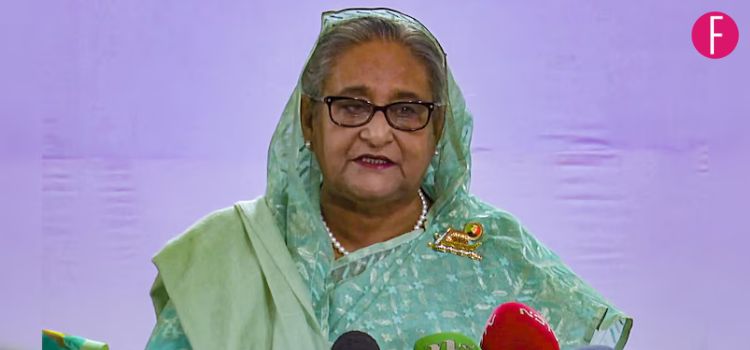
The judgment, delivered on 17 November 2025, focuses on the deadly state response to the student-led uprising of 2024, which ultimately resulted in the fall of Hasina’s long-standing government. The tribunal’s 453-page verdict outlines findings about the chain of command within the government, the conduct of security forces, and the nature of violence used against civilians during the unrest.
Background To The Case
The case arose from the widespread protests that erupted across Bangladesh during July and August of 2024. The demonstrations first started as a movement against public job quota rules, but within weeks, they grew into a nationwide challenge to the government’s authority. Students, teachers, opposition groups, and ordinary citizens joined the protests, calling for broader reforms and demanding an end to what they described as years of excessive state control and intimidation.
As the protests escalated, clashes between demonstrators and law enforcement became more frequent and increasingly severe. Numerous reports during this period described the use of live ammunition, aerial surveillance, and reinforced police presence. Hundreds of people were killed in these confrontations, and thousands were injured. International concern grew rapidly, and several governments and human rights organisations called for restraints on the use of force.
Amid this turmoil, Hasina’s government lost political control. Several senior officials reportedly advised her to resign, and by early August 2024, she left Bangladesh. She has remained in India ever since, where she continues to issue statements through her party and legal team.
Charges & Legal Process
The tribunal charged Hasina with five counts of crimes against humanity, accusing her of being responsible for the actions of security forces and affiliated groups during the crackdown. She was tried under the principle of “command responsibility,” meaning the court judged that she had authority over the forces involved, had knowledge of what was happening, and failed to prevent or stop the violence.
The charges included specific incidents such as the killing of a university student in Rangpur, the shooting of several unarmed protesters in Dhaka’s Chankharpul area, and the burning of bodies in Ashulia. These events were presented as examples of a broader and coordinated operation carried out against civilians. The prosecution argued that the level of force used could not have taken place without approval from the highest level of government.
The tribunal reviewed statements from witnesses, security personnel, survivors, and family members of victims. It also examined audio recordings, internal communications, medical and forensic reports, and drone and helicopter flight logs. According to the judges, these materials collectively established that the crackdown was systematic and that it had been carried out with knowledge and direction from senior officials.
Verdict & Sentencing
In the final judgment, the tribunal stated that Hasina bore direct responsibility for the loss of life and widespread injuries during the protest period. It concluded that she had full operational control over the security forces and did not take steps to reduce the level of force being used, even as the situation escalated. Because the court found that civilians had been intentionally targeted as part of a wider pattern, it ruled that the legal threshold for crimes against humanity had been met.
The court sentenced Hasina to death.
Her former Home Minister, Asaduzzaman Khan, received the same sentence.
Former police chief Chowdhury Abdullah Al-Mamun received a five-year prison sentence, having admitted involvement and given testimony that helped investigators understand the internal chain of command.
The tribunal also instructed the government to confiscate Hasina’s personal and family assets and allocate portions of them to fund compensation for victims’ families.
Response From Hasina & Her Party
From exile, Hasina dismissed the verdict as unbalanced and politically influenced. She said the case was conducted too quickly and without giving her legal team the opportunity to properly present their defence. She has maintained that she did not order violence and that the protests turned chaotic because of outside actors and infiltrators.
Her party, the Awami League, called the tribunal a “politically driven mechanism” and argued that it was being used to sideline the party before the next national election, which is scheduled for early 2026. Party officials have repeatedly demanded that the interim government guarantee free political participation and allow the Awami League to contest the election without interference.
Reaction Inside Bangladesh
The verdict has created a tense atmosphere in the country. Security forces were placed on high alert before and after the verdict, especially in Dhaka, where additional checkpoints, patrols, and restricted zones were put in place around government buildings and judicial complexes. Although the city remained mostly calm on the day the verdict was announced, there were isolated gatherings and heated discussions in several districts.
Families of victims, on the other hand, expressed relief. Many had been waiting for official acknowledgment of their losses and said they viewed the ruling as a step toward long-term justice. Some said they were grateful that the tribunal documented what happened during the protests and assigned responsibility at the highest level.
International & Legal Implications
The ruling has attracted significant international attention. Several organisations have asked whether the tribunal followed international standards for trials involving crimes against humanity – particularly because of the use of the death penalty and the fact that the trial was held in absentia.
Legal analysts have pointed out that the verdict is unprecedented in Bangladesh, as it involves the conviction of a former head of government for actions taken while in office. The decision may become the subject of future appeals or requests for review, especially if political circumstances change.
The interim government has said it intends to seek international cooperation to enforce the ruling. This may involve requests for extradition or assistance from foreign law-enforcement bodies if Hasina remains outside Bangladesh. It is unclear how neighbouring countries will respond to such requests.
What Happens Next
Bangladesh is now preparing for national elections scheduled for February 2026. The verdict against Hasina is expected to play a major role in shaping political campaigns, alliances, and public debate. Whether the opposition, including the Awami League, will be able to participate fully in the election remains a central question.
At the same time, the government is expected to begin the compensation process for families affected by the 2024 unrest, as ordered by the tribunal. Investigations into related incidents are ongoing, and additional trials involving lower-ranking officials and officers may follow.
The tribunal’s ruling represents a major moment in Bangladesh’s political transition. It closes one chapter but opens many new questions about accountability, political reconciliation, and the future direction of the country.
Sources: Al Jazeera, Reuters, BBC.

