

A massive fire ripped through Wang Fuk Court, a residential housing estate in the Tai Po District of Hong Kong, on Wednesday afternoon.
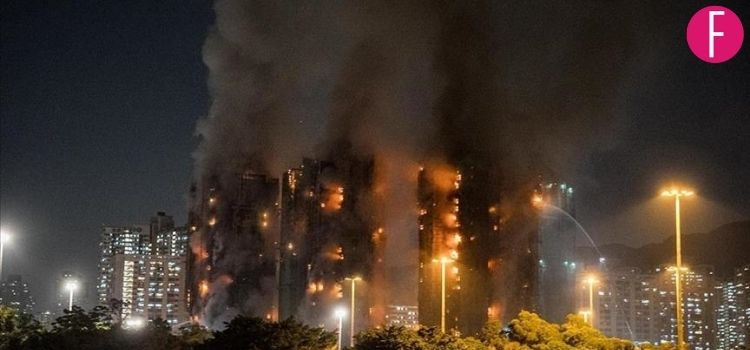
The fire began at around 2:51 p.m. local time on the bamboo scaffolding wrapped around one of the tall towers that were undergoing renovation. Flames quickly spread upward and outward, igniting the green construction netting and leaping from one tower to the next.
The estate consists of eight tall residential towers. The bamboo scaffolding, cloth or mesh coverings and other external protective netting are widely believed to have helped the blaze spread rapidly across multiple buildings.
The Human Toll And Rescue Efforts
As of Thursday, authorities have confirmed that at least 55 people have died in the fire, including a firefighter. This makes it the deadliest apartment building fire Hong Kong has seen in decades.
Rescue teams face extremely difficult conditions. Intense heat, thick smoke and unstable scaffolding have made accessing upper floors very dangerous. Firefighters have struggled to reach trapped residents, as debris and burning scaffolding collapse repeatedly.
Dozens of people are hospitalized with injuries. Several are in critical condition. In addition, 279 residents remain missing, and rescue teams continue to search for survivors amid dangerous conditions. Nearly 900 residents have been evacuated to temporary shelters.
Investigation, Arrests And What Went Wrong
Police and investigators have launched a full scale inquiry into the blaze. They allege gross negligence on the part of the construction company responsible for the renovation work. Three people, including two directors of the firm and one engineering consultant, have been arrested on suspicion of manslaughter.
Officials say flammable external materials, including bamboo scaffolding and protective nets, were a key factor in the fire spreading across multiple towers. Reports also suggest some windows may have been sealed with foam or other hazardous materials during renovation, which hindered escape and rescue.
By Thursday morning, flames in four of the towers had been largely brought under control, but crews were still battling fires and searching for survivors in the remaining buildings. Structural instability remains a major danger.
Why This Fire Spread So Quickly
Experts and officials say this tragedy is not just a result of a random accident, but also deeper systemic issues in Hong Kong housing and building safety practices. The use of bamboo scaffolding for high rise renovation has drawn criticism. Bamboo is highly flammable and does not provide adequate fire safety for tall buildings.
The external mesh and netting used to wrap buildings for renovation appear not to have been fire resistant. They seem to have acted as fuel, allowing fire to engulf towers from the outside before internal alarms or safety systems could respond.
Dense living conditions, aging housing stock, cost cutting during renovations and uneven enforcement of safety regulations combine to create deadly risks. Observers warn that without stricter oversight and fire safety reforms, similar catastrophes could occur again.
Shelters remain open for displaced residents. Community networks are providing food, clothing and assistance for those who lost homes or are still searching for missing family members. The full extent of losses, both human and material, will take time to become clear.
This is a developing story.
Sources: Al Jazeera, Reuters, and The Independent.


Comments 1