

In Sargodha, a tragic incident unfolded when a man, Nazir Gill, succumbed to injuries inflicted by an enraged mob. The mob accused Gill of desecrating pages from the Qur’an and launched a violent attack on his home and workplace, a shoemaking factory which led to Gill tragically losing his life.
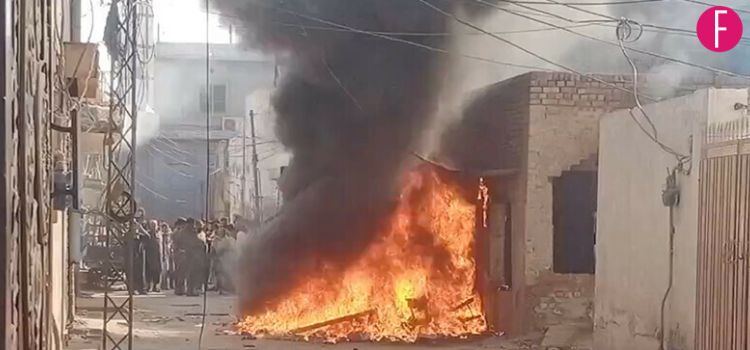
Gill’s death has left the Christian community in fear, with many seeking refuge in local churches. The police managed to save several others from harm, though some sustained injuries requiring hospital treatment.
Disturbing Echoes Of Jaranwala City
According to Inspector Azar Nadeem, speaking to Arab News, the situation in Sargodha is now under control. Police have taken action by registering criminal cases against more than 100 individuals involved in the incident. Following the pacification of the situation, police contingents have been deployed throughout the city to maintain order and prevent further unrest.
This latest incident in Sargodha occurred less than a year after a disturbing attack on the Christian community in Jaranwala city. In that incident last August, a mob targeted churches and homes, fueled by allegations of blasphemy. The pattern is distressingly similar, indicating a recurring threat to the safety and well-being of Pakistan’s Christian minority.
Extra Judicial Killings
Last year alone, Pakistan witnessed five extrajudicial killings related to blasphemy accusations, with Punjab alone reporting 552 blasphemy accusations. Since 1994, a staggering 94 people across the country have lost their lives to violent mobs following blasphemy allegations. These alarming statistics underscore the urgent need for action.
There’s a pressing call to establish a commission of inquiry to review blasphemy laws and the recurring incidents associated with them. Parliament must take a proactive role in addressing this issue by launching mass awareness campaigns to curb the rising tide of violence stemming from blasphemy accusations. Promoting dialogue and understanding is imperative while safeguarding the principles of justice and human rights.
While protecting religious sentiments is crucial, the senseless killings perpetrated by vigilantes highlight a disturbing aspect of Pakistan’s social fabric. The power of rhetoric, amplified by religious leaders and media, has led individuals to take justice into their own hands, resulting in irreversible tragedies.
Pakistan’s blasphemy laws were meant to protect faith, but they have become tools of persecution. In a nation that prides itself on its Islamic identity, it’s a paradox that these laws are leading us further away from the essence of the faith they seek to defend. Instead of fostering harmony and understanding, they have bred a culture of fear and division.
We cannot allow the shackles of blind faith to bind us, nor can we turn a blind eye to the cries of the innocent, silenced by the fury of the mob. It is not enough to mourn the fallen; we must rise, united in our resolve to break the chains of hatred and intolerance that threaten to consume us all.

