

In a historic turn of events, the consecration of the Ram Temple in northern Ayodhya marks a significant moment in the turbuent history of the region once known as the subcontinent. This event underscores the culmination of a long-standing dispute, waging war between religious sentiments and legal battles. The newly inaugurated temple reflects a shift in Ayodhya’s cultural landscape, paving the way for a new era marked by the establishment of the Ram Temple.
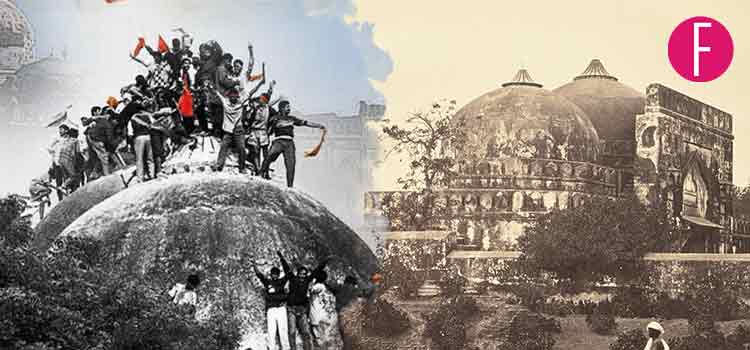
Prime Minister Narendra Modi’s inauguration of the Ram Mandir in Ayodhya, Uttar Pradesh, represents the culmination of a four-decade-long campaign led by Hindu far-right groups. The temple’s construction on the contested site, where a 16th-century mosque stood until its demolition by Hindu mobs in 1992, is a poignant moment in sub continent’s complex history. This event, marred by the destruction of the Babri Masjid, triggered nationwide Hindu-Muslim riots, resulting in over 2,000 deaths, predominantly among Muslims.
The dispute over the site’s religious significance stems from conflicting narratives. Hindus claim the Babri Masjid was built on the birthplace of their chief deity Ram, contending that it replaced an existing temple during the rule of the first Mughal ruler, Babar. Muslims, however, had offered prayers at the mosque until 1949, when idols were allegedly placed inside by Hindu priests, further intensifying the longstanding religious tension surrounding this contested land.
1528: Babri Masjid Constructed By Mughal Commander Mir Baqi
1528, Ayodhya witnessed the construction of the Babri Masjid under the command of Mughal Commander Mir Baqi. This architectural marvel became a testament to Mughal craftsmanship, with its design and structure reflecting the distinctive features of the Mughal era. Historical records substantiate Mir Baqi’s role in overseeing the mosque’s construction, further solidifying its attribution to him. The Babri Masjid, standing as an embodiment of Mughal architectural style, contributed to Ayodhya’s rich cultural heritage during the reign of the Mughal ruler, Babar.
Mir Baqi’s initiative in building the Babri Masjid left an enduring mark on Ayodhya’s landscape. The mosque served as a place of worship for centuries, witnessing the ebb and flow of history. Its construction during Babar’s era added a layer of historical significance, blending religious and cultural narratives in the heart of India. The Babri Masjid became a symbol of the country’s diverse heritage, reflecting the confluence of various influences that shaped the Mughal architectural legacy in Ayodhya.
1853: Hindu’s Claim Of Temple Destruction Under Babur’s Rule
In 1853, Ayodhya witnessed its first conflict when a Hindu sect claimed a temple’s destruction during Babur’s reign. This assertion deepened historical tensions around Ayodhya, foreshadowing the contentious disputes and legal battles that would follow.
The location of the mosque has been a source of contention between Muslims and Hindus, the latter asserting that it was built on top of Ram Janmabhoomi, the site they believe to be the birthplace of the Hindu deity Rama.
Britannica
The dispute intensified over centuries, culminating in the 1992 demolition of the Babri Masjid by a Hindu nationalist mob. This triggered widespread unrest and highlighted Ayodhya’s complex historical and religious tapestry, shaping India’s socio-religious dynamics.
Dec 23, 1949: Mosque Declared “Disputed Property”
On December 23, 1949, the Babri Masjid became a “disputed property” as idols of the Ram deity were placed inside. This event marked a significant turning point, altering the religious landscape of Ayodhya. Following this incident, Muslims refrained from offering prayers at the mosque, intensifying the simmering religious tensions surrounding the site.
The placing of Ram idols inside the Babri Masjid in 1949 fueled the already contentious dispute over the site’s religious significance. The mosque’s declaration as a “disputed property” set the stage for subsequent legal battles and heightened communal sentiments. The absence of Muslim prayers at the site since 1949 became a crucial aspect of the broader Ayodhya controversy, shaping the narrative that unfolded in the subsequent decades.
Dec 6, 1992: Demolishment Of Babri Masjid
On December 6, 1992, Ayodhya witnessed a devastating event as Hindu activists tore down the Babri Masjid. This destructive act unleashed widespread violence and riots across the country, leading to the loss of about 2000 lives, creating a seismic shift in India’s socio-political landscape. The demolition of the mosque became a flashpoint, amplifying religious tensions and challenging the country’s secular fabric.
The demolition of the Babri Masjid in 1992 was a watershed moment, triggering a series of communal clashes and riots. The aftermath saw profound consequences, including the loss of lives and the displacement of communities. This event catalyzed a prolonged legal battle, leading to the establishment of a trust for the construction of the Ram Temple at the disputed site in Ayodhya. The repercussions of the Babri Masjid demolition continue to reverberate in India’s social and political discourse, underscoring the complexities of religious identity and coexistence in the nation.
Sep 2010: Allahabad High Court’s Decision
In September 2010, a significant development emerged as the Allahabad High Court ruled that Hindus and Muslims should share the disputed site in Ayodhya. This decision aimed to find a compromise in the longstanding religious conflict, suggesting a nuanced approach to the complex issue.
The Allahabad High Court’s verdict reflected an attempt to address the competing claims of Hindus and Muslims over the Ayodhya site. The ruling proposed a division of the land among the two religious communities and a third portion allocated to the Nirmohi Akhara, a Hindu religious institution. However, the decision faced mixed reactions, with both sides expressing dissatisfaction, fueling the need for a more comprehensive resolution. Despite the attempt at reconciliation, the legal battle persisted, ultimately leading to the Supreme Court’s involvement in subsequent years to adjudicate the complex Ayodhya dispute.
Nov 9, 2019: Supreme Court’s Judgement
On November 9, 2019, a landmark judgment by the Supreme Court granted the disputed land in Ayodhya to Hindu parties. This decision came despite the acknowledgment that the 1992 demolition of the Babri Masjid was deemed illegal, highlighting the complexity of balancing historical injustices and religious sentiments.
The Supreme Court’s verdict aimed to bring closure to the protracted Ayodhya dispute by allocating the disputed land for the construction of a Ram Temple. In a gesture of reconciliation, the Sunni Waqf Board was allotted five acres of land at a separate location to build a mosque. The ruling sought to strike a delicate balance between justice and the need for communal harmony, marking a pivotal moment in India’s legal and religious history. The judgment set the stage for the construction of the Ram Temple and opened a new chapter in Ayodhya’s narrative, emphasizing the importance of legal resolution in sensitive religious matters.
Jan 22, 2024: Ram Temple’s Inauguration
Despite pending construction, the consecration of the Ram Temple in Ayodhya marked a momentous occasion. A grand ceremony, attended by prominent figures, Hindu spiritual leaders, and Prime Minister Modi, unfolded.
The ceremonial proceedings included a majestic procession of idols and the installation of a statue of Lord Ram in the temple’s inner sanctum. The event symbolized the culmination of a long-standing aspiration for the Hindu community and showcased the unity and cultural significance associated with the Ram Temple. As construction advances, the consecration serves as a landmark in India’s religious and historical tapestry, emphasizing the temple’s role as a symbol of faith and national identity.
India’s Secularism And Unfulfilled Commitments
The recent developments around the allocation of land for the construction of the Ram Temple in Ayodhya have sparked widespread debates, leading some to question the secular nature of India. Despite legal rulings acknowledging the 1992 demolition of the Babri Masjid as illegal, the Supreme Court’s decision to grant the disputed land to Hindu parties has raised concerns about religious bias. People are scrutinizing the perceived inequity in the distribution of the land between Hindus and Muslims, especially considering the historical tensions and legal intricacies. Additionally, the recorded commitment to build a hospital, a space for 2000 namazis, and a community centre at the site prompts inquiries into the fulfillment of these promises. The media’s coverage of these events has intensified public scrutiny, emphasizing the need for transparency and accountability in the implementation of decisions related to religiously sensitive sites. As these questions persist, they underscore the challenges India faces in balancing religious sentiments, legal principles, and the secular ideals enshrined in its constitution.
As the construction of the Ram Temple in Ayodhya commenced swiftly, the narrative took a divergent turn for Muslim groups. Faced with challenges in fundraising and initiating work at a distant site approximately 25 km away, they embarked on building the mosque named “Masjid Muhammed bin Abdullah,” dedicated to Prophet Mohammad. This endeavour, distinct from the disputed structure known as “Babri Masjid,” named after the Mughal emperor Babar, marks a shift in nomenclature and symbolism. The mosque’s projected completion in three to four years underscores the complex dynamics surrounding religious constructions in India. This dichotomy in progress highlights the contrasting journeys of the Ram Temple and Masjid Muhammed bin Abdullah, encapsulating the intricate interplay of faith, politics, and logistics in the ongoing Ayodhya issue.
Have something more to add to the story? Drop us a comment below.
The information is sourced from Al Jazeera, The Wire, Hindustan Times & Britannica.

