

A Syrian court has sentenced former president Bashar al-Assad to death in absentia, marking the first conviction against the former ruler since his regime was toppled in December 2024.
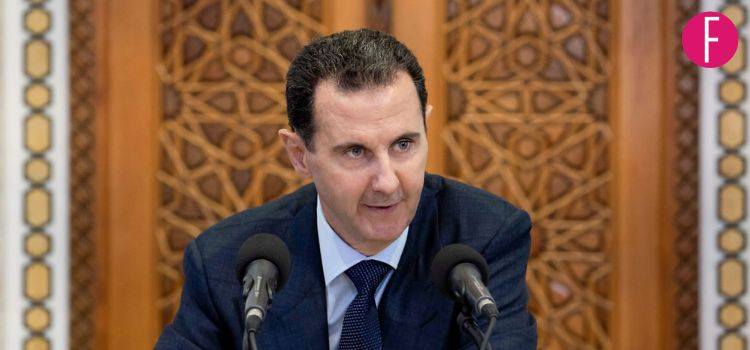
The ruling, delivered on Tuesday by the Fourth Criminal Court in Damascus, found Assad guilty of crimes including premeditated murder, torture, arbitrary detention and crimes against humanity committed during Syria’s nearly 14-year civil war. The court also sentenced his younger brother, Maher al-Assad, and several former officials to death in absentia Atef Najib.
Assad, however, was not present in court. He fled Syria after rebel forces captured Damascus in December 2024 and is currently living in Russia, where he and his family were granted asylum. Syrian authorities have sought to bring former regime figures back to the country, but securing Assad’s extradition remains a major challenge.
The verdict is therefore significant not only because of the punishment itself, but because it represents the new Syrian authorities’ first major domestic attempt to hold the former leadership legally accountable for the violence that defined Assad’s rule.
Why Was Bashar Al-Assad Sentenced To Death?
The court held Assad responsible for some of the most serious crimes committed during the Syrian conflict, including the deliberate killing of civilians, torture and arbitrary detention.
The judgment described Assad as the highest-level decision-maker behind the state machinery used to commit these crimes. His government had faced years of allegations from international organisations and rights groups over widespread torture, forced disappearances, killings, attacks on civilian areas and other abuses.
The Syrian Network for Human Rights has documented an enormous scale of alleged abuses by Assad’s forces since the conflict began in 2011. Its records include more than 202,000 civilians killed by regime forces, over 96,000 cases of enforced disappearance and more than 15,000 deaths attributed to torture. The organisation has also documented the extensive use of barrel bombs, chemical weapons, cluster munitions and incendiary weapons during the conflict.
The figures underline why Tuesday’s ruling carries weight beyond the courtroom. For families who spent years searching for missing relatives, survivors of detention and torture, and communities destroyed during the war, the verdict represents an attempt to put legal accountability behind a period of violence that reshaped the country.
Atef Najib And The Crackdown That Helped Spark Syria’s War
Assad was not the only major figure sentenced.
His cousin Atef Najib, the former head of Political Security in Daraa, was also sentenced to death. Unlike Assad, Najib was present in court after being detained in Syria.
Najib’s case is particularly significant because it goes back to the very beginning of the uprising that eventually became Syria’s devastating civil war.
In 2011, a group of teenagers in Daraa were arrested after writing anti-government messages on a school wall. Their alleged torture and detention triggered anger in the southern city, with demonstrations soon spreading beyond Daraa.
The government’s violent response to those protests helped turn an initially peaceful uprising into a nationwide conflict. Najib, who was serving as a senior security official in Daraa at the time, was convicted of crimes including murder, the killing of children and torture resulting in death.
His conviction therefore links Tuesday’s ruling directly to one of the moments that set Syria on the path to war.
The Syrian Civil War Under Bashar Al-Assad
To understand the significance of Assad’s conviction, it is impossible to separate it from the war that dominated his presidency.
Bashar al-Assad became president in 2000 after the death of his father, Hafez al-Assad, continuing a family rule that had already lasted for decades. What initially came with expectations of political and economic reform eventually became a deeply authoritarian system dominated by the security apparatus.
When protests spread through Syria in 2011 as part of the wider Arab Spring, Syrians were demanding political reform, greater freedoms and an end to government repression. Instead of allowing the protests to develop peacefully, Assad’s government responded with arrests and force.
The unrest eventually escalated into a full-scale civil war involving the Syrian government, opposition groups, extremist organisations and foreign powers. Russia and Iran became major supporters of Assad, while different opposition factions received varying forms of outside backing.
Over the next decade, Syria was devastated.
Cities were reduced to rubble, millions of people were forced from their homes and families were separated by detention and disappearance. Human rights groups documented torture inside government detention facilities, while civilians were repeatedly caught in attacks and military operations.
The Syrian Network for Human Rights estimates that around 6.8 million Syrians were internally displaced during the conflict, while roughly seven million became refugees outside the country. It also documented extensive destruction of hospitals, schools, places of worship and other civilian infrastructure.
The war killed hundreds of thousands of people, although exact estimates vary depending on the period and methodology. Its consequences, however, are much larger than any single death toll: an entire generation grew up amid conflict, displacement and economic devastation.
Assad’s Fall And The Beginning Of Accountability
Despite losing large parts of the country at different points during the war, Assad remained in power for years.
That changed dramatically in late 2024, when rebel forces launched a rapid offensive and reached Damascus. Assad fled the country, bringing an end to his family’s decades-long rule.
His departure opened a difficult question for Syria’s new leadership: what should happen to the officials and security figures accused of crimes under the former government?
Tuesday’s verdict is the clearest answer yet.
The transitional authorities have begun pursuing former regime officials through domestic legal proceedings, presenting the cases as part of a wider effort toward transitional justice. The court has also ordered international arrest warrants for fugitives sentenced in absentia.
But the verdict also raises a practical problem. Assad is in Russia, meaning Syria cannot simply enforce the sentence itself. His return would depend on Moscow agreeing to hand him over, something that remains uncertain.
There is also a wider debate over whether a death sentence can ultimately help or hinder efforts to bring former officials back to Syria. Some legal experts have argued that countries may be reluctant to extradite suspects to a state where they could face execution.
What The Verdict Means For Syria
For the new Syrian government, the ruling is an important test of whether the country can move from the violence of the Assad era towards a functioning system of accountability.
For victims, however, justice is unlikely to end with a single verdict.
Thousands of families are still searching for answers about relatives who disappeared. Survivors continue to live with the consequences of torture and displacement, while communities across Syria are still dealing with destroyed homes and infrastructure.
The challenge for Syria is therefore much bigger than deciding the fate of Assad. It involves establishing who was responsible for crimes, finding the missing, documenting what happened and ensuring that accountability does not become selective.
Tuesday’s ruling may be a historic moment, but it is only one part of a much longer process.
For a country that spent more than a decade living through war under Assad’s rule, the verdict marks an attempt to finally put the former regime on trial — not just politically, but legally.
Sources: CNN, Dawn, TRT World, BBC, Reuters, Syrian Network for Human Rights, The Guardian

